
 English
 русский
 Türk
TürkContent
- 1 Confirm the Problem Before You Bake a Spool
- 2 Four Practical Drying Methods, Ranked by Control
- 3 Drying Temperature and Time by Material
- 4 Why Nylon Is the Hardest Filament to Dry
- 5 What a Drying Curve Looks Like in Practice
- 6 Choosing a Material Changes How Much Drying You Do
- 7 Storage Is What Keeps a Dry Spool Dry
- 8 Mistakes That Damage Spools
You pull a spool off the shelf after three months in a humid room, load it, and start a long print. Twenty minutes later the nozzle begins to pop and crackle, the extruded bead looks foamy, and the finished part splits along its layer lines when you squeeze it. Nothing in the slicer changed. What changed is the water inside the polymer, and no print setting can compensate for it.
The short answer to how you dry 3D printer filament is this: heat the spool in a closed, ventilated enclosure at a temperature chosen for the material, hold it there for a material-specific number of hours, then move it straight into a sealed container below 20 percent relative humidity. PLA is comfortable at 45 to 50 °C for 4 to 6 hours, PETG at 60 to 65 °C, TPU at 50 to 55 °C, and nylon at 80 to 95 °C for 6 to 12 hours. The sections below explain how those windows are set, which equipment holds them accurately, and where the real risk of damage sits.
Confirm the Problem Before You Bake a Spool
Drying costs time and carries a small risk of ruining a spool, so it is worth confirming that moisture is actually the issue. These symptoms appear in roughly this order as a spool takes on water.
- Popping, ticking, or crackling from the nozzle, sometimes with a visible puff of steam.
- A dull, cloudy, or frosted surface where the same material used to print glossy.
- Layers that separate under light finger pressure, or walls that crumble rather than tear.
- Heavy stringing and oozing on PETG and TPU that no retraction setting fixes.
- Measured diameter above the label, typically 1.78 to 1.82 mm instead of 1.75 mm, because absorbed water swells the strand.
- Filament that snaps instead of bending, which is common on saturated PLA, PVA, and nylon.
One symptom on its own proves little, but three or more together almost always mean the spool needs drying rather than a slicer tweak.
Four Practical Drying Methods, Ranked by Control
A dedicated dryer gives the most repeatable results, a food dehydrator gives the best value, a heated bed plus a box is the cheapest working option, and a kitchen oven is the one method most likely to destroy a spool. That ranking is about temperature control, not about how dry the filament eventually gets.
- Dedicated filament dryer. A heated chamber with a fan and a timer that holds between 45 and 90 °C. It reaches nylon temperatures, keeps air moving, and often doubles as a dry box while printing.
- Food dehydrator. Remove the trays, set 40 to 70 °C, and dry one or two spools at a time. Airflow is excellent and cost is low, but the upper limit of cheap units sits below what nylon needs.
- Heated bed and a box. Set the bed to 45 to 70 °C, stand the spool on it, and cover everything with a cardboard or plastic box. Flip the spool every two hours, because heat arrives from one side only.
- Kitchen oven. Usable only with a separate oven thermometer, since domestic ovens commonly overshoot by 15 to 25 °C. It is also the fastest way to melt a spool hub and fuse the strands on a reel.
Desiccant is not a drying method. Silica gel can hold a dry spool dry, but at room temperature it cannot pull two percent of absorbed moisture back out of nylon. Use it after drying, never instead of drying.
Drying Temperature and Time by Material
The chart below shows the middle of the recommended drying window for six common materials. That is the number you would dial into a dryer, not the edge of the safe range.
Typical drying setpoint in degrees Celsius
Temperature is the first variable and time is the second, and the two are traded against each other. A spool held at 45 °C for eight hours ends up close to a spool held at 65 °C for four hours, but nylon simply cannot be dried properly at 45 °C no matter how long it stays in the chamber. The reason is that absorbed water is bound inside the polymer chains, and the polymer has to soften enough for that water to move. Every material therefore has a floor temperature below which drying stalls, and a ceiling temperature above which the strand deforms, the spool welds into a solid block, or additives migrate out of the filament. Note also that these are air temperatures inside the chamber, and a dryer that reports 65 °C while only reaching 55 °C at the spool will leave nylon wet even after a full night.
| Material | Drying temperature | Typical time | What to watch |
|---|---|---|---|
| PLA | 45 to 50 °C | 4 to 6 hours | Drying is often optional, and above 60 °C the strands can weld together on the reel. |
| PETG | 60 to 65 °C | 4 to 6 hours | Mainly a cure for stringing, oozing, and cloudy surfaces. |
| TPU | 50 to 55 °C | 4 to 8 hours | Soft grades deform easily, so stay at the low end of the window. |
| ABS and ASA | 70 to 80 °C | 4 to 6 hours | Watch for spool hubs softening before the filament is dry. |
| PA6 and PA66 | 80 to 95 °C | 6 to 12 hours | The most hygroscopic group, so a sealed dry box is mandatory afterwards. |
| PA610 and PA612 | 80 to 90 °C | 6 to 8 hours | Lower uptake than PA6, so cycles can be shorter and more forgiving. |
| PBT | 80 to 90 °C | 4 to 6 hours | Low moisture uptake and good dimensional stability in humid rooms. |
| PC | 80 to 90 °C | 6 to 8 hours | Drying matters less than a hot, enclosed build chamber. |
| PVA | 45 to 50 °C | 4 to 6 hours | Extremely moisture sensitive and prone to becoming brittle. |
Why Nylon Is the Hardest Filament to Dry
Nylon absorbs more water than any other common printing material, and it holds that water more tightly. The chart below compares how much moisture each polymer takes up at saturation.
Moisture uptake at saturation as a percentage of dry weight
The gap between PA6 and PETG in this chart is more than tenfold, and that gap explains almost every drying complaint people post about nylon. PA6 and PA66 carry amide groups along the chain, and those groups bond readily with water molecules from the air. A spool of PA6 stored in a room at 60 percent relative humidity can move from 0.2 percent moisture to well over 1 percent in a few weeks, which is already enough to produce steam bubbles at 260 °C. PA610 and PA612 use longer carbon chains with fewer amide groups per unit of weight, so they pick up roughly one third to one half as much water as PA6 under identical storage conditions. PBT sits lower still, which is one reason it performs well in humid workshops. The practical consequence is that nylon deserves a sealed dry box the moment it leaves the dryer, while PLA can tolerate an open shelf for a fortnight.
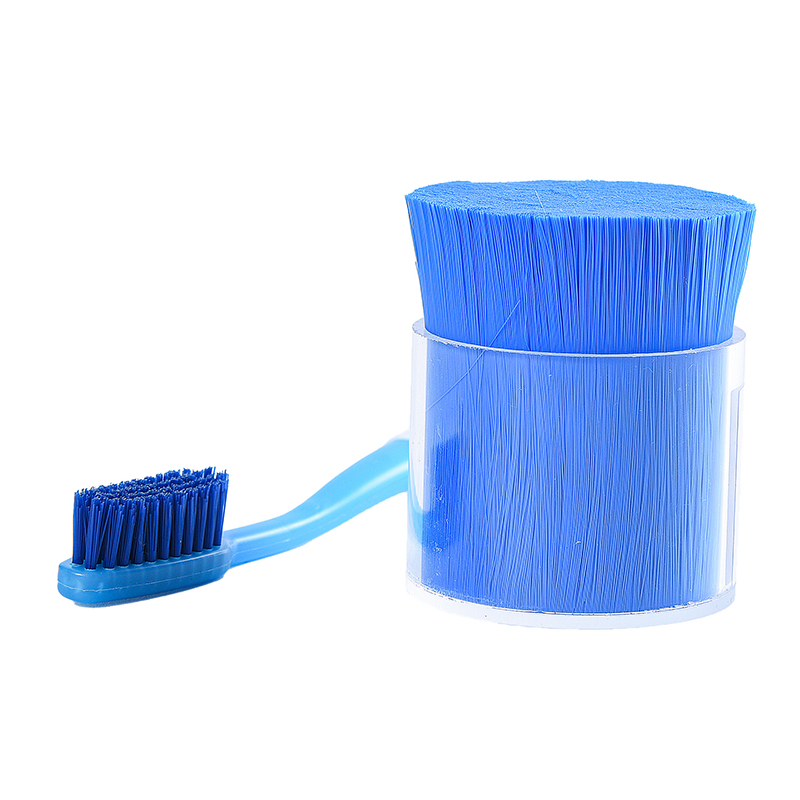 Nylon PA6 Brush FilamentNylon PA6, also known as polyamide 6 or nylon 6, is a thermoplastic polymer compound with a translucent or opaque milky white appearance. It has a moderate melting poi...View Product →
This behaviour is not exclusive to 3D printing. In industrial production of PA6 and PA66 brush filament, moisture content is measured and controlled before shipment for exactly the same reason that a wet spool prints badly: water changes strength, diameter, and surface finish.
What a Drying Curve Looks Like in Practice
Drying is not linear. The first two hours remove surface and loosely bound water quickly, and the final hours do the harder work of pulling water out of the core of the spool.
Moisture content over eight hours in a dryer at 80 °C
The PA6 curve falls steeply for the first three hours and then flattens, which is exactly why short drying cycles feel successful and still print badly. After two hours the outer few millimetres of the spool are dry while the core is still wet, and once printing resumes the strand coming off the core carries that remaining moisture into the melt zone. Humidity inside the chamber matters as much as temperature, because a dryer with a saturated atmosphere simply re-deposits water on the filament it just dried. That is why dryers with a vent, or a lid cracked open slightly during the first hour, outperform fully sealed boxes with no exhaust path. PA610 starts from a much lower moisture level and reaches a printable state in roughly half the time, which is a genuine argument for choosing it in humid climates. Cutting the cycle short because the surface of the strand feels dry is the single most common mistake in filament drying.
Choosing a Material Changes How Much Drying You Do
Drying effort is a material decision as much as a process decision. The comparison below rates five properties that determine how much time a spool spends in a dryer over its working life.
PA6, PA610 and PBT compared across five practical properties
PA6 scores highest on strength and cost but lowest on moisture resistance, which is the trade that has frustrated nylon users for decades. PA610 and PA612 give up some tensile strength and cost more per kilogram, and in return they absorb far less water and hold their dimensions through a long print. PBT is the most dimensionally stable of the three and resists moisture well, though it is not the strongest option in the group. If your printer sits in a garage, a basement, or a coastal workshop where relative humidity rarely drops below 50 percent, that drying speed axis is worth more than a few megapascals of tensile strength. On a dry, air-conditioned bench the calculation flips and PA6 remains the value choice.
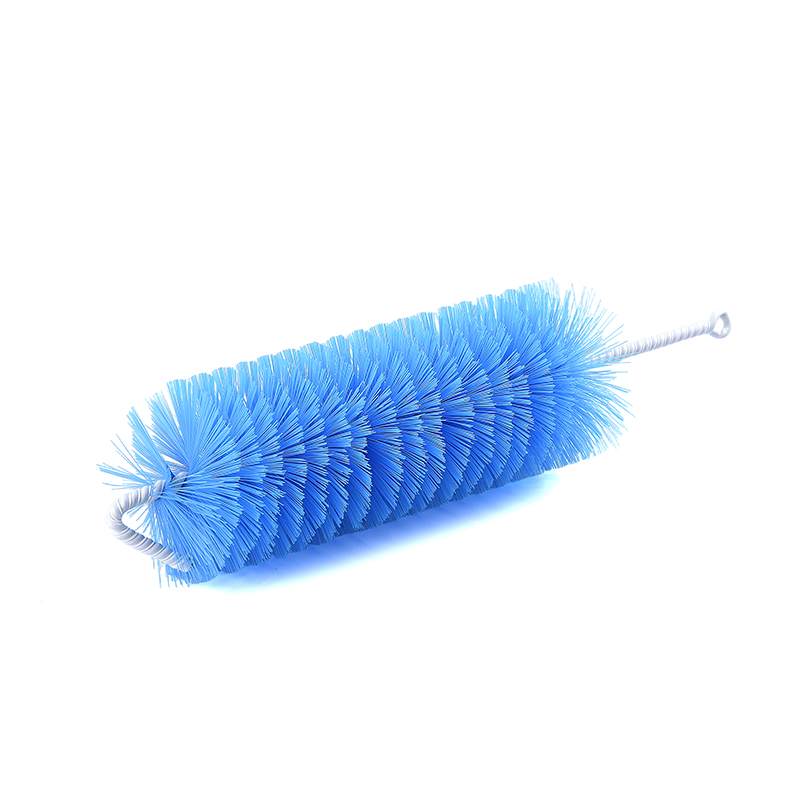 Nylon PA610 Brush FilamentNylon PA610 is a high-performance nylon material that is widely used in many fields due to its unique physical and chemical properties. Nylon PA610 has a series of per...View Product →
The same logic applies to PA612, which pushes the carbon chain a step further and trades a little more stiffness for even lower water uptake. For a workshop that prints structural parts on a humid site, that exchange usually pays for itself in fewer failed prints and fewer wasted spools.
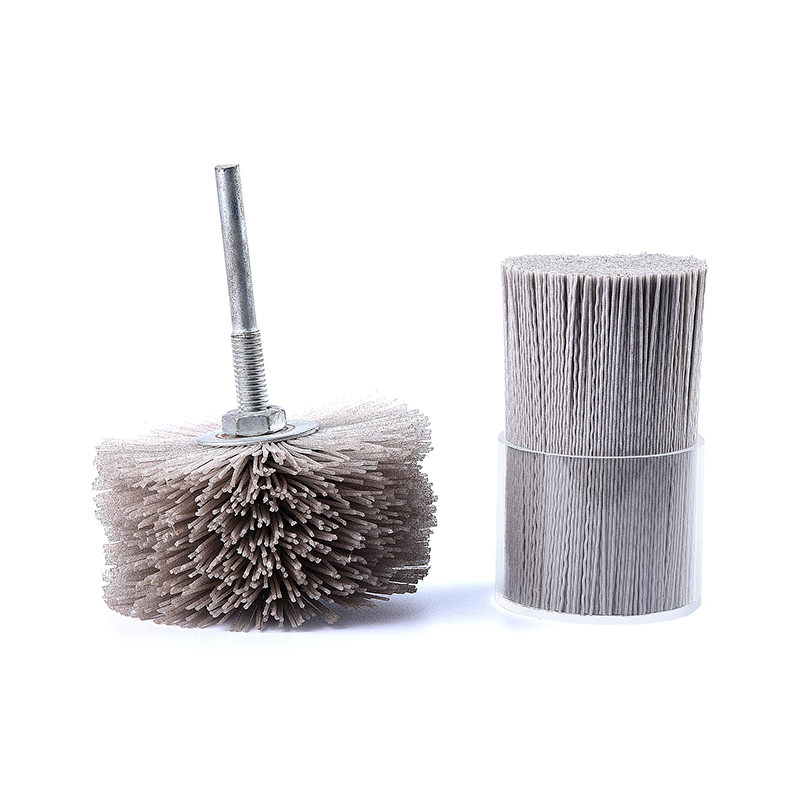 Nylon PA612 Brush FilamentNylon PA612, also known as polyamide 612, is an important variety of polyamide engineering plastics with unique physical and chemical properties. Nylon PA612 has chemi...View Product →
Our own note on PA610 brush filament looks at how that balance plays out when the material is used industrially rather than on a desktop printer.
Storage Is What Keeps a Dry Spool Dry
Filament that goes back onto an open shelf starts reabsorbing water immediately, and the rate depends on the room as much as on the material. A sealed box with a fresh desiccant pack and a hygrometer costs less than one ruined spool of nylon.
- Target below 20 percent relative humidity inside the container, and below 15 percent for nylon and PVA.
- Use rechargeable silica gel and regenerate it when the indicator changes color, roughly every four to six weeks in a humid room.
- Keep the spool in a dry box while printing, because a twenty hour print in a humid room can re-wet the outer layers.
- Write the drying date on the spool, since a spool dried in March is not automatically dry in August.
Vacuum bags work well for long term storage of expensive technical materials, but they are inconvenient enough that most people quietly stop using them after the third spool.
Mistakes That Damage Spools
- Drying PLA above 60 °C, where the strand can soften enough to weld into a solid block on the reel.
- Trusting an oven dial instead of a separate thermometer placed next to the spool.
- Microwaving filament, which heats unevenly, melts the strand from the inside, and damages the polymer.
- Drying for far longer than necessary, since PVA and PLA become brittle and snap when over-dried at the top of their range.
- Drying without ventilation, because water needs somewhere to go and a sealed chamber simply moves it around.
- Assuming a new spool is dry, since sealed bags fail and a spool that sat open in a shop before packing may already be wet.
One final caution concerns measurement itself. Most budget dryers control the air next to the heater rather than the air next to the spool, and a 10 °C difference between those two points is entirely normal.
Drying 3D printer filament is a temperature and time problem with a storage problem attached, and the material decides both. Work out the floor and ceiling temperatures for your polymer, hold the spool inside that window long enough for the core to dry, and seal it the moment the timer ends.
The same polymer chemistry runs through our daily work. Ningbo Keying New Material Technology produces PA6, PA66, PA610, PA612, PBT and abrasive filament for brush manufacturers, where moisture content and diameter tolerance are verified before shipment rather than discovered on a production line. Our brush filament product range covers the nylon and PBT grades discussed in this article, and we develop custom specifications from customer drawings or samples when a standard grade does not fit the job.