
 English
 русский
 Türk
TürkContent
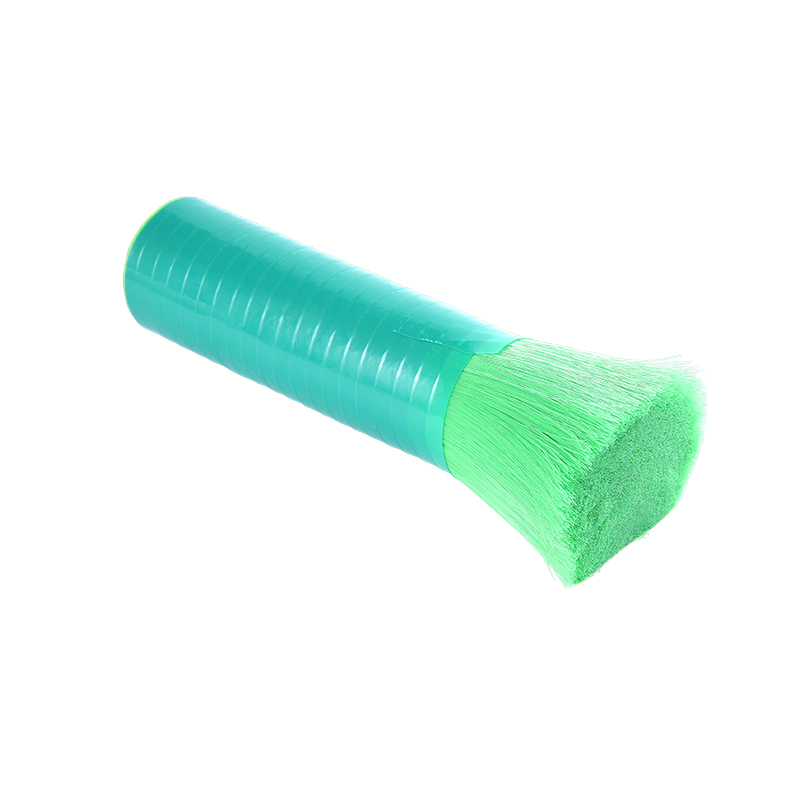
Abrasive filaments offer a unique combination of advantages that conventional abrasive tools — grinding wheels, sandpaper, wire brushes — cannot match: they simultaneously provide abrasive cutting action and the flexibility of a brush filament, allowing them to access complex shapes, contoured surfaces, and recessed areas while continuously presenting fresh abrasive particles to the work surface as the filament wears. The result is a consistent, controllable surface finish without the aggressive material removal, workpiece damage, or rapid abrasive loading that characterizes rigid abrasive tools.
Self-Sharpening Action: Consistent Performance Throughout Tool Life
The most technically significant advantage of abrasive filaments is their self-renewing abrasive surface. As the nylon filament tip wears during use, fresh abrasive particles embedded throughout the filament cross-section are continuously exposed at the working end. This means the tool maintains consistent cutting performance from the start of its service life to the end — unlike sandpaper or grinding wheels that become glazed and ineffective as their surface abrasive particles wear flat.
For brush-mounted abrasive filaments — disc brushes, end brushes, and wheel brushes used on angle grinders, bench grinders, and robotics — this characteristic translates directly to a consistent surface finish quality and predictable material removal rate throughout a production run, without operator intervention to change or dress the tool.
Flexible Access to Complex Geometries
Abrasive filaments conform to the contour of the workpiece surface under the light pressure of brush operation. This flexibility allows them to reach and finish surfaces that rigid abrasive tools cannot address:
- Internal bores and cavities: end brushes with abrasive filaments can finish the inner diameter of precision bores, valve bodies, and hydraulic fittings where grinding wheels cannot fit or rotate freely
- Gear tooth profiles and splines: abrasive filament brushes follow the involute form of gear teeth, deburring and finishing the flanks and root radius without altering the critical tooth geometry
- Drilled hole edges: the filaments sweep across hole entries during brush rotation, consistently deburring the edge radius without hand intervention — a key advantage in high-volume automated deburring lines
- Cast and forged surfaces with irregular topography: abrasive filaments follow the raised and recessed areas of rough castings, applying consistent abrasive action across the full surface without skipping over low spots the way a rigid wheel would
Controlled Material Removal Without Workpiece Damage
Unlike wire brushes or aggressive grinding wheels, abrasive filaments remove material in small, controlled increments — making them suitable for finishing operations where preserving dimensional accuracy and surface integrity are critical. The abrasive particle content is precisely controlled at 20–30% by weight of the nylon filament — a ratio engineered to provide sufficient cutting action while maintaining the flexibility and durability of the nylon substrate. Too high an abrasive loading makes the filament brittle and prone to breakage; too low reduces cutting efficiency below the threshold needed for effective surface treatment.
The controlled removal characteristic is particularly important for:
- Aerospace and medical components where surface finish specifications are tight and any dimensional deviation is cause for rejection
- Soft metals (aluminum, copper, brass) that would be scratched or gouged by wire brushes or aggressive grinding
- Coated or anodized surfaces where only the oxide layer or contamination should be removed, not the base material
Abrasive Grain Selection for Different Applications
The abrasive particles embedded in the nylon filament are selected based on the hardness of the workpiece material and the required surface finish:
| Abrasive Type | Hardness (Mohs) | Best For |
|---|---|---|
| Silicon carbide (SiC) | 9.5 | Non-ferrous metals, stone, ceramics, composites |
| White corundum (aluminum oxide) | 9 | Steel, stainless steel, general metal deburring |
| Diamond | 10 | Hardened steel, carbide, advanced ceramics |
| Ceramic | 8.5–9 | High-alloy steel, demanding surface finishing |
Grain size (grit) is selected based on the required surface finish: coarser grit (36–80 mesh) for aggressive material removal and oxide layer stripping; finer grit (400–800 mesh) for light surface conditioning, polishing, and achieving low Ra values. The cubic particle shape of quality abrasive grains ensures multiple cutting edges are always presented to the work surface as the filament flexes — maximizing cutting efficiency compared to irregular grain shapes.
Durability of the Nylon Base Material
The nylon base material (PA6, PA610, PA612, PA1010) contributes essential properties that determine how long the abrasive filament performs in service:
- High mechanical strength: the nylon substrate resists fatigue fracture during repeated high-speed flexing — the filaments return to straight after each deflection without cracking at the root
- Chemical resistance: nylon maintains its properties in contact with cutting oils, coolants, rust inhibitors, and mild acids used in metalworking environments
- Thermal stability: the base nylon formulations for abrasive filaments are selected for stability under the frictional heat generated during high-speed brush operation — maintaining consistent properties without softening or glazing during use
- Long service life compared to wire brushes: wire brushes shed metal fragments into the workpiece and environment, eventually losing fill density and effectiveness; abrasive filaments wear uniformly and maintain effective cutting action throughout their service life