
 English
 русский
 Türk
TürkContent
If you are buying filament for a desktop 3D printer, the size decision is easier than many guides suggest. Roughly 85 to 89 percent of active printers use 1.75mm filament, and the remaining machines are almost entirely committed to 2.85mm or 3mm hardware. The practical conclusion is simple: unless your printer manual explicitly requires 2.85mm or 3mm, buy 1.75mm. That recommendation holds for beginners and experienced users alike. Understanding why this standard emerged, and how diameter tolerance affects your prints, will help you avoid expensive mistakes when you move to engineering materials.
Common Filament Sizes at a Glance
Before comparing sizes in depth, here is a clear breakdown of what actually exists on the market. The numbers below are nominal diameters. Real filament sits slightly above or below the stated number within a published tolerance range.
| Nominal Diameter | Where It Is Used | Typical Availability |
|---|---|---|
| 1.75mm | Most desktop FDM printers, from hobby to prosumer | Very high; nearly every material and color |
| 2.85mm | Selected European brands and some industrial systems | Moderate; core materials available |
| 3.00mm | Older industrial machines; few new models | Shrinking; mostly specialty suppliers |
1.75mm dominates because it allows a smaller, lighter extruder assembly and faster response to extrusion changes. 2.85mm persists because certain printer architectures, particularly those engineered around thicker filament, benefit from its larger cross-section and lower back-pressure at high flow rates.
Why 1.75mm Became the Standard
The shift to 1.75mm accelerated in the early 2010s as desktop printers moved toward lighter extruder assemblies. A 1.75mm filament has only about 37 percent of the cross-sectional area of a 2.85mm filament. This means the extruder motor pushes less material to achieve the same flow rate, enabling faster retraction, more compact direct-drive extruders, and sharper control over fine details.
The chart above shows why this size debate is largely settled for desktop users. The 1.75mm standard has captured nearly nine out of every ten active printers. That concentration matters because it drives material manufacturers to prioritize 1.75mm production lines, which keeps prices competitive and variety high. 2.85mm retains a small but stable install base, mostly tied to specific European brands and legacy industrial systems. 3.00mm has effectively disappeared from new product development. If you are starting a new print project and do not already own a 2.85mm machine, the data strongly favors 1.75mm.
When 2.85mm or 3mm Still Makes Sense
2.85mm filament is not obsolete. It remains the correct choice for specific printer models, particularly some European machines and industrial systems with direct-drive extrusion. The larger diameter gives the extruder more grip on flexible materials such as TPU, because soft filaments are less likely to buckle or jam in a long Bowden tube when they have a bigger cross-section. Large-format printers that move a lot of material also benefit from the lower back-pressure of 2.85mm at high volumetric flow. However, the material selection is narrower, and the price per kilogram often runs slightly higher because of smaller production volumes. If your printer accepts both sizes, the flexibility of 1.75mm usually wins.
Filament Tolerance: What the Numbers Mean
Diameter tolerance is the specification you should check before almost anything else. A filament stated as 1.75mm with a tolerance of +/-0.05mm is considered ordinary quality. Premium filament holds +/-0.02mm. In relative terms, the same absolute tolerance affects a 1.75mm filament about twice as much as it affects a 2.85mm filament, because the smaller diameter has less area to absorb the error.
What matters more than the diameter itself is the volumetric error it produces. Extrusion flow depends on cross-sectional area, so a small change in diameter translates directly into a noticeable change in material output. The chart below shows how delivered volume deviates from nominal for typical tolerance values on both common filament sizes.
Volumetric Deviation from Nominal Diameter
The two curves show the same tolerance applied to both sizes. A 1.75mm filament with +/-0.05mm tolerance shifts the actual extrusion volume by roughly 5.8 percent. The same tolerance on a 2.85mm filament moves volume by only 3.5 percent. At the premium tolerance of +/-0.02mm, the 1.75mm deviation falls to about 2.3 percent. That is why premium filament producers invest in precise extrusion lines and continuous laser measurement systems. It also explains why 2.85mm can feel more forgiving on poorly calibrated printers: the larger diameter absorbs the same absolute error with lower relative impact. For functional parts, the tolerance number matters just as much as the nominal size.
How to Measure Filament Size Accurately
You can measure filament diameter at home with a digital caliper. Take at least five readings at different points along a one-metre length, rotating the filament between readings, then average the results. Ignore the first 30 centimetres from the spool anchor, because the filament is often slightly deformed by winding tension at that point. What matters most is the spread between the minimum and maximum readings, not just the average. A premium 1.75mm spool should stay within 1.73 to 1.77mm over its entire length. If the spread exceeds +/-0.05mm, you will likely see inconsistent layer width and surface quality. Keep a record of your measurements so you can compare spools from different suppliers over time.
Filament Size Control Beyond 3D Printing
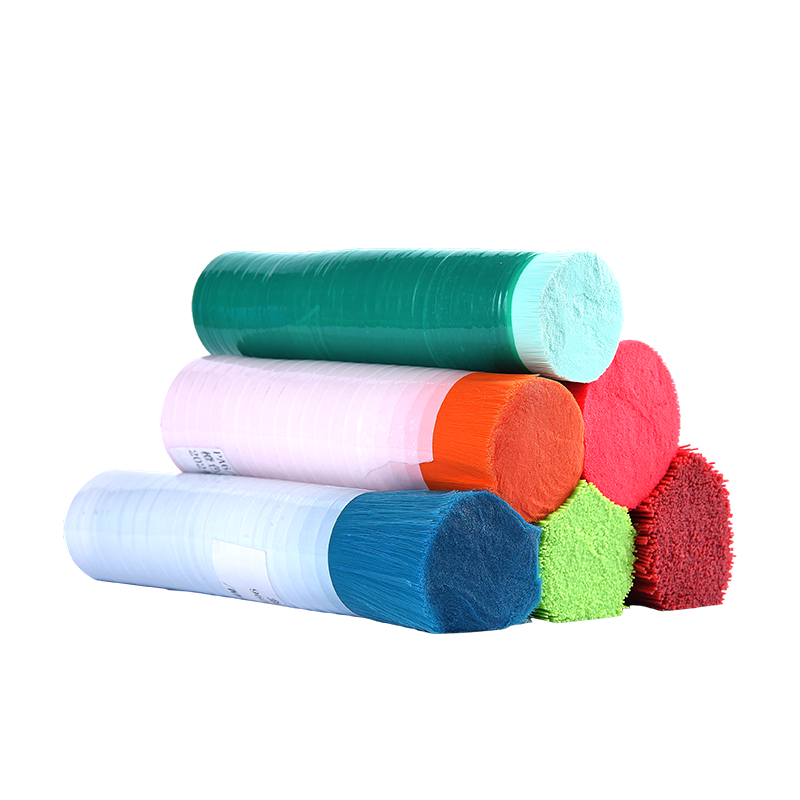
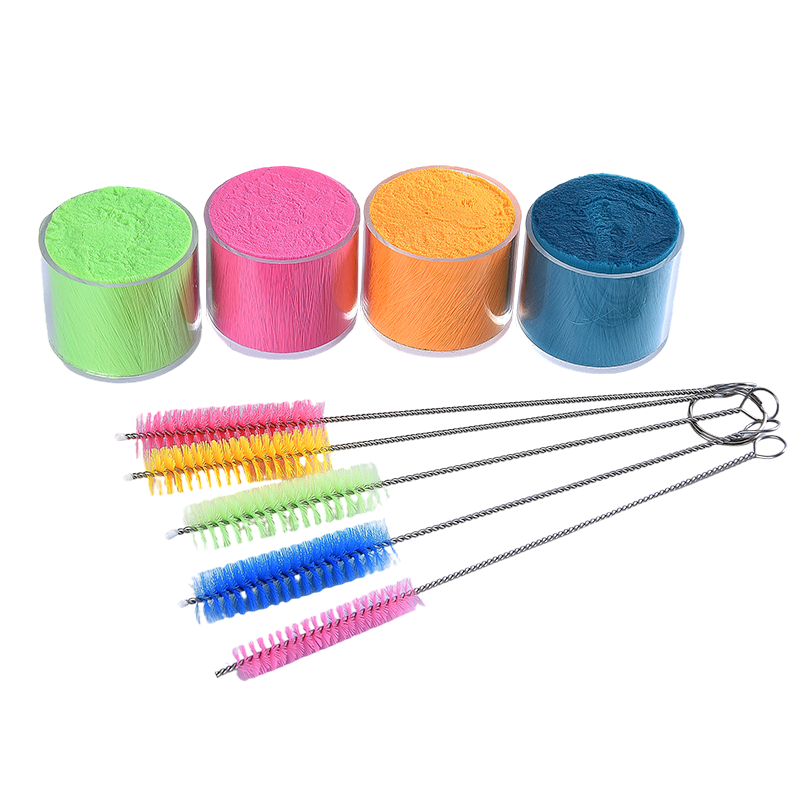
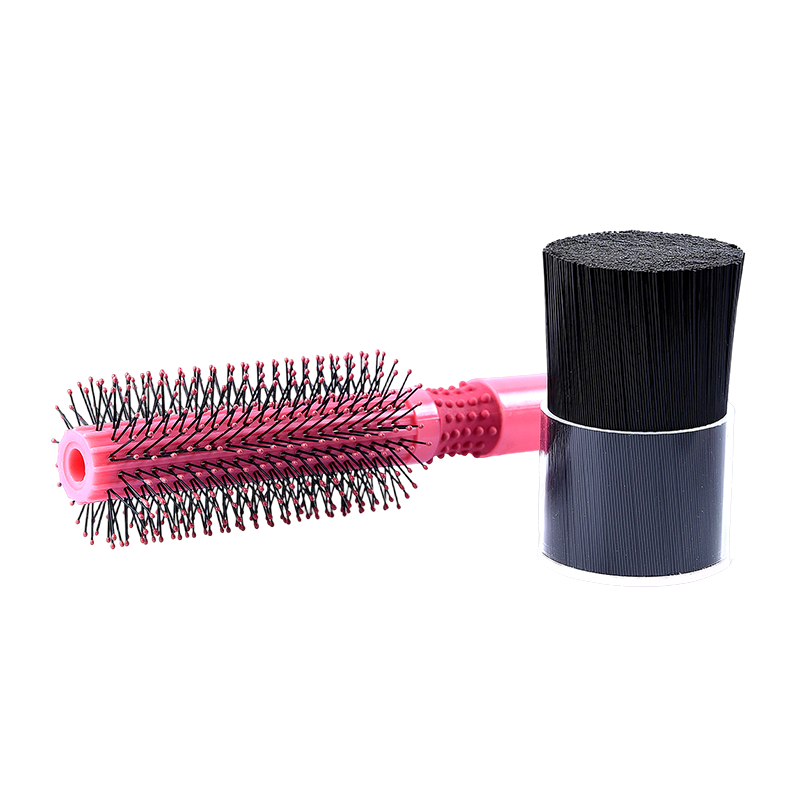
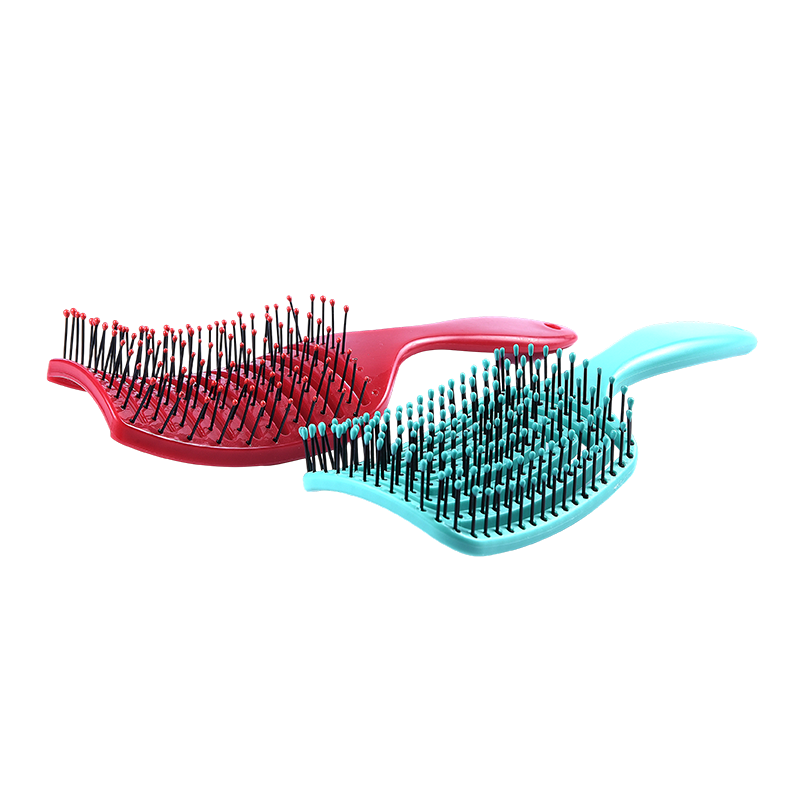
The same diameter discipline applies far outside the 3D printing world. Brush filament manufacturers produce nylon and polyester monofilaments for industrial brushes, and their customers impose equally strict size specifications. A brush filament that varies in diameter changes the stiffness, bending recovery, and effective abrasiveness of the finished brush. That is why reliable suppliers publish clear dimensional tolerances and use in-line diameter monitoring during production. The engineering principle is identical: a consistent cross-section is the foundation of predictable mechanical performance. For a closer look at how nylon filament strength and wear resistance translate into real cleaning and industrial applications, see this overview of high-strength, wear-resistant nylon filaments.
Companies such as Ningbo Keying have built their production around this principle, offering PA6, PA66, PA610, PA612, and PBT brush filaments with controlled diameter profiles. When a brush manufacturer specifies a filament size, the supplier must hold that dimension across the entire batch, just as a 3D printing filament brand must hold 1.75mm across every spool. This shared focus on dimensional consistency is one reason the two industries use similar measurement and quality-control methods.
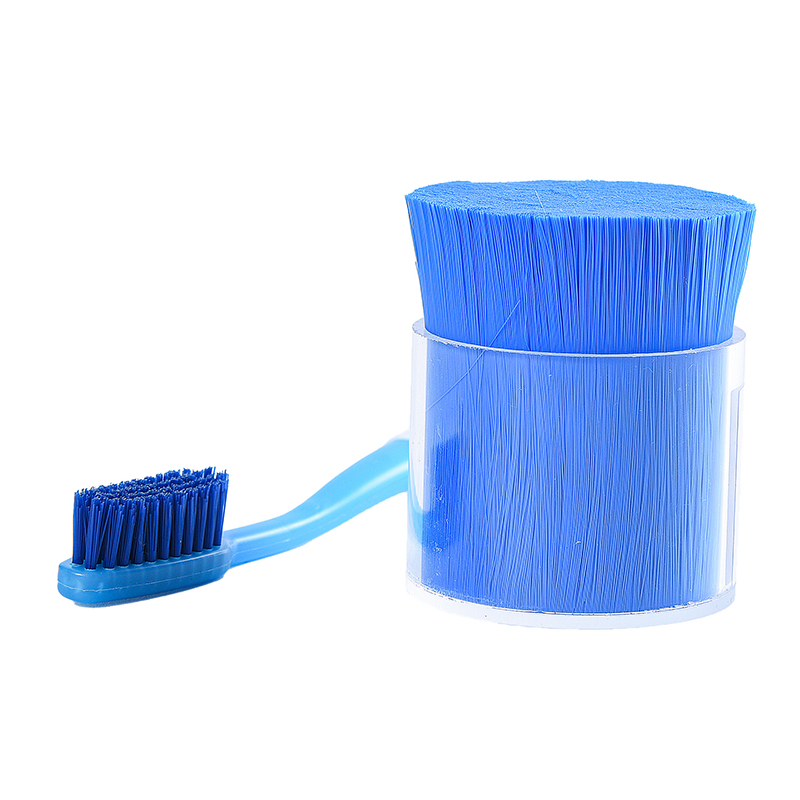 Nylon PA6 Brush Filament for Industrial Cleaning BrushesThis PA6 filament offers good wear resistance, chemical stability, and low-temperature performance, making it a practical choice for brush manufacturing. Its dimensional consistency is highlighted alongside the industry's focus on batch uniformity.View Product →
 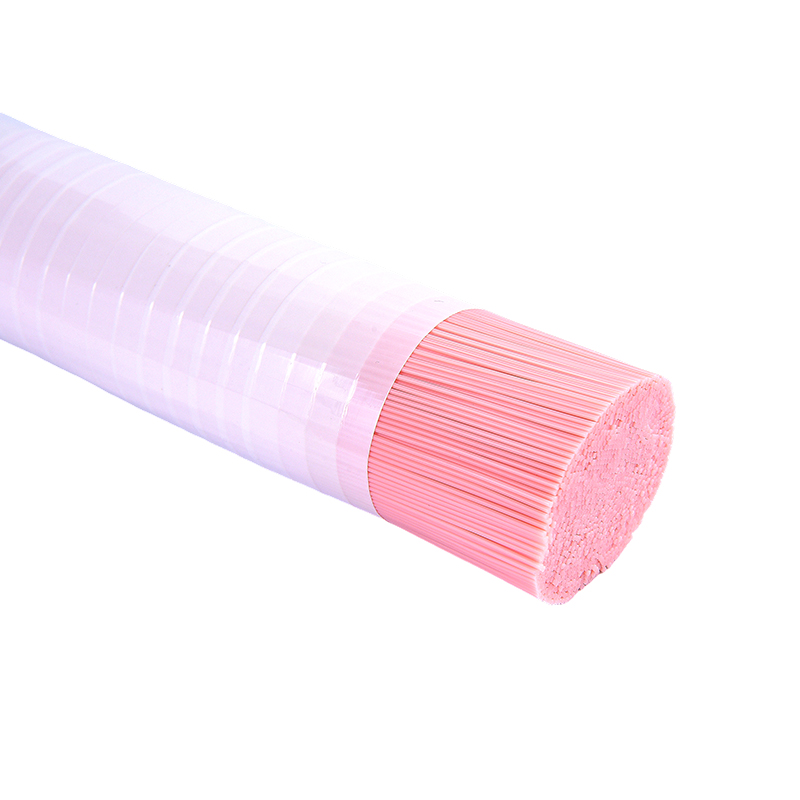 Abrasive Filament with Silicon Carbide or Diamond GritEmbedded with abrasive particles sized from 36 to 800 mesh, this nylon-based filament suits deburring and surface finishing. Its controlled abrasive ratio aims to balance grinding power with flexibility for long-lasting use.View Product →
How to Choose the Right Filament Size
When you sit down to choose between 1.75mm and 2.85mm, the comparison comes down to five factors: printer compatibility, extrusion precision, material variety, flexible filament handling, and large-part throughput. The radar chart below scores both sizes on a five-point scale for each factor.
1.75mm vs 2.85mm: Multi-Factor Comparison
1.75mm wins clearly on compatibility, precision, material variety, and retail availability. 2.85mm leads only in flexible filament handling and large-part throughput, where its larger cross-section helps push soft materials and high volumes. For the vast majority of desktop users, the score gap is decisive. If you already own a 2.85mm printer, those two advantages are real, but the reduced material selection and higher spool cost are the price you pay. If you are buying a new printer today, the ecosystem around 1.75mm gives you more choices at every stage of the workflow.
The ecosystem effect is worth measuring directly. The column chart below counts the number of common filament types readily available in each diameter on major online marketplaces.
Material Variety by Filament Diameter
The gap is not just about counting product listings. A wider material ecosystem means more specialized options, more frequent formulation updates, and more competition that keeps prices down. It also means more community profiles, slicer presets, and documented print settings for that specific diameter. When your project eventually needs a nylon or PBT-based filament, staying within the mainstream diameter gives you access to the broadest selection. This advantage compounds over time because each new material release is almost always developed for 1.75mm first.
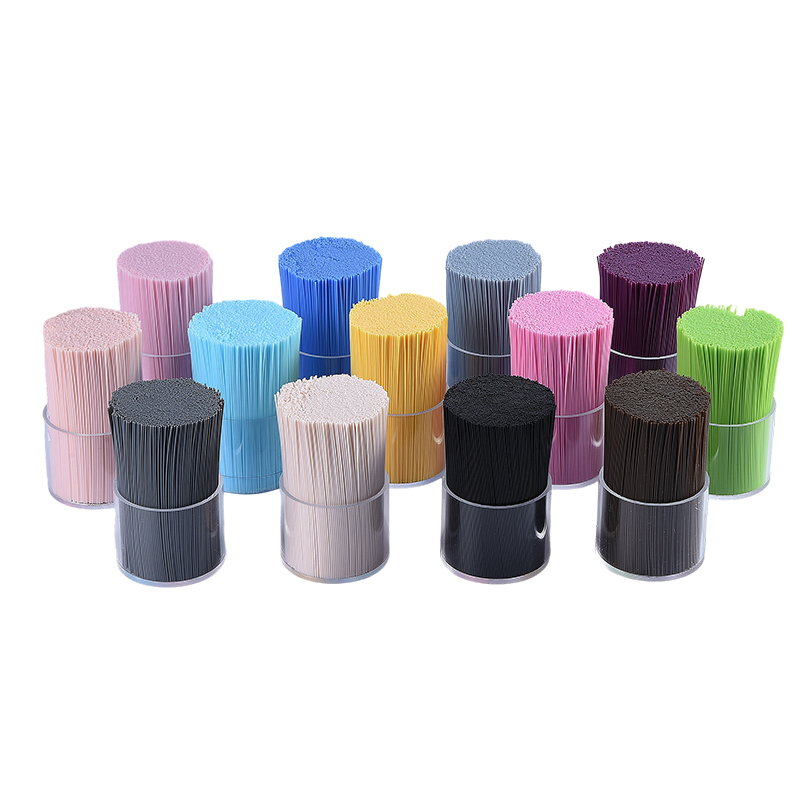 Nylon PBT Brush Filament with High Heat ResistanceCombining nylon's strength with PBT's thermal and electrical properties, this filament suits high-temperature brush applications. It is recyclable and compliant with environmental standards, offering a durable and sustainable option.View Product →
Final Takeaway
The filament size question has a clear answer for most users: buy 1.75mm with the tightest tolerance you can afford. Choose 2.85mm or 3mm only when your machine requires it, or when you have a specific need for higher volumetric flow and easier flexible material handling. In both cases, consistency matters more than the nominal number on the package. A 1.75mm spool that stays within +/-0.02mm will outperform a sloppy 2.85mm spool with +/-0.10mm variation on almost every real print. Measure your filament, check the tolerance, and let the data guide your settings.