
 English
 русский
 Türk
Content
- 1 What Ball Honing Does Inside a Bore
- 2 Why the Filament Decides the Result
- 3 Choosing Grit for the Finish You Actually Need
- 4 Matching the Filament to the Workpiece Material
- 5 What Belongs on a Ball Honing Filament Spec Sheet
- 6 Failure Modes and What They Tell You
- 7 Custom Filament Supply and What to Ask a Supplier
- 8 The Takeaway
A ball hone that leaves a clean cross-hatch in one hydraulic cylinder and a smeared, tapered bore in the next is usually not a machine problem. The machine did the same thing both times. What changed was the abrasive filament inside the tool.
The short version: in ball honing, the abrasive filament is the cutting tool. The holder only spins it. Grain type, grit size, filament diameter and the abrasive globule at the tip decide the surface finish, the tool life and whether the bore stays inside tolerance. Buy filament as a specified component, not as a consumable you reorder by habit.
What Ball Honing Does Inside a Bore
Ball honing uses a rotating tool made from abrasive nylon filaments. Each filament carries abrasive grain and normally ends in a small abrasive ball or globule, which is where the process gets its name. Because the filaments flex, the tool follows the bore instead of fighting it. It self-centers, applies light and even wall pressure, and reaches into cross-drillings, ports and interrupted bores that rigid stones cannot touch.
In production, ball honing is used to:
- remove glaze, carbon and light rust from cylinder bores before new rings or seals go in
- deburr and radius-blend edges after drilling, milling or boring
- produce a cross-hatch pattern that retains lubricant
- plateau-finish hydraulic and pneumatic cylinder bores
- clean and finish valve bodies, tube IDs and barrel interiors
Rigid stones cut faster, but they need a rigid setup and constant alignment, and they load or chip when the bore is not perfectly round. Ball honing trades stock removal rate for repeatability, and that repeatability comes from the filament.
Why the Filament Decides the Result
Three filament variables do most of the work, and they interact. Changing one without checking the others is the most common reason a honing process runs perfectly on Monday and fails on Wednesday.
Abrasive grain type
Silicon carbide is sharp and friable. It cuts quickly on cast iron and carbon steel and refreshes its own cutting edges as the grain breaks down. Aluminum oxide is tougher and wears more slowly, which suits stainless and hardened steels where premature grain fracture is the failure mode. Ceramic and alumina-zirconia blends hold up best in automated cells where the tool runs long cycles without an operator watching it.
Grit size
Coarse grit removes material and leaves a deeper scratch pattern. Fine grit produces a smoother surface but loads faster and glazes more easily, especially on soft alloys. Grit number is nominal. A 240 from one supplier does not always cut like a 240 from another, because grain size distribution and the way the grain is bonded into the polymer both differ.
Filament diameter, free length and tip form
A thicker filament is stiffer, cuts harder and demands more torque from the spindle. Longer free length gives softer contact and better conformity in a slightly wavy bore, at the cost of wall pressure. The ball at the tip concentrates the contact point, so a worn or flattened ball polishes instead of cutting, and an operator who compensates by pushing harder is making exactly the wrong correction.
| Filament variable | What it changes in the bore | Practical starting point | Typical risk when it is wrong |
|---|---|---|---|
| Grain type | Cut rate and grain life | Silicon carbide for iron and steel, alumina for stainless | Glazing or premature grain wear |
| Grit size | Scratch depth, surface roughness, loading tendency | 120 to 240 for stock removal, 320 to 600 for finishing | Rework, or a cross-hatch that is polished away |
| Filament diameter | Stiffness, wall pressure, spindle torque | Match to bore size, then confirm with a trial pass | Bore distortion or filaments snapping at the base |
| Free length | Conformity against pressure on the wall | Longer for wavy bores, shorter for straight bores | Tapered or barrel-shaped bore |
| Ball tip condition | Whether the tool cuts or rubs | Inspect tips at every tool change | Polished wall and heat build-up |
If you want to go deeper on grain, bonding and tool behaviour, these common questions about abrasive filament cover the points buyers raise most often.
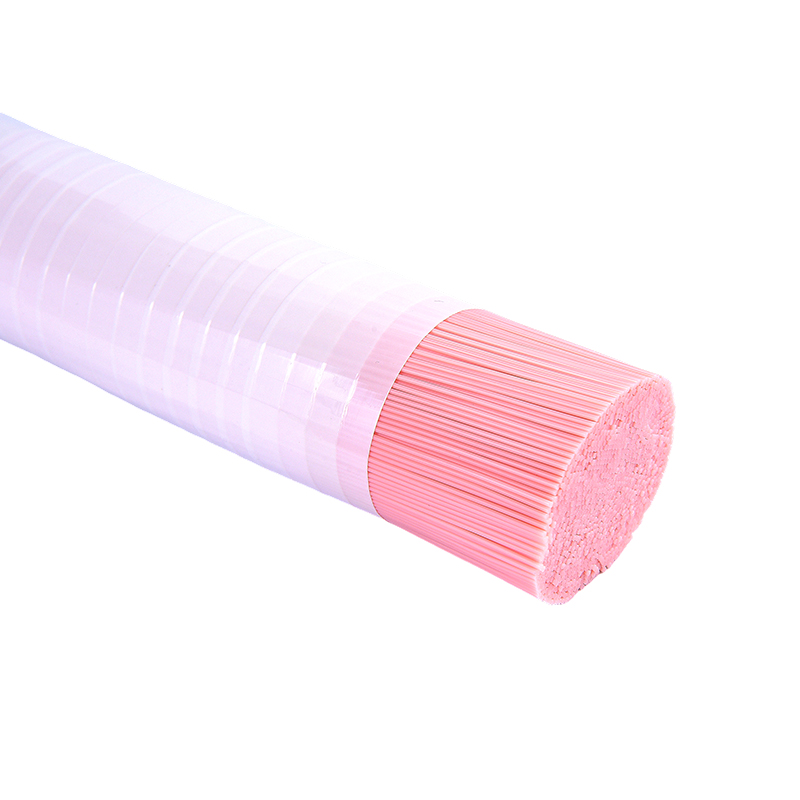 Abrasive Nylon Filament for Deburring and Surface FinishingReview nylon abrasive filament grades, grit ranges, and loadings to match finishing requirements before testing on your own material.View Product →
Choosing Grit for the Finish You Actually Need
Start from the finish requirement, not from the grit already sitting on the shelf. The ranges below are practical starting points for abrasive nylon tools. Confirm them on your own material with a trial pass before you commit a production order.
- 80 to 120 grit: heavy deburring, glaze removal and light stock removal after boring. Expect a visible, aggressive cross-hatch.
- 180 to 240 grit: general honing and deburring where a defined cross-hatch is required but geometry must be preserved.
- 320 to 400 grit: plateau finishing work, where peaks are knocked down and valleys are kept to hold oil.
- 600 to 800 grit: polishing and light finishing of soft alloys, run with low pressure and short dwell times.
Two rules keep operators out of trouble. First, never use a grit so coarse that the scratch depth exceeds the tolerance band of the bore. Second, do not try to repair a coarse cut with a finer brush afterwards. Cross-hatch angle and depth are set in the first passes, and polishing later only rounds off the peaks you wanted to keep.
Matching the Filament to the Workpiece Material
The base polymer matters as much as the abrasive when the tool runs wet, runs hot, or has to survive a great deal of flexing.
- Cast iron and carbon steel: silicon carbide filament, medium grit, works with oil mist or dry at low speed.
- Hardened steel and stainless: alumina or ceramic grain. Stainless work-hardens and galls, so keep pressure light and never let the tool dwell in one spot.
- Aluminum, brass and bronze: fine grit with a more flexible filament. Soft metals load a brush quickly, and a loaded brush rubs rather than cuts.
- Thin-wall and large-diameter tubes: reduce filament diameter to limit wall pressure and distortion.
The nylon base sets how far the filament can flex before it takes a permanent set, and how it behaves in the presence of coolant, honing oil or alkaline cleaners. PA6 is the common general-purpose base, PA66 is stiffer and holds strength at higher temperatures, PA610 and PA612 tolerate moisture and repeated flexing better, and PBT resists chemicals and holds its shape in wet processes. For an abrasive tool, that base choice decides whether the filament keeps the grain locked in place long enough to be economical.
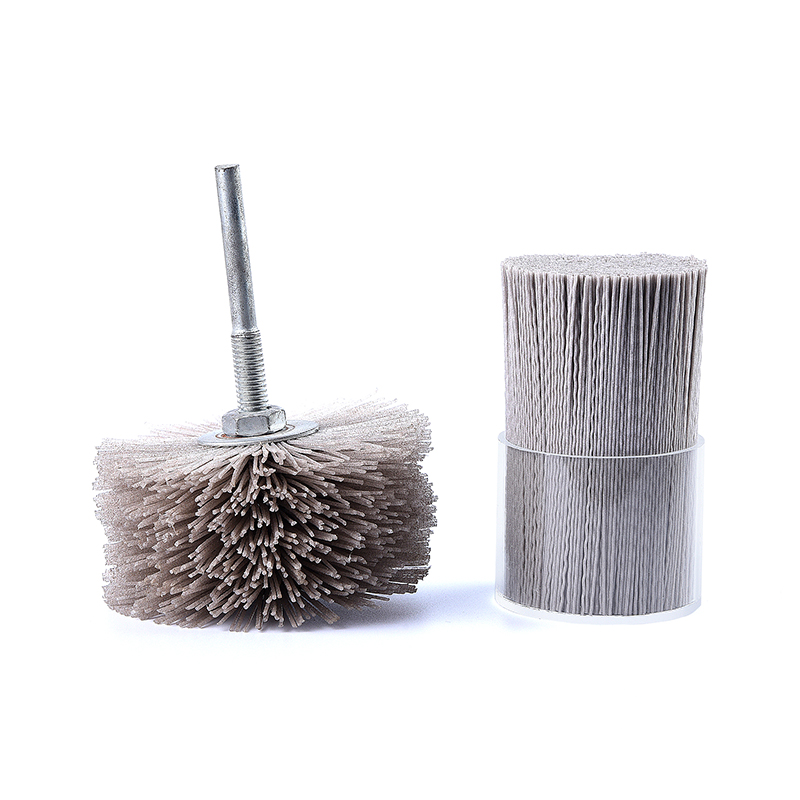 Nylon PA612 Brush Filament for Wet and Chemical ProcessesSpecify PA612 filament diameter, shape, and cut length when moisture resistance and chemical stability matter for repeatable brush performance.View Product →
What Belongs on a Ball Honing Filament Spec Sheet
Filament delivered against a written specification is repeatable. Filament ordered as abrasive nylon, medium grit, is a lottery. Cover these points before the first purchase order goes out.
- Base polymer and grade, for example PA6, PA612 or PBT, with the moisture or chemical exposure stated.
- Abrasive grain type and grit number, plus the acceptable grain size distribution if cut rate is critical.
- Filament diameter with a stated tolerance, measured on the finished and conditioned filament.
- Ball tip form and integrity, including the minimum acceptable globule size.
- Cut length and free length after trimming, which together set stiffness.
- Color, when it is used to identify grit on the shop floor and prevent mix-ups between tools.
- Compliance documents such as RoHS declarations and third-party test reports, when the finished brush is exported.
- Batch consistency evidence: a retained sample and a cut test result from the same lot.
Failure Modes and What They Tell You
- The bore glazes or polishes instead of cutting: the grit is too fine, the tool has loaded, or the speed is too high. Check the tips before you change anything else.
- Cross-hatch appears only near the ends of the bore: free length is too long, or filament diameter is too small for that bore.
- The bore measures larger in the middle: too much dwell time or a tool held in one position. It is a technique problem before it is a filament problem.
- Filaments break at the base: the filament is too stiff for the bore diameter, or the tool is being reversed at speed.
- Results drift from batch to batch: no retained sample and no incoming cut test. This is the most expensive failure, because it stays invisible until a customer finds it.
Custom Filament Supply and What to Ask a Supplier
Most ball honing tools are built from a filament that was never a catalogue item. Diameter, grit blend, tip geometry and cut length are usually developed against a customer drawing or a worn sample taken off the line. That development work is what separates a filament manufacturer from a trader.
Ningbo Keying New Material Technology has produced brush filament since 2010, with more than 7,000 square meters of factory space, four imported production lines and annual output above 1,000 tons. The company develops abrasive and nylon filament to customer drawings and samples and works to RoHS and SGS requirements for export orders. As a brush filament manufacturer, it supplies the material layer rather than finished brushes, which means the specification conversation starts at the polymer and the grain.
When you approach any supplier, send the drawing or a physical sample, the workpiece material, the target surface finish and the machine parameters. Ask for two grit options and one diameter option, not a single sample. Run the same cycle on each and compare cut rate, surface finish and tip wear after a fixed number of passes. That is half a day of testing that prevents a year of drift.
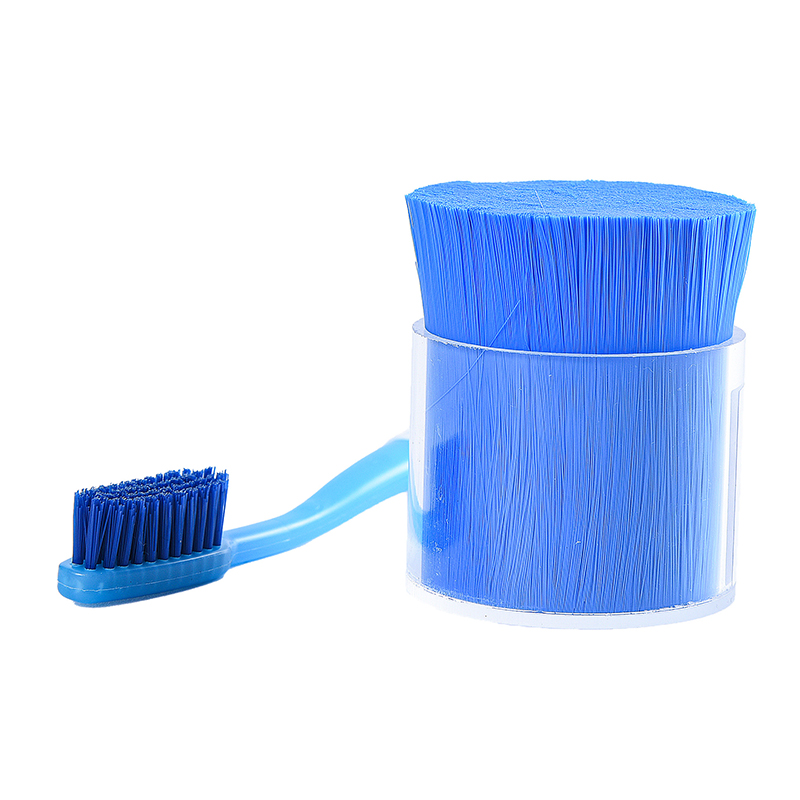 Nylon PA6 Brush Filament for Cleaning and Deburring BrushesUse PA6 filament for cup, strip, and industrial brushes where resilience, wear resistance, and customizable dimensions support consistent cleaning.View Product →
The Takeaway
Ball honing is a filament process. Specify the grain, the grit, the diameter, the tip form and the base polymer, test two options before committing to a production order, and keep a retained sample from every lot. Do that, and the process stops depending on operator feel and becomes a line item you can plan around.