
 English
 русский
 Türk
Content
- 1 Brush Wire Means Two Different Products
- 2 The Specification Sheet Decides Everything
- 3 Choosing Between PA6, PA66, PA610, PA612 and PBT
- 4 Abrasive Filament: When the Bristle Has to Cut
- 5 Where Brush Wire Orders Usually Go Wrong
- 6 What a Custom Filament Supplier Should Provide
- 7 A Short Checklist Before You Request a Quote
A brush maker approves a 0.30 mm filament sample in March, orders five tons in April, and by June the tufting line is jamming twice a shift. Nothing changed in the brush design. What changed was the incoming coil: the second batch measured closer to 0.35 mm, the machine could not seat it, and finished wheel brushes started shedding bristles in the field.
That failure is the reason brush wire should be treated as an engineered component rather than a commodity roll of plastic. Diameter, tolerance, tensile behaviour, curl, cut length, and moisture content all travel with the material into your production line, and any one of them drifting outside the agreed window turns into scrap, downtime, or a warranty claim.
This guide covers polymer brush wire, the nylon and PBT monofilament used to make cleaning, industrial, and abrasive brushes, and explains what to specify, what to compare, and where purchase risk usually hides.
Brush Wire Means Two Different Products
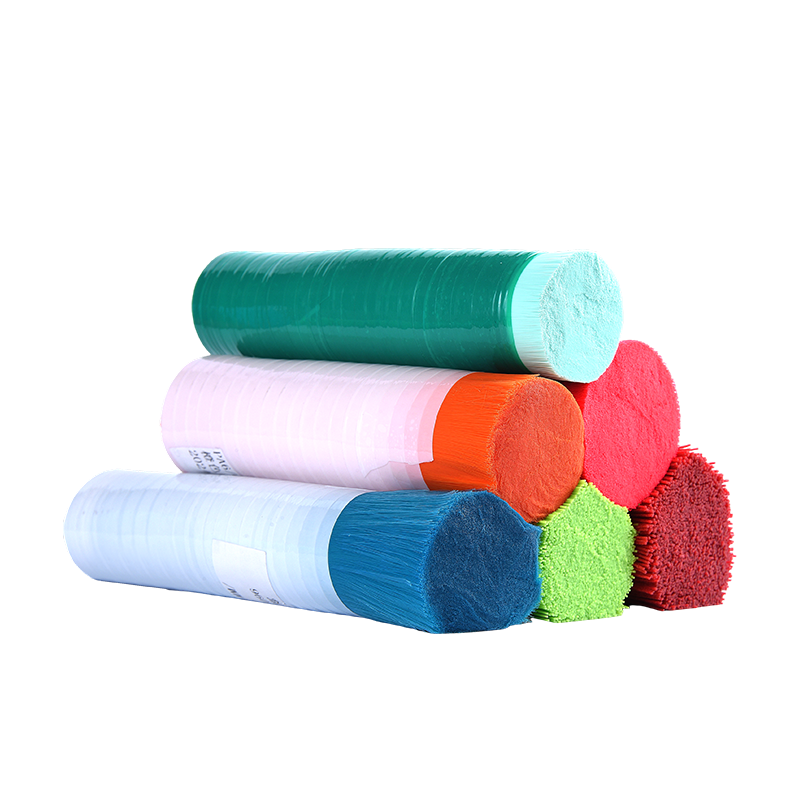
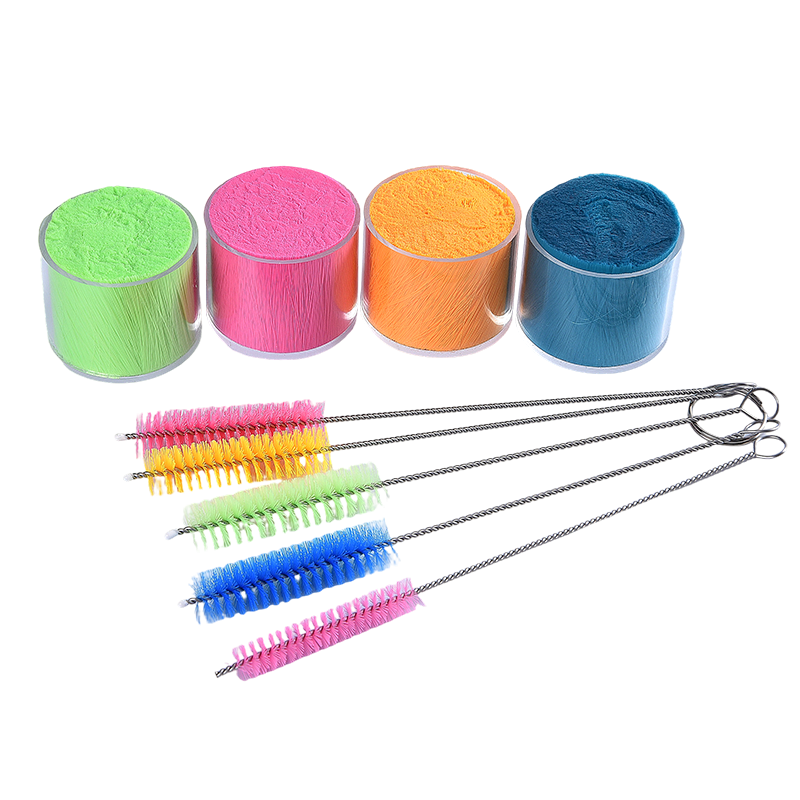
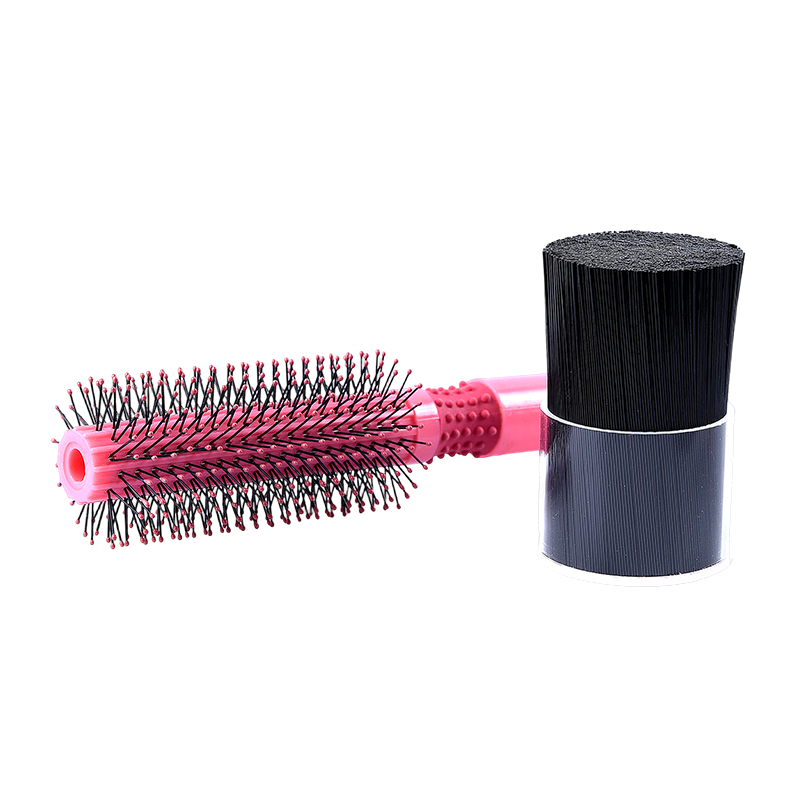
The term brush wire describes two unrelated materials, and confusing them wastes time on both sides of a quote. In hardware and DIY use, brush wire usually means metal bristles: carbon or stainless steel wire crimped into a hand brush, cup brush, or tube brush for rust removal, paint stripping, and weld cleaning. In brush manufacturing, brush wire means the polymer monofilament that forms the tufting, extruded from polyamide or PBT and supplied on spools, in cut lengths, or as pre-trimmed tufts.
This article deals with the second category. If your application is a steel cup brush on an angle grinder, the decisions are about wire gauge, crimp density, and arbor size. If you make brushes, or specify filament for cleaning, deburring, polishing, or food-contact handling, the decisions are about polymer grade, diameter control, and how the filament behaves on your own equipment.
The Specification Sheet Decides Everything
Two suppliers can quote the same material name and ship filament that behaves nothing alike. Before price is discussed, six points should be written down and attached to the purchase order.
- Diameter and tolerance. Common brush wire runs from about 0.20 mm to 2.00 mm, with tolerances of plus or minus 0.02 mm or 0.03 mm. A 0.30 mm filament held to plus or minus 0.03 mm varies by roughly 50 percent in cross sectional area across that range, and stiffness follows area, not diameter.
- Tensile strength and elongation. These set how much load a bristle carries before it bends permanently or snaps, which matters most in powered brushes and in tufting that pulls hard on the filament.
- Curl and set. Straightness affects automated tufting and how evenly a brush face wears. Filament with memory curl is difficult to feed at high speed.
- Cut length. Pre-cut filament is usually held to a tighter window than spooled material, and that tolerance should match your trimming equipment rather than your warehouse habits.
- Heat and chemical exposure. Cleaning chemicals, hot water, and friction heat at the brush face all narrow the list of suitable grades.
- Moisture content. Polyamide absorbs water from the air, so a coil that measured correctly at the factory can swell, soften, or tuft badly after weeks in a humid warehouse.
Choosing Between PA6, PA66, PA610, PA612 and PBT
Material grade is the second decision, and it is usually driven by where the brush works rather than by price alone. The table below is a general orientation, not a substitute for a line trial.
| Filament | General character | Moisture uptake | Typical direction |
|---|---|---|---|
| PA6 | Tough, abrasion resistant, easy to process, cost efficient | Higher | General cleaning and industrial brushes, high volume programs |
| PA66 | Stiffer than PA6, better heat resistance and a higher melting point | Moderate | Brushes running hot, at higher speed, or under heavier load |
| PA610 | Good dimensional stability and good chemical resistance | Lower | Long life technical and industrial brushes, wet environments |
| PA612 | High strength with low moisture sensitivity, keeps stiffness when wet | Low | Precision brushes, dental and personal care, fine technical work |
| PBT | Very low moisture uptake, good stiffness, resists hydrolysis in many conditions | Very low | Humid or wet duty cycles where dimensions must stay stable |
Two practical rules follow. First, if a brush is judged wet, test the candidate grade wet as well, because a PA6 filament that feels ideal dry can soften noticeably after a shift in water. Second, if the brush face runs hot, moving up the heat resistance ladder is usually cheaper than replacing failed brushes in the field.
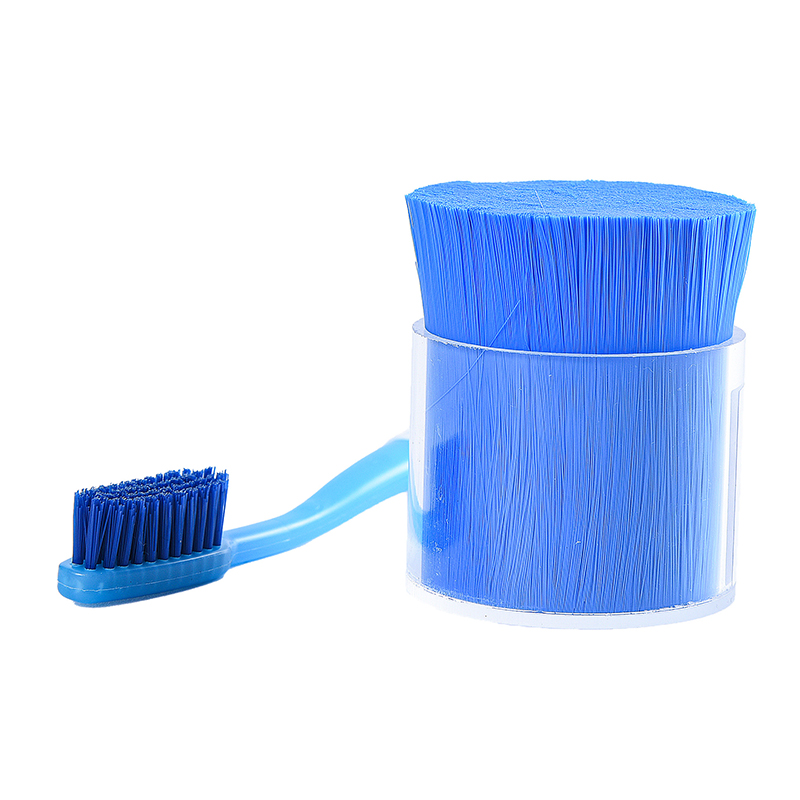 Nylon PA6 Brush Filament for Cleaning and Industrial BrushesA versatile PA6 filament for cleaning and industrial brushes, with customizable diameter, color, and shape; consider moisture sensitivity when matching wet or hot brush conditions.View Product →
 Nylon PA612 Brush Filament for Wet, Chemical, and Precision CleaningA PA612 filament with wet stiffness and chemical resistance for brooms, technical brushes, and precision cleaning, useful where PA6 may soften in wet service.View Product →
Abrasive Filament: When the Bristle Has to Cut
Some jobs need a bristle that removes material, not just sweeps it. Abrasive filament is nylon monofilament loaded with abrasive particles such as silicon carbide or aluminium oxide, so each bristle acts like a small flexible file. It is used for deburring, edge radiusing, surface preparation, and finish work where a rigid grinding wheel would cut too aggressively or reach too little.
Four variables control the result: particle type, particle size, loading percentage, and filament diameter. Higher loading cuts faster but leaves a more brittle bristle with a shorter working life, so the right figure depends on whether the customer values cycle time or brush life. Because the abrasive is distributed through the polymer rather than coated on the surface, the filament keeps cutting as the tips wear back.
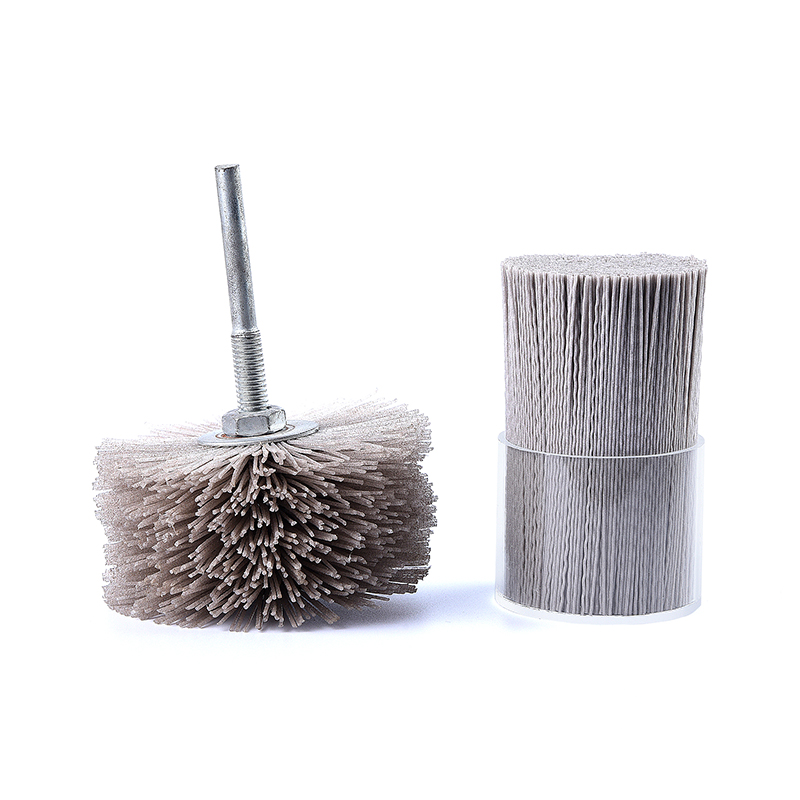
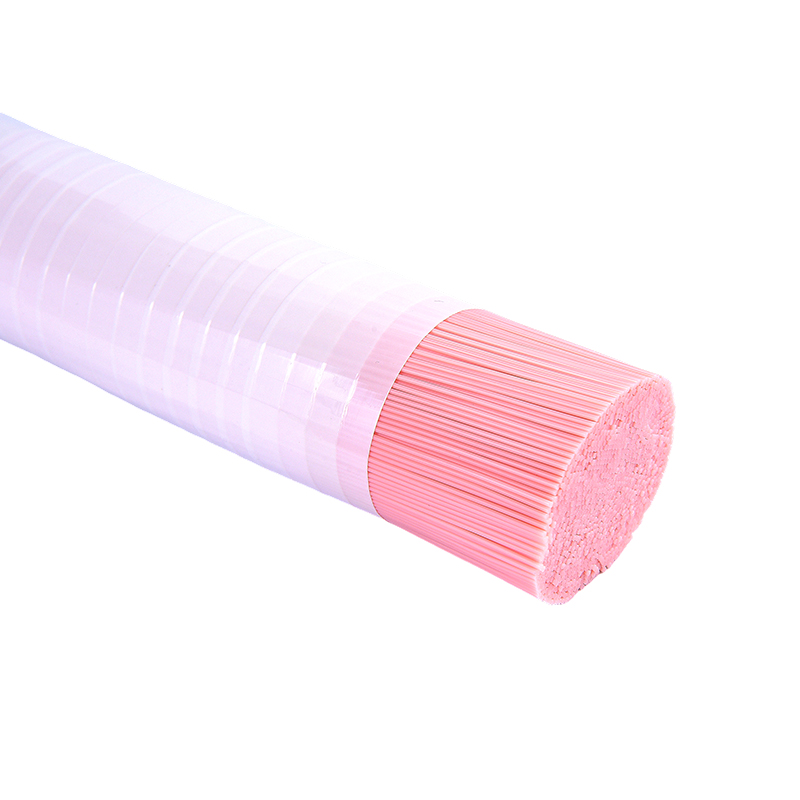 Abrasive Filament for Deburring, Finishing, and Surface PreparationComposite nylon filament with embedded abrasive particles for deburring, cleaning, and finishing; choose grade, grit, loading, and diameter to balance cutting speed with brush life.View Product →
Where Brush Wire Orders Usually Go Wrong
Most filament problems trace back to the purchasing process, not to the extrusion line. These five points cover the majority of disputes.
- Approving a sample without writing a specification. A sample proves the material can be made, not that it will be repeated. Put diameter tolerance, tensile range, moisture content, and cut length in writing.
- Shipping without moisture protection. Polyamide needs a moisture barrier and a desiccant for long sea freight, especially in humid seasons.
- Comparing price per kilogram only. Yield per metre, breakage on the tufting line, and scrap rate decide the real cost per finished brush.
- Skipping the line trial. Run a few hundred kilograms on your own equipment before committing to a container load.
- Leaving compliance documents to the last minute. Export markets often require test reports for restricted substances, and these take time to issue.
What a Custom Filament Supplier Should Provide
Brush wire is rarely bought off a shelf. Diameters, colours, cut lengths, and abrasive loadings are usually adjusted to a customer drawing or a physical sample, which means the supplier's development process matters as much as the catalogue.
A workable relationship includes four things: a stated capacity so delivery dates can be trusted, in house extrusion rather than trading, documented testing for restricted substances, and a technical contact who can discuss grade selection instead of only quoting a price. Ningbo Keying New Material Technology has produced brush filament since 2010, runs a factory of more than 7,000 square metres with four imported production lines, and ships over 1,000 tons a year across PA6, PA66, PA610, PA612, PBT, and abrasive filament. Its declared compliance references include EU ROHS and SGS testing, and its development work starts from customer drawings or samples.
If you are still narrowing the grade, the notes on PA610 filament characteristics are a useful starting point, and the full brush filament range shows how the standard grades are split by material rather than bundled into one generic nylon listing.
A Short Checklist Before You Request a Quote
Send these details and the first reply is likely to be usable rather than a request for more information.
- Nominal diameter and acceptable tolerance
- Spool, cut length, or tuft format, with length tolerance
- Required tensile strength and elongation, or the sample that already works
- Operating temperature, cleaning chemicals, and whether the brush runs wet or dry
- Brush type and end use, so grade and stiffness can be matched
- Estimated annual volume and delivery schedule
- Compliance documents required by your market
Brush wire is a small line item that decides whether a brush works. Fix the diameter tolerance, choose the grade against the real working conditions rather than the lowest price per kilogram, and confirm both with a trial run on your own equipment. That sequence removes most of the surprises that reach the customer.