
 English
 русский
 Türk
TürkContent
- 1 What Changes While Filament Sits on a Shelf
- 2 Storage Targets That Keep Brush Filament in Specification
- 3 Material by Material: PA6, PA66, PA610, PA612 and PBT
- 4 Packaging and Handling Rules That Do the Heavy Lifting
- 5 How to Tell a Batch Has Been Stored Too Long
- 6 A Storage Routine That Fits a Working Brush Plant
A tufting line rejects three coils of PA6 filament the week after a long rainy season. Diameter still measures within tolerance, so the operator blames the extruder. In most cases the cause is simpler: the filament sat in an open bag for six weeks, absorbed moisture from the air, and came back softer and less predictable than the batch that passed incoming inspection.
Filament storage is the last step of quality control before filament becomes a brush. Handled well, it protects tensile strength, diameter tolerance, tuft retention and surface finish. Handled casually, it produces rejected batches, uneven trim and rework nobody budgeted for. This guide covers what changes during storage, the conditions that slow those changes, and the checks that catch a problem before it reaches the machine.
What Changes While Filament Sits on a Shelf
Nylon and PBT do not age in exactly the same way, but they share one weakness: they respond to the air around them. Four mechanisms account for most storage damage.
- Moisture absorption. PA6 and PA66 are hygroscopic. In a warm, humid warehouse a coil can move from 0.2 percent to more than 2 percent moisture by weight. Absorbed water acts as a plasticizer, so the filament becomes softer, less dimensionally stable and harder to tuft consistently.
- Hydrolysis under heat. Water plus sustained heat breaks polymer chains. A pallet stored beside a compressor or under a metal roof for a summer will not fail visibly, but strength at break can drop enough to change tuft pull-out results.
- Light exposure. Direct sun through a skylight or dock door yellows filament and reduces surface quality. Pigmented and natural grades both lose strength, and the visible change often appears late.
- Temperature cycling. Moving a cold pallet into a warm, humid room leaves a film of water on every coil. Repeated cycles are worse than a constant, slightly warm environment.
Mechanical damage belongs on the same list. Coils crushed under heavy cartons take a permanent set, which later shows up as camber, waviness and uneven feed tension. Dust, floor grit and machine oil are equally common in workshops where the storage area doubles as a shared aisle.
Storage Targets That Keep Brush Filament in Specification
You do not need a climate controlled room to store filament well. You need a defined zone with measured conditions, clear rules and one person responsible for checking them. These ranges work for most nylon and PBT brush filament in a temperate warehouse.
| Parameter | Target range | Why it matters |
|---|---|---|
| Ambient temperature | 15 to 25 degrees C | Heat accelerates hydrolysis and softens the coil |
| Relative humidity | 45 to 55 percent | Above 60 percent uptake speeds up, below 30 percent filament turns brittle and builds static |
| Light | Dark store, no direct sun | Ultraviolet light yellows filament and lowers strength |
| Floor contact | Pallets, 10 cm minimum clearance | Concrete wicks moisture and transfers cold |
| Bag condition | Sealed with desiccant until use | An open bag is an open door for humidity |
| Rotation | Oldest lot first, review at 6 months | Properties drift slowly even in good conditions |
Two details are easy to miss. Humidity is a moving target: a store reading 50 percent on a dry morning may sit above 70 percent after three days of rain, so a low cost data logger left inside the zone tells you more than a single handheld reading. Partial coils are the other risk. A sealed carton is safe for months, while a coil opened for a sample run and left on a shelf is not.
Material by Material: PA6, PA66, PA610, PA612 and PBT
Different polymer grades tolerate storage differently, and the cost of a spoiled batch rises with the grade. Matching storage discipline to the material is more useful than applying one rule to everything.
PA6 and PA66
These are the most hygroscopic grades in common brush production and the most sensitive to a humid store. PA6 absorbs moisture quickly, while PA66 combines a high melting point and good heat resistance with a similar appetite for water. Keep both sealed, use them first in first out, and inspect any bag that has been open longer than a few days.
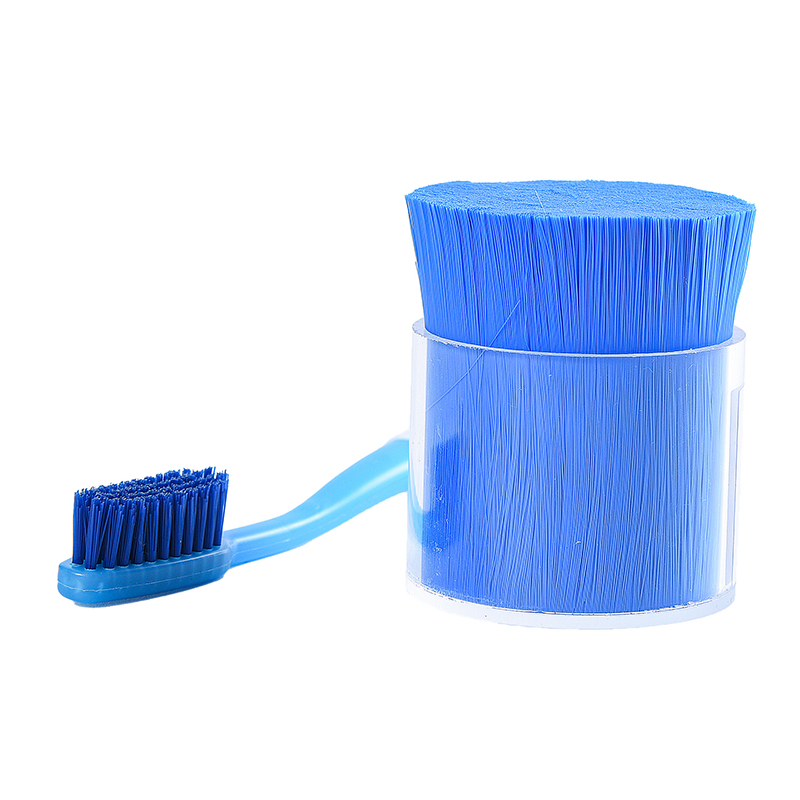 Nylon PA6 Brush FilamentNylon PA6, also known as polyamide 6 or nylon 6, is a thermoplastic polymer compound with a translucent or opaque milky white appearance. It has a moderate melting poi...View Product →
PA610 and PA612
Long chain polyamides absorb noticeably less moisture than PA6 or PA66. That lower uptake translates into better dimensional stability, which matters for precision brushes and for parts that will work in humid or wet conditions. These grades usually cost more, so a storage mistake is more expensive. The lower water sensitivity of PA610 brush filament does not remove the need for sealed packaging, it simply buys you more time.
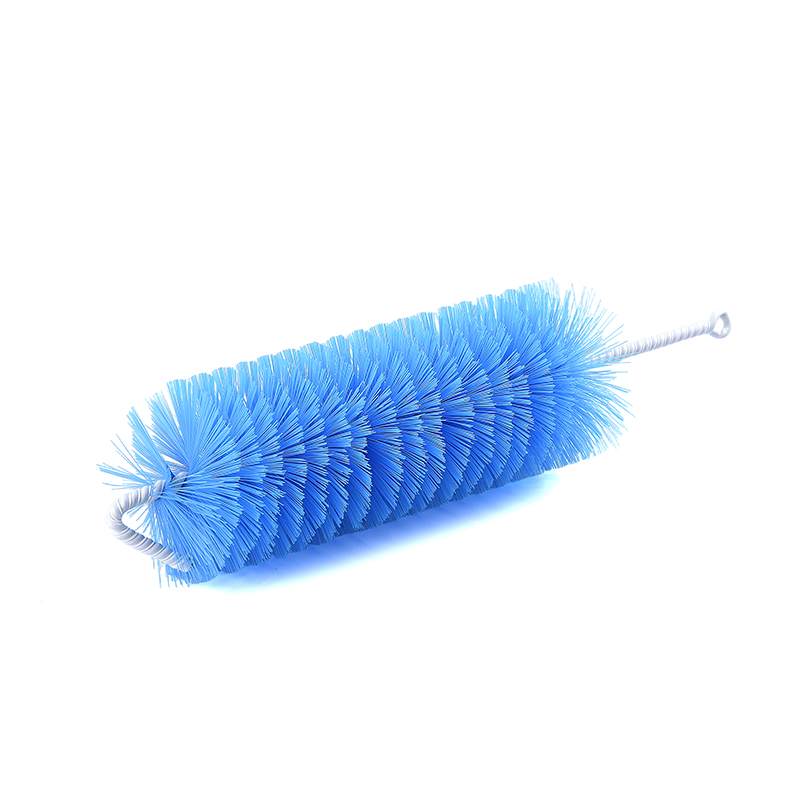 Nylon PA610 Brush FilamentNylon PA610 is a high-performance nylon material that is widely used in many fields due to its unique physical and chemical properties. Nylon PA610 has a series of per...View Product →
PBT and Abrasive Filament
PBT is a polyester rather than a polyamide. Its moisture uptake is low and its stiffness is stable, which makes it the easiest of the group to store. The trade off is sensitivity to heat and to prolonged light exposure, so a cool, dark shelf is the right home for it. Abrasive filament deserves its own corner: the embedded grit is heavy, coils settle under their own weight, and loose particles from one coil can contaminate a standard batch stored beside it.
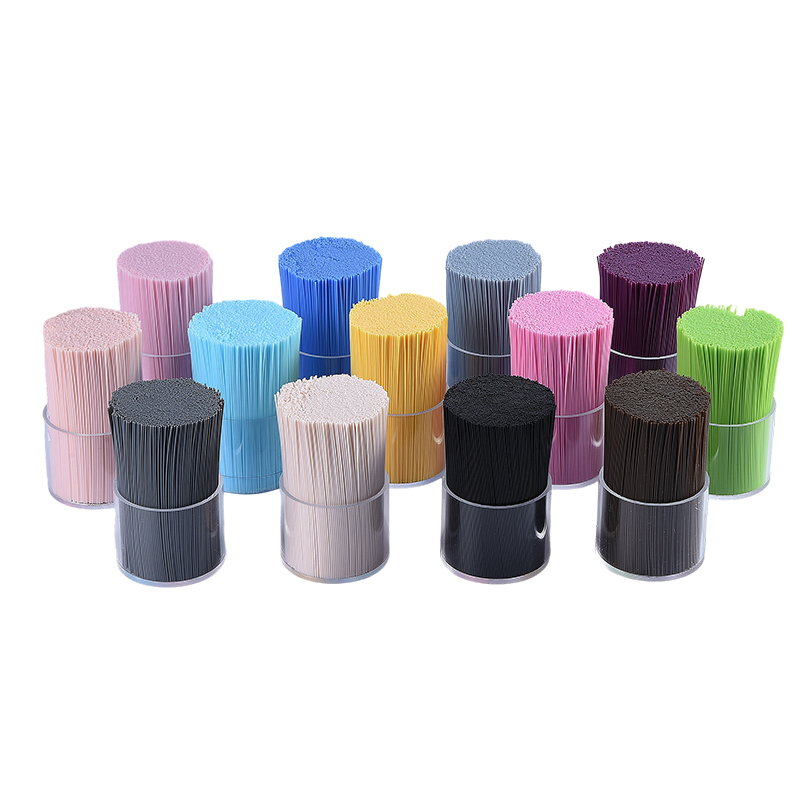 Nylon PBT Brush FilamentNylon PBT, full name polybutylene terephthalate, is a thermoplastic engineering plastic that combines the advantages of nylon (PA) and PBT (polybutylene terephthalate)...View Product →
For a closer look at how the different polymer families behave in finished brushes, this overview of nylon and PBT brush filament is a useful companion to the storage rules above.
Packaging and Handling Rules That Do the Heavy Lifting
Most storage problems are prevented by packaging and layout, not by air conditioning. These rules cover the points where brush plants most often lose material.
- Keep filament in the sealed polyethylene bag, inside the carton, with desiccant, until the coil goes to the machine.
- Reseal partial coils with fresh desiccant and label the opening date. Never leave a half used coil exposed overnight in a humid room.
- Store on pallets or racks with at least 10 cm of clearance from the floor and 30 cm from exterior walls.
- Respect the stack limit on the carton. Overstacking deforms the coil, and that deformation does not recover.
- Keep storage away from compressors, ovens, dock doors and skylights. Drafts carry humidity, and radiant heat carries more.
- Segregate abrasive filament on lower racks so grit cannot fall onto standard coils.
- Control pests, and never store filament beneath oil drums, solvents or lubricants.
How to Tell a Batch Has Been Stored Too Long
Before a suspect batch reaches the tufting machine, run a short incoming check. It takes about ten minutes and it catches most problems.
- Look at the coil surface for yellowing, dull patches, water stains or condensation inside the bag.
- Measure diameter at several points along the coil to confirm it still sits inside your tolerance band.
- Bend a short length by hand. Filament that snaps instead of flexing has dried out or aged.
- Weigh a sample before and after oven drying to estimate moisture content, or use a calibrated meter.
- Run a small tufting or trimming trial and check pull out force and trim consistency.
- If any check fails, quarantine the lot and record the result so the supplier lot can be traced later.
Documenting these results matters more than the individual numbers. A written log of opening dates, humidity readings and rejection reasons turns storage from guesswork into a process you can defend during a customer audit.
A Storage Routine That Fits a Working Brush Plant
Three habits do most of the work. Label every carton with the receiving date and open bags only at the machine. Keep one dry, dark zone with a data logger and review it weekly. Inspect anything older than six months before it enters production rather than after a customer complaint.
Buying also plays a part. Filament that arrives properly sealed, with desiccant, lot numbers and a documented material grade is far easier to store well. Keying has produced nylon and PBT brush filament at its Ningbo plant since 2010, with more than 7,000 square meters of factory space, four imported production lines and annual output above 1,000 tons, supplying material that meets ROHS and SGS requirements. Custom coils can be packed for the storage conditions your workshop actually has.
Filament storage is not glamorous, but it is one of the few quality controls you fully own. Keep the material sealed, cool and dry, rotate it by date, and check a batch before it goes to the line. Those four habits protect the strength, diameter and tuft performance you already paid for at the extrusion stage, and they cost far less than a rejected batch.