
 English
 русский
 Türk
Content
A cylinder bore can measure within size and still fail ring seal because the surface has the wrong crosshatch, too many rough peaks, or embedded abrasive. Honing cylinder bore work is a controlled abrasive process, not a cleaning step. The first decision is whether the bore needs geometry correction or only surface preparation, and the tool choice follows from that answer.
What Honing Cylinder Bore Actually Changes
Honing removes metal with bonded abrasive or abrasive filament, but it does two different jobs. The first is dimensional correction: roundness, straightness, taper, and final size. The second is surface control: crosshatch angle, peak height, valley depth, and plateau finish. A rigid hone with tension controlled stones can cut enough material to correct a bore, provided the operator measures the bore and leaves enough stock for finishing. A flexible abrasive brush conforms to the existing bore and works mainly on the surface.
That difference matters at the bench. If a bore has 0.002 inch of taper or visible out of round, a flexible brush will follow that shape rather than fix it. If the bore is straight, round, and only glazed, a flexible abrasive brush may be enough to restore ring seating. Check the bore with a dial bore gauge at the top, middle, and bottom in two axes before choosing a tool.
| Method | Primary job | Geometry correction | Typical risk |
|---|---|---|---|
| Rigid hone with stones | Size, roundness, taper, and crosshatch | Yes, with measured stock removal | Overcutting if size is not checked often |
| Flexible abrasive brush | Deglazing, plateau work, and cleaning | No, or very limited | Expecting a geometry fix from a surface tool |
Crosshatch Angle and Surface Finish
The crosshatch is the visible result of stroke speed and rotation. It affects ring rotation and oil migration up and down the cylinder wall. Many specifications call for an included crosshatch angle in the 45 to 60 degree range, but the ring or engine manufacturer's print controls. A finish that is too rough wears rings and can increase oil consumption. A finish that is too smooth can delay ring seating because the valleys do not hold enough oil.
Plateau finishing removes the sharp peaks while keeping oil holding valleys. That is why a two stage process is common: cut with a coarser abrasive, then finish with a finer abrasive or a flexible abrasive brush. If a profilometer is available, use it. If not, use the manufacturer's visual comparator and keep the stroke, speed, and abrasive grade consistent from bore to bore. Consistency is what makes the finish repeatable.
Rigid Hones versus Flexible Abrasive Brushes
A rigid hone uses stones held against the cylinder wall with adjustable pressure. It can remove thousandths of an inch, correct taper, and set a crosshatch pattern. The operator must measure often, keep the stones clean, and use enough honing oil to flush away cuttings. A flexible abrasive brush uses nylon filaments loaded with abrasive grit. The filaments conform to the bore, apply lower pressure, and work well for deglazing, plateau finishing, and cleaning after a rigid hone.
The brush is not a substitute for a rigid hone when the bore is out of round or tapered. It is also not a substitute for measurement. In a production brush, filament diameter, grit size, abrasive type, and trim length all affect cut rate and finish. A brush that is too large can load the motor and generate heat. A brush that is too small can miss areas of the wall. For engine work, match the brush diameter to the bore and confirm the abrasive grade against the target finish.
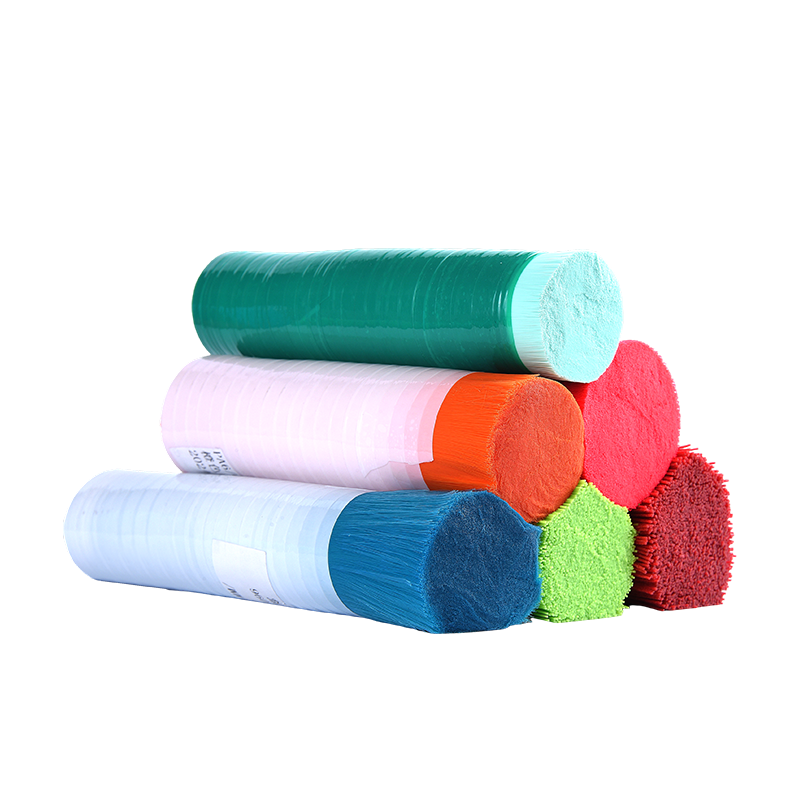
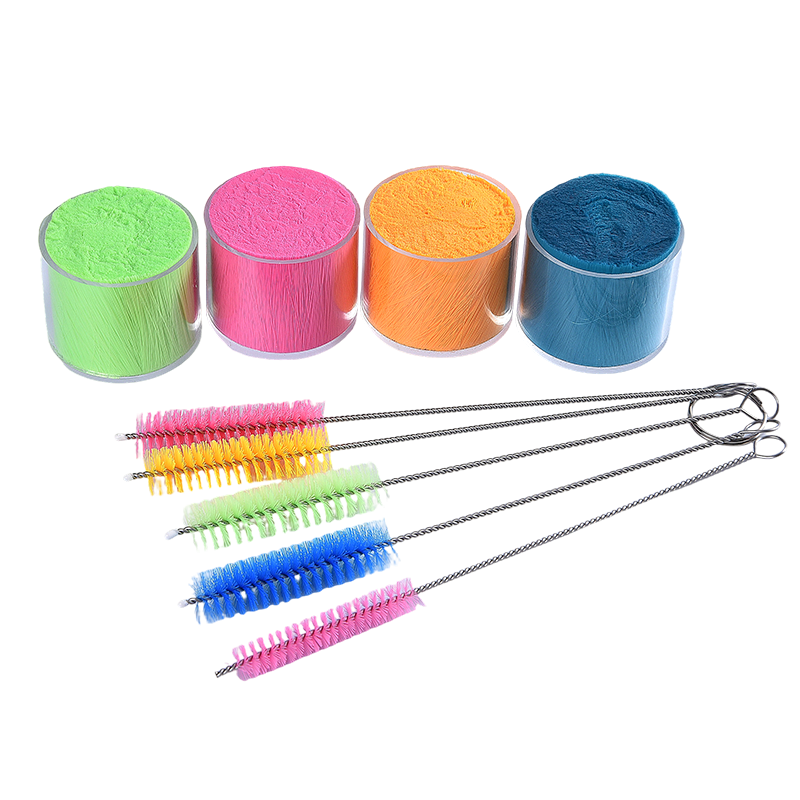
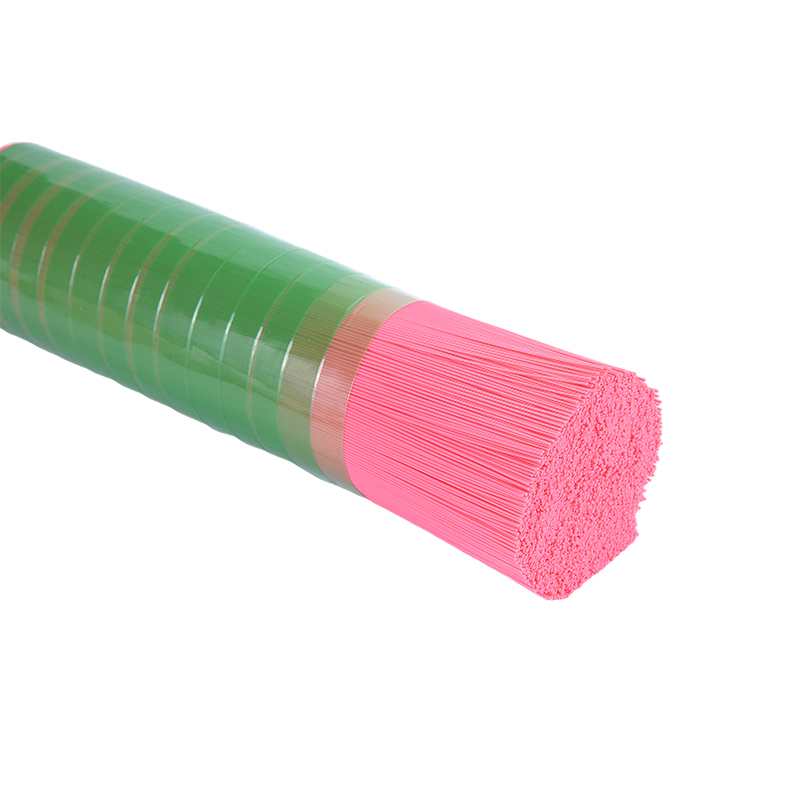 Abrasive Filament for Production BrushesCompare nylon grades, abrasive types, grit sizes, and filament diameters to match bore and target finish in production brush applications.View Product →
For a deeper checklist on filament construction and selection, see this guide to abrasive filament questions.
A Practical Honing Sequence
- Clean and inspect the bore. Remove carbon, ridge, and loose material. Check for cracks, pits, and deep scoring before spending time on honing.
- Measure the bore at top, middle, and bottom in two axes. Record taper and out of round. Decide whether the job needs a rigid hone for geometry or a flexible brush for surface work.
- Select the abrasive. Use a coarser grade for stock removal and a finer grade for finish. Match the abrasive to the bore material, especially with aluminum, which can load abrasives quickly.
- Set stroke and speed. Use clean honing oil and keep the tool moving. Do not dwell in one spot, because that creates a low area and a size problem.
- Check size and crosshatch often. Stop before the bore goes oversize. A few extra seconds can turn a good bore into a scrap block.
- Clean until no abrasive residue remains. Use hot soapy water, a soft brush, and lint free cloths. Dry and oil the bore immediately. Embedded abrasive is a ring and bearing risk.
Common Mistakes and Purchase Risks
- Buying a flexible abrasive brush to fix taper or out of round. It will follow the existing shape, not correct it.
- Using one grit for every step. Rough grit cuts faster but leaves a finish that may not seat rings well. Fine grit controls finish but may not remove enough stock.
- Skipping plateau work. Sharp peaks can wear rings and raise oil consumption even when the bore size is correct.
- Cleaning with solvent only. Solvent can leave abrasive in the pores. Hot soapy water and mechanical scrubbing are more effective.
- Specifying a filament brush by outside diameter only. For consistent results, specify filament material, abrasive type, grit, filament diameter, trim length, and brush density.
- Assuming that a bore within size is ready to run. Surface finish is part of the tolerance, not a cosmetic detail.
What to Specify to a Filament Supplier
For abrasive filament used in flexible hones or industrial brushes, give the supplier the bore size range, target surface finish, workpiece material, grit size, filament diameter, trim length, brush density, and machine speed. Ask for a sample run and a finish report. For cast iron, confirm the oil and cleaning method so graphite does not smear. For aluminum, avoid aggressive pressure and confirm that the abrasive does not load. These details are not paperwork. They are the difference between a brush that cuts consistently and one that leaves a different finish on every part.
Bottom Line
Honing cylinder bore work is a system: measurement, tool choice, abrasive grade, stroke, and cleaning. A rigid hone corrects geometry. A flexible abrasive brush refines the surface. Use the right tool for the condition in front of you, verify crosshatch and size, and clean until no grit remains. When buying abrasive filament for a flexible hone or production brush, match the filament to the bore and the finish target, then prove it on a sample before the run goes to the floor.