
 English
 русский
 Türk
TürkContent
- 1 Why Standard Plastic Blocks Electric Current
- 2 How Engineers Measure and Classify Conductivity
- 3 Three Ways to Make Plastic Conduct Electricity
- 4 Conductive Brush Filaments in Everyday Equipment
- 5 Choosing the Base Resin for a Conductive Filament
- 6 How the Resins Compare Across the Whole Scorecard
- 7 A Buying Checklist for Conductive Filament Projects
Run a multimeter across a nylon gear, a PVC pipe fitting, or the plastic housing of a cleaning machine and the reading never moves. So the short answer is no: standard plastic does not conduct electricity, and that insulation is exactly why it is chosen for cable jackets, tool handles, and appliance bodies.
The complete answer has a second half that matters in real production. A plastic tote can hold enough static charge to damage a circuit board, and a brush sweeping toner off a printer drum can charge the very surface it is supposed to clean. In those situations plain insulation becomes a liability, which is why conductive and static dissipative plastics exist, including conductive brush filaments. This article explains why plastic insulates, how it can be made to conduct, and what that means when you buy filament for brushes.
Why Standard Plastic Blocks Electric Current
Electric current needs mobile charge carriers, and metals are full of them: outer electrons in copper drift freely through the lattice, so current flows with little opposition. In nylon, PBT, and most other plastics, electrons sit locked in strong covalent bonds along the molecular chain. There are no free electrons to move, and the energy an electron would need to escape is far beyond what any ordinary circuit provides.
The gap shows in the numbers. Copper measures roughly 0.0000017 ohm-centimeters in volume resistivity, while common plastics measure around one quadrillion ohm-centimeters, about twenty orders of magnitude higher. That difference is why a plastic enclosure stays safe to touch near live parts and why plastic sheeting works as an insulating barrier in electrical panels.
Moisture adds one nuance. Nylon absorbs water from the air, and absorbed water carries trace ions that leak small currents, so a humid PA6 part can read hundreds of times lower in resistance than a dried one. It is still an insulator by any static control definition, but anyone recording resistance values should expect readings to move with the weather.
The chart places four material classes on one logarithmic scale, where every step multiplies resistance by ten. Copper sits at the very bottom, below one ohm, because its free electrons move with almost no opposition. Carbon filled conductive plastics land near 10,000 ohms, high compared with metal yet low enough to drain charge quickly. Static dissipative plastics occupy the wide middle band where charge flows gently instead of snapping. Standard insulating plastics sit more than a quadrillion ohms from metal, which is why the choice of where a part belongs on this scale has to be made deliberately.
How Engineers Measure and Classify Conductivity
Because the values span twenty orders of magnitude, the industry works with broad classes instead of exact figures. Surface resistance, measured in ohms, describes how easily charge moves across a surface and is the number most static control programs specify, while volume resistance describes the path through the body of the material. Standardized methods from the IEC 61340 and ANSI/ESD families keep results comparable between laboratories and suppliers.
| Class | Typical surface resistance | What it means in practice |
|---|---|---|
| Conductive | Below 100,000 ohms | Charge drains almost instantly, suitable for grounding paths and fast discharge. |
| Static dissipative | 100,000 to 100,000,000,000 ohms | Charge flows slowly and safely, the usual target for antistatic brushes and packaging. |
| Insulative | Above 100,000,000,000 ohms | Charge stays put, which protects users but lets static build until it discharges on its own terms. |
Two habits protect buyers. First, ask which test method and electrode configuration produced any resistance figure, because a class label without a method behind it is marketing rather than data. Second, remember that filled plastics shift with humidity, wear, and temperature, so confirm the value holds in the environment where the part will actually serve.
Three Ways to Make Plastic Conduct Electricity
Conductive fillers and the percolation threshold
The most common route is compounding the resin with a conductive filler such as carbon black, graphite, carbon fiber, or metal fibers. At low loadings the particles stay isolated and the compound still insulates. Near a critical percentage called the percolation threshold, the particles link into connected pathways and resistance collapses by many orders of magnitude within a narrow window. Carbon filled grades are the economical workhorse, though they color parts black and add some stiffness.
Intrinsically conductive polymers
A second route changes the polymer itself. Certain conjugated backbones, first demonstrated with doped polyacetylene in the 1970s and honored with the 2000 Nobel Prize in Chemistry, conduct electricity without any filler. These intrinsic conductive polymers appear in antistatic coatings and transparent films, although cost keeps them out of most commodity parts.
Surface treatments
The third route treats the surface: topical antistatic agents, conductive coatings, or thin metallization. These options can be inexpensive and effective, but many depend on ambient humidity or wear away with abrasion, which pushes durable designs back toward filled compounds.
This curve explains why filler loading is controlled so tightly. Up to about four percent carbon black, resistance barely moves and the compound still behaves as an insulator. Between roughly six and eight percent, the line collapses by several orders of magnitude, marking the percolation threshold where connected pathways finally span the part. Just past that zone, small formulation changes cause large resistance swings, so process control must be strict. Beyond ten percent the curve flattens, and extra filler mainly adds cost and stiffness rather than conductivity.
Conductive Brush Filaments in Everyday Equipment
Brushes are one of the quiet success stories here. A conductive brush filament is a monofilament, usually nylon or PBT, compounded with a controlled dose of carbon based filler and drawn to diameter. The finished filament lands in the static dissipative or conductive range, so the brush sweeps charged dust and toner away instead of generating fresh static. Users include electronics assemblers preparing boards for coating, printer brushes around photoconductor drums, cleanroom tools, and lines that move charged films and powders.
Most conductive filament starts from a PA6 or PA612 base. PA6 draws well, survives millions of bending cycles, accepts filler evenly, and keeps cost low, which is why it remains the default choice for general purpose antistatic brushes.
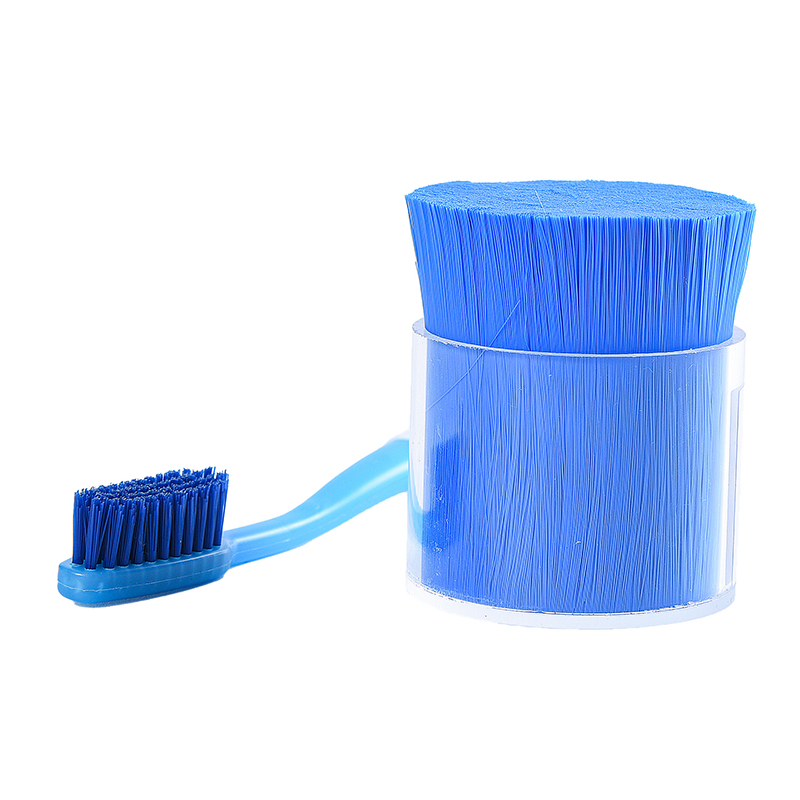 Nylon PA6 Brush Filament for General Purpose Antistatic BrushesPA6 draws well, survives millions of bending cycles, and accepts conductive filler evenly at low cost, making it the default base material for general purpose antistatic and cleaning brushes.View Product →
For concrete examples of where these filaments earn their keep, this overview of application examples of conductive plastic brush filaments walks through real use cases across several industries.
Choosing the Base Resin for a Conductive Filament
Base resin selection decides whether those resistance numbers stay put over the life of the brush, and moisture is the biggest variable. The common resins differ enormously, as the chart below makes clear.
The columns make the selection risk easy to see. PA6 and PA66 absorb eight to nine percent of their weight in water at equilibrium, which is why their electrical readings wander so much with the seasons. PA610 cuts that figure to about three percent, PA612 to roughly two, and PBT sits below one percent and barely notices humidity. For a conductive filament, lower absorption means steadier resistance, fewer customer complaints, and less retesting across a year of production. That single property explains why precision antistatic brushes so often specify PA612 or PBT rather than PA6.
PA612 picks up only a fraction of the water that PA6 absorbs, so its resistance readings stay far more consistent between a dry warehouse in winter and a humid production line in summer.
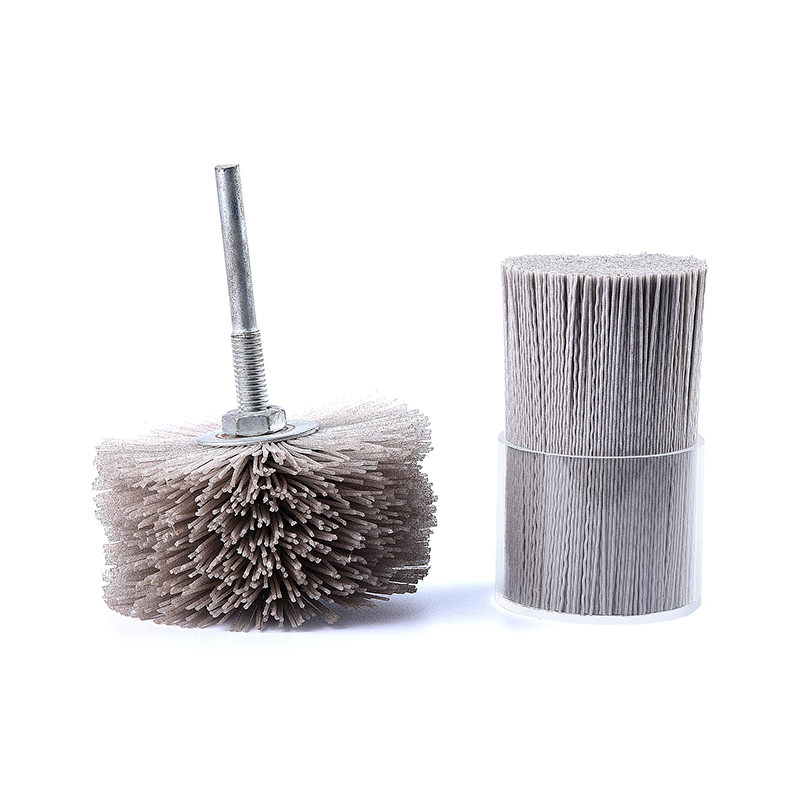 Nylon PA612 Brush Filament with Low Water AbsorptionPA612 absorbs only a fraction of the water PA6 takes on, so its resistance readings stay consistent between dry winter warehouses and humid production lines, while chemical stability extends service life.View Product →
PBT goes further still, combining very low water uptake with strong heat resistance for brushes that run hot or sit near motors.
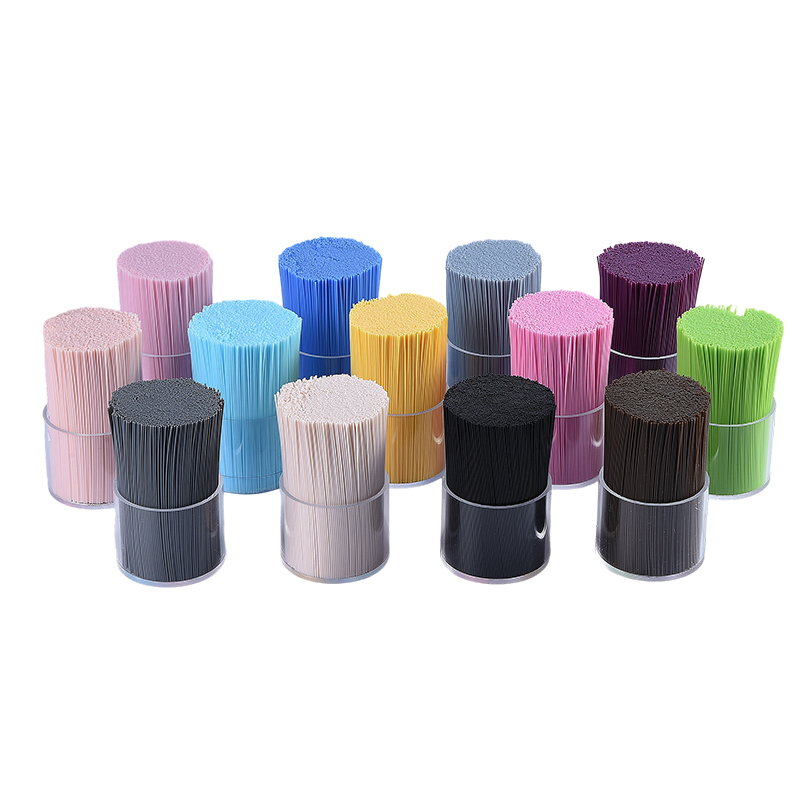 Nylon PBT Brush Filament for Heat Resistant BrushesPBT combines very low water uptake with strong heat resistance, holding its stiffness near motors and hot running conditions while offering the high strength and rigidity buyers compare across all three filaments.View Product →
How the Resins Compare Across the Whole Scorecard
Moisture is not the whole story. PA6 keeps the best bend recovery for tight spiral brushes, PBT holds its stiffness at elevated temperatures, and PA612 balances the two, which is why it fits precision cleaning brushes so well. The radar chart below scores all three from one to five on the properties buyers weigh most often.
The radar chart scores the three candidate resins on the properties that matter in static control filament. PA6 leads on flexibility and cost, which explains its dominance in general purpose antistatic brushes for mild environments. Its weak axis is moisture stability, since absorbed water makes resistance readings drift between dry and humid conditions. PA612 keeps nearly all of that flexibility and wear performance while moving much closer to PBT on moisture stability. PBT tops the chart on moisture stability and heat resistance and gives up some flexibility, which suits hot or dimensionally demanding service. The right choice is the resin that is strongest on the axis your application punishes hardest.
A Buying Checklist for Conductive Filament Projects
Before committing to a conductive filament, put these questions to any supplier, including our own engineering team:
- What surface resistance will the filament hold, and which test method and electrode produced the figure?
- How far does the reading drift between dry and humid conditions, and after the brush has worn in?
- Which base resin and filler loading were selected, and why do they fit the application?
- What is the trade-off between conductivity, flexibility, and abrasion life at the required diameter?
- If the color must be lighter than black, which filler system replaces carbon, and what conductivity does it reach?
- Can the supplier develop against a drawing or a sample, and what compliance documentation, such as RoHS or SGS testing, ships with the order?
Suppliers who answer with data rather than adjectives are the ones whose brushes still pass audits a year later.
So, is plastic conductive to electricity? Standard plastic is not, and its insulation remains a feature most products rely on every day. Conductive fillers, intrinsically conductive polymers, and surface treatments move selected plastics onto the conductive or static dissipative part of the scale when the job demands it. For brush makers, that decision becomes physical in the filament itself: the right conductive filament removes charged dust quietly and safely, while the wrong one turns a cleaning brush into a static generator. Match the resin and loading to the environment the brush will actually face, and confirm every number with test data before committing a production run.