
 English
 русский
 Türk
TürkContent
You can print a working touch sensor, a static-safe container for a circuit board, and a simple slider potentiometer with conductive PLA filament. What you cannot do is use it like a piece of wire. Conductive PLA is a functional material, not a metal substitute, and understanding that boundary before you buy a spool saves you from failed prints, false readings, and wasted hours. It handles the milliamps that sensors and indicator LEDs need, but it struggles with power traces and is rarely the right long-term answer for industrial static-control equipment. For brushing contacts, grounding rollers, and wear-prone ESD components, a manufactured conductive brush filament is usually the more reliable choice. This article explains how conductive PLA works, what it can realistically do, and where you should switch to an engineered filament.
What Makes a PLA Filament Conductive?
Pure PLA is an electrical insulator, with volume resistivity around 1012 ohm-cm. Conductive grades change that by compounding conductive filler into the polymer before the filament is drawn. Carbon black is the most common filler because it is inexpensive and disperses evenly. Graphite, carbon nanotubes, and graphene appear in premium grades, with nanotubes delivering high conductivity at much lower loading levels. The effect depends on percolation: once the filler concentration crosses a threshold, the particles form continuous chains through the part. Below that threshold the material barely conducts; above it, resistance drops sharply until the network saturates.
Most conductive PLA filaments carry roughly 10 to 25 percent conductive filler by weight. That addition makes the material stiffer and more brittle, so printed parts snap more easily than plain PLA parts. It also affects your nozzle: the abrasive filler wears brass nozzles faster, so a hardened steel or ruby nozzle is a sensible upgrade for regular use.
| Filler | Typical loading | What it changes |
|---|---|---|
| Carbon black | 10 to 25 percent by weight | Low cost, reliable network, noticeably more brittle part |
| Graphite powder | 15 to 30 percent by weight | Lower conductivity gain, smoother surface, easier flow |
| Carbon nanotubes | 1 to 5 percent by weight | High conductivity at low loading, expensive spool price |
| Graphene nanoplatelets | 3 to 10 percent by weight | Good network quality, higher risk of nozzle clogging |
How Conductive Is Conductive PLA, Really?
The honest answer is that conductive PLA is a static-dissipative, low-current material in the engineering sense. A good grade measures around 15 ohm-cm in volume resistivity, while budget grades can measure 100 ohm-cm or more. Copper, by comparison, sits around 1.7E-6 ohm-cm. The difference matters because it decides whether your part can carry a signal or just leak a charge.
The chart uses a logarithmic scale, so every step along the axis represents a tenfold change in resistivity. Copper sits at about 1.7E-6 ohm-cm, which is why its bar is barely visible at this scale. Conductive PLA typically measures between 10 and 20 ohm-cm, and the value shown here, 15 ohm-cm, is a good working estimate for a quality grade. That means a printed trace is roughly eight orders of magnitude more resistive than a copper trace of identical dimensions. Carbon-loaded nylon brush filament, at about 150 ohm-cm, stays inside the same dissipative range, which is why it is useful for grounding and static elimination but never for carrying current. Plain PLA, at 1.0E12 ohm-cm, is an insulator, and it will not conduct at the voltages a desktop printer part normally sees.
For a 50 mm long trace with a 1 mm by 0.4 mm cross-section, expect roughly 200 to 2500 ohms depending on the grade and print quality. That number is fine for a pull-up resistor, a touch pad, or a ground path, and completely inadequate for carrying 100 mA to a motor. Always measure the actual resistance of a test trace before designing the rest of the circuit around it.
Infill, Orientation, and Print Settings
The most common mistake is printing conductive PLA with the same infill used for decorative parts. Conductivity requires a continuous filler network, and a 20 percent infill is mostly air.
Both curves fall rapidly as infill increases, but the Z-direction trace remains roughly five times more resistant at every point. The reason is that the nozzle deposits each layer as a separate event, and the filler network has to bridge tiny gaps between layers. At 20 percent infill, most of the interior is empty, and the material rarely forms a continuous conductive path. At 100 percent infill, the network is as dense as the extruder can produce, and the resistance reaches its practical minimum. The gap between the two curves matters when a circuit trace has to travel through a vertical wall in the part. In that situation, orienting the trace flat in the XY plane, or embedding a short copper jumper, is a more reliable design choice.
| Parameter | Recommended value | Why it matters |
|---|---|---|
| Nozzle temperature | 200 to 230 degrees Celsius | Too much heat degrades the polymer and weakens the conductive network |
| Bed temperature | 40 to 60 degrees Celsius | Improves adhesion and prevents warping of large flat parts |
| Nozzle diameter | 0.4 mm or larger | Conductive filler clogs small nozzles quickly |
| Print speed | 20 to 40 mm per second | Slow extrusion gives the layers time to fuse into a continuous path |
| Infill density | 100 percent for functional traces | Lower infill leaves air gaps that break the percolation network |
| Flow rate | 100 to 110 percent | Extra material compensates for filler packing voids |
| Retraction | Disabled or set below 1 mm | Prevents clogging and reduces stringing on travel moves |
| Filament drying | 4 to 6 hours at 45 to 50 degrees Celsius | Moisture causes steam bubbles that interrupt the conductive path |
Practical Applications and Their Limits
Conductive PLA is a fit for a specific set of jobs: low-voltage, low-current circuits where a printed trace replaces a soldered wire, plus parts that need to dissipate static charge.
Touch-sensitive buttons dominate the list because a conductive pad connected to a simple voltage divider is the easiest dependable project a maker can build. ESD-dissipative housings come next, usually small clips, trays, or lids that keep charged PCB assemblies from attracting dust or taking a discharge. Slider potentiometers and pressure strips are popular because the printed surface itself changes resistance when it is pressed, bent, or touched. Sensor electrodes appear in water-level monitors, soil-moisture meters, and educational bio-signal kits, where the printed electrode simply has to complete a low-current circuit. PCB trace repair shows up in repair forums even though it only works on signal traces with a few milliamps of current. EMI shielding is the smallest category because a thin conductive plastic film cannot block high-frequency fields the way a copper enclosure does.
Where Conductive PLA Works Best
- Touch-sensitive buttons in interactive enclosures and control panels
- Slide potentiometers and printed resistance strips for simple analog controls
- ESD-dissipative clips, trays, and inserts for bench electronics
- Electrodes for water-level detection, skin-contact prototypes, and soil-moisture sensors
- Repairing damaged low-current PCB traces in hobbyist boards
- Bend and pressure sensors for classroom demonstrations of piezoresistive effects
Keep the current low. A narrow trace on conductive PLA should not be expected to carry more than about 10 to 20 mA without heating. The resistance drifts when the part bends, so dynamic designs should minimize flex in the trace region. ESD protection only works if the printed part is actually connected to ground; a floating piece of conductive plastic just stores charge unevenly. None of these limitations make the material useless, but they do define the envelope in which it works well.
When a Printed Part Is Not Enough: Industrial Conductive Filaments
Once a static-control component becomes part of a production line, the situation changes. A printed conductive PLA part has a glass transition near 55 to 60 degrees Celsius, modest wear resistance, and a resistance that depends on the quality of every layer. Manufacturing operations that need brushes, rollers, wipers, or contact strips to dissipate charge continuously will wear through a printed part quickly. This is where conductive plastic brush filaments take over. The manufacturer's own guide to application examples of conductive plastic brush filaments shows how carbon-loaded bristles are installed in conveyor brushes, PCB cleaners, and film grounding rollers. Because the fiber is drawn rather than printed, its conductivity is continuous along the whole length, and it can be tufted into brush profiles that a desktop printer cannot produce.
The radar comparison shows why printed conductive PLA and manufactured conductive brush filaments are not interchangeable. Printed PLA wins on conductivity, design freedom, and prototyping speed, because the user can shape a part on the machine and test it within hours. Carbon-loaded nylon brush filament wins clearly on wear resistance, heat resistance, and static-dissipation stability, which are exactly the properties a production component needs when it rubs, slides, or contacts moving parts thousands of times per day. The two gaps that matter most for industrial use are wear resistance and heat resistance. PLA softens near 55 to 60 degrees Celsius, while nylon brush filaments keep useful stiffness at temperatures far beyond that. If a static-control brush runs against a moving web or a board edge, a printed PLA contact can fail in a few hours, whereas a conductive brush filament can hold its geometry and its conductivity for months of continuous duty.
Consider the material choice inside such a brush. Many static-control brush blocks are tufted with a nylon PA612 brush filament because it balances stiffness, wear life, and dimensional stability even in humid factory air. For softer wiping brushes and tighter roller radii, a nylon PA6 brush filament bends more easily and remains a standard choice for dust removal webs. And when the same brush has to remove burrs or scale from machined edges before the static pass, manufacturers combine conductive bristles with an abrasive filament in one brush block, so the abrasive and the static-control work happen in a single pass. Ningbo Keying, a brush filament manufacturer with 14 years of compounding experience and a 7000 square meter factory, routinely develops custom formulations from a customer's drawings and samples for exactly these combined duties.
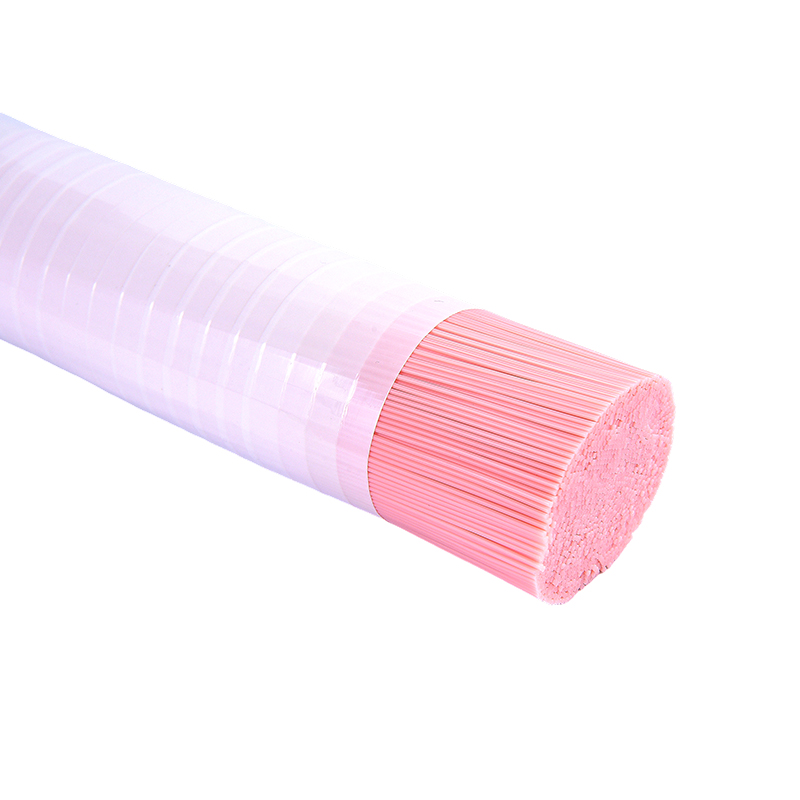 Abrasive Filament, Brush For Stone Abrasive Filament ManufacturersNingbo Keying is China OEM/ODM abrasive filament manufacturers and brush for stone abrasive filament suppliers, We are a factory that pro...View Product →
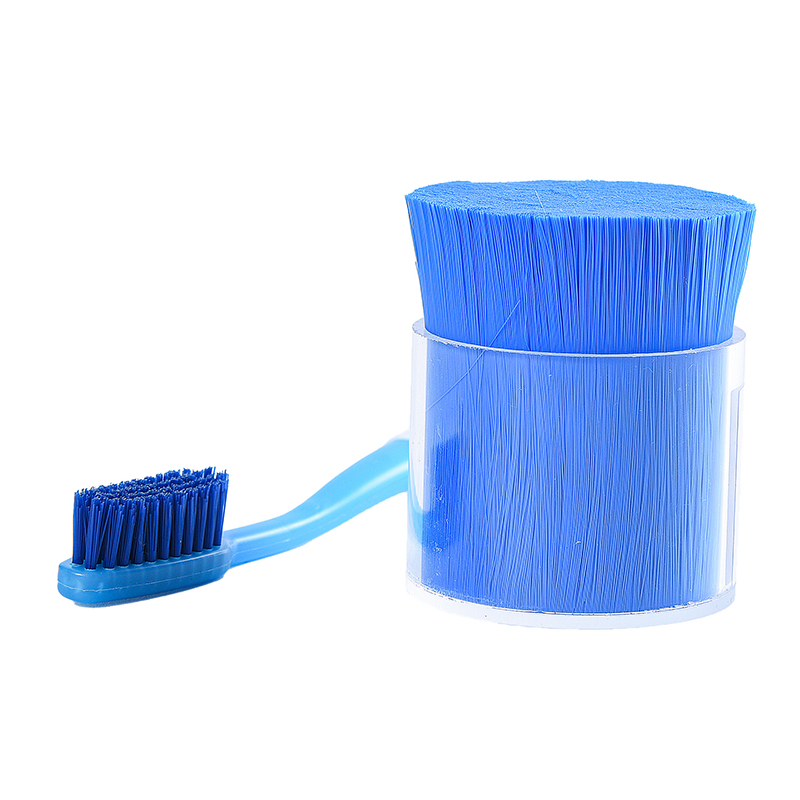 Custom Nylon PA6 Brush Filament Manufacturers, OEM/ODM SuppliersNingbo Keying is China OEM/ODM nylon PA6 brush filament manufacturers and nylon PA6 filament suppliers, factory direct sales, Customized ...View Product →
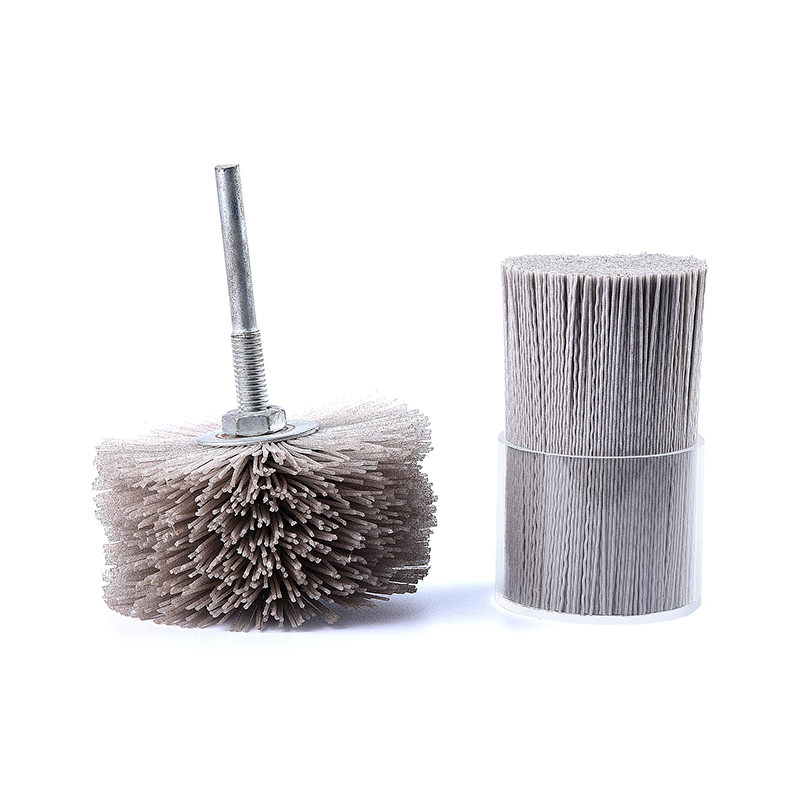 Custom Nylon PA612 Brush Filament Manufacturers, OEM/ODM SuppliersNingbo Keying is China OEM/ODM nylon PA612 brush filament manufacturers and nylon PA612 filament suppliers, factory direct sales, Customi...View Product →
Bottom Line
Conductive PLA earns its place in the workshop as a prototyping and light-ESD material. Use 100 percent infill, keep traces flat in the XY plane, limit currents to tens of milliamps, and always ground ESD parts through a wire or a metal shield. When the application moves to continuous brushing, sustained heat, or abrasive contact, stop printing and specify a manufactured conductive brush filament. The two families of materials serve different niches, and the right choice depends on whether you need a quick adjustable prototype or a durable production component.