
 English
 русский
 Türk
TürkContent
- 1 What Is Creep Resistance?
- 2 Why Creep Resistance Matters in Brush Filaments
- 3 Material Comparison: Which Brush Filament Resists Creep Best?
- 4 How Temperature and Load Change the Picture
- 5 Testing Creep Resistance in Practice
- 6 Selecting the Right Brush Filament for Creep-Sensitive Applications
- 7 Final Thoughts
After six months on a high-speed industrial brushing line, a nylon brush roller no longer conforms to the workpiece. The bristles have taken a permanent set, the gaps between tufts have widened, and the cleaning result has become inconsistent. This is creep in action, one of the most common reasons industrial brushes are replaced earlier than expected. Creep resistance is the material property that determines how well a brush filament keeps its shape under constant pressure.
What Is Creep Resistance?
Creep resistance is the ability of a solid material to resist slow, time-dependent deformation when it is exposed to a constant mechanical stress. In practical terms, it measures how long a material can hold its shape under load. A filament with good creep resistance returns to its original position when the brush stops, while a filament with poor creep resistance stays permanently bent.
Creep typically develops in three stages. The primary stage starts with a short period of fast deformation that gradually slows as polymer chains rearrange. The secondary stage is a long period of steady deformation and controls the useful life of most brush products. When a material reaches the tertiary stage, the deformation rate accelerates and the component fails.
Temperature changes the whole picture. At higher temperatures, polymer chains gain thermal energy and slide past each other more easily, so the same load produces more strain. This is why creep data always includes the test temperature and stress level. A filament that behaves well at 23 degrees Celsius can deform significantly at 80 degrees Celsius.
Why Creep Resistance Matters in Brush Filaments
Brush filaments are subjected to sustained loads in nearly every industrial application. A sweeping brush presses against a floor, a deburring brush pushes against a metal edge, and a conveyor brush holds a finished part in place. In each case, the filaments remain in a deflected position for hours or days, and the bending stress inside each filament never fully relaxes.
Low creep resistance leads to visible failures. Filaments lean in the direction of brush rotation, the brush profile flattens, and contact pressure drops. The result is a brush that cleans less effectively, generates inconsistent finishes, and has to be replaced sooner than expected.
For brush manufacturers, creep resistance affects warranty claims, reorder frequency, and customer confidence. A small increase in raw material quality can make a meaningful difference in service life, which is why many OEMs specify creep-resistant grades for demanding brush assemblies. More details on how filament strength and wear behavior interact can be found in our article on high-strength wear-resistant nylon filaments, which explains why these grades are opening up new possibilities in cleaning and industrial equipment.
Material Comparison: Which Brush Filament Resists Creep Best?
Not all brush filaments resist creep equally. The table below compares the most common grades used in brush manufacturing. The relative creep resistance values are screening ratings based on long-term loading behavior, and they help narrow down material options before detailed testing.
| Material | Relative creep resistance | Moisture absorption (24 h) | Stiffness under load | Typical brush application |
|---|---|---|---|---|
| PA6 | Baseline | 1.5 to 1.8 percent | Moderate | General-purpose sweeping |
| PA610 | Moderate improvement | 0.4 to 0.6 percent | Moderate | Moisture-sensitive operations |
| PA612 | Good improvement | 0.2 to 0.4 percent | High | Precision finishing |
| PA66 | Good improvement | 1.0 to 1.3 percent | High | High-wear deburring |
| PBT | Best improvement | 0.08 to 0.10 percent | High | Continuous-contact brushes |
The bar chart above ranks the five most common brush filament materials at room temperature. PBT sits at the top because its semicrystalline structure limits chain movement under sustained loading. PA66 follows closely and remains the preferred option when tensile strength and wear resistance are equally important. PA612 offers strong dimensional stability in humid environments because it absorbs far less water than PA6. PA610 and PA6 occupy the lower portion of the ranking, meaning they are more likely to yield in brushes that run under continuous contact pressure. For applications where the brush must keep its shape for thousands of operating hours, the gap between PBT and PA6 is large enough to justify changing the material specification.
Within our production range, PA66 brush filaments are a common recommendation when creep resistance must be balanced with mechanical toughness.
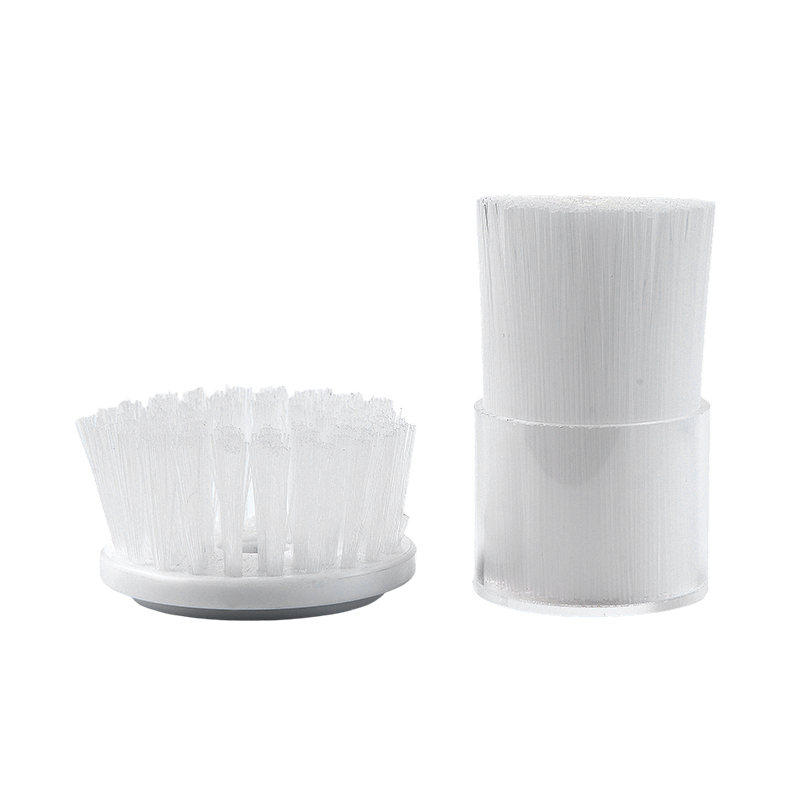 Custom Nylon PA66 Brush Filament Manufacturers, SuppliersNingbo Keying is China OEM/ODM nylon PA66 brush filament manufacturers and nylon PA66 filament suppliers, Our factory customizes and whol...View Product →
How Temperature and Load Change the Picture
Creep resistance is not a fixed number; it changes with temperature and applied stress. The line chart below shows how creep strain develops under a constant 5 MPa load at three temperatures. At 23 degrees Celsius, the strain curve rises quickly and then flattens into a long plateau. At 60 degrees Celsius, the plateau disappears and strain climbs steadily. At 80 degrees Celsius, the material moves into the tertiary stage within a few hundred hours.
The line chart above highlights three important behaviors for brush designers. First, creep does not need extreme heat to become a problem; even a modest rise from 23 to 60 degrees Celsius more than doubles the total strain after 1000 hours. Second, the room-temperature curve shows a clear plateau, which means the material is operating within its safe stress range and dimensional changes will remain limited. Third, the 80 degrees Celsius curve accelerates as it approaches the tertiary stage, indicating that the filament will fail mechanically rather than just lose shape. This is why brush rolls used near motors, drying ovens, or hot wash systems need a filament with a higher glass transition temperature. The chart also explains why creep tests must be run at the real operating temperature rather than at standard laboratory room conditions.
Testing Creep Resistance in Practice
Creep resistance is verified through standardized test methods, not subjective inspection. The most widely used standards in the polymer industry are ASTM D2990 and ISO 899-1. Both apply a constant load to a specimen and measure deformation over time in a temperature-controlled chamber. Tests can be carried out in tensile, compressive, or flexural mode, and the choice should match the way the filament is loaded in the final brush. For brush filaments, tensile creep testing is most relevant because brushing loads are primarily bending and tension.
A reliable creep test report specifies the stress level, temperature, duration, and final strain. Without these four parameters, a claim of good creep resistance has little engineering value. The column chart below shows a typical trend in creep modulus for a standard nylon filament as temperature rises. Creep modulus falls continuously, and the drop becomes severe above 60 degrees Celsius.
The column chart above shows why operating temperature is the first question to ask when selecting a brush filament. The modulus at 80 degrees Celsius is only about one third of the room-temperature value, which means the same brush load produces roughly three times more deformation. This sharp decline is characteristic of nylon filaments, and it explains why brush speeds and contact pressures are usually derated for hot environments. When evaluating a supplier's data, always check the test duration; a 1000-hour curve reveals long-term stability far better than a 100-hour screening test. For critical brush applications, it is recommended to run a verification test with the actual filament, actual load, and actual temperature before finalizing the material.
For surface finishing and deburring operations, abrasive filaments combine creep resistance with embedded cutting performance and are worth considering when grinding action and shape retention both matter.
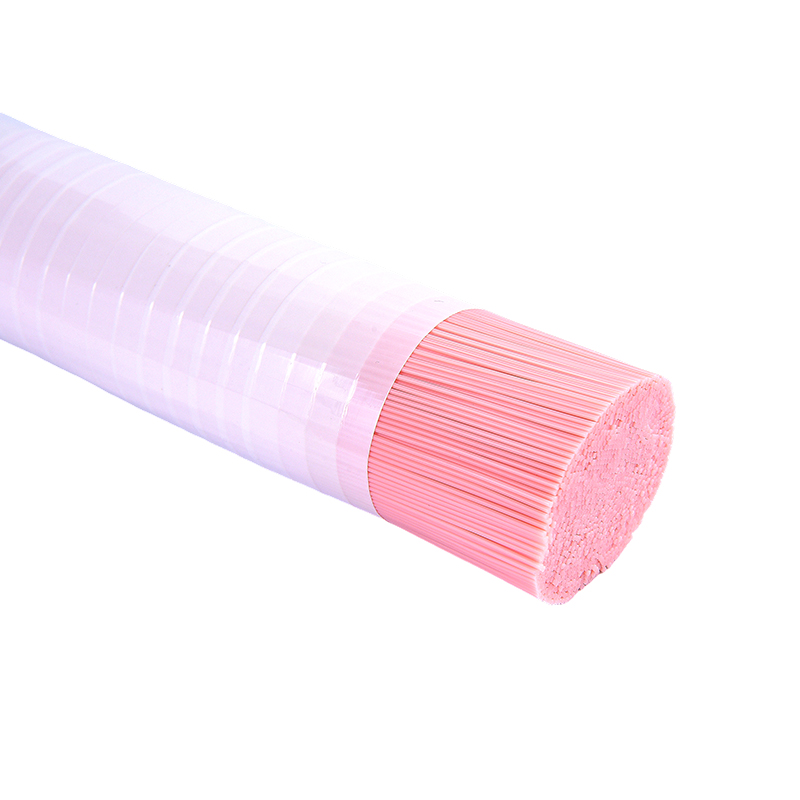 Abrasive Filament, Brush For Stone Abrasive Filament ManufacturersNingbo Keying is China OEM/ODM abrasive filament manufacturers and brush for stone abrasive filament suppliers, We are a factory that pro...View Product →
Selecting the Right Brush Filament for Creep-Sensitive Applications
Choosing the right material depends on three questions. How high is the operating temperature? How long does the brush stay in contact? Does the application require a precise profile over time?
For general-purpose brushes at normal temperatures, PA6 delivers acceptable performance at a lower cost. For brushes that operate under continuous pressure or near heat sources, the decision usually moves to PBT or PA66. The radar chart below compares the two materials most often considered in creep-sensitive brush designs.
The radar chart above compares PA6 and PBT across five practical selection criteria. PBT clearly leads in creep resistance and dimensional stability, which makes it the safer choice for brushes that must hold precise dimensions under long-term load. PA6 leads in tensile strength and cost efficiency, which explains its popularity in less demanding applications. PBT also earns a strong score in overall value for high-wear environments because its longer service life offsets the higher raw material price. The intersecting shapes show that no single material wins on every criterion; the best choice depends on the specific brush duty and temperature. For this reason, a conversation with a filament supplier should start with the application profile rather than the material name.
In our experience, PBT brush filaments are the default recommendation when shape retention under load is the critical requirement.
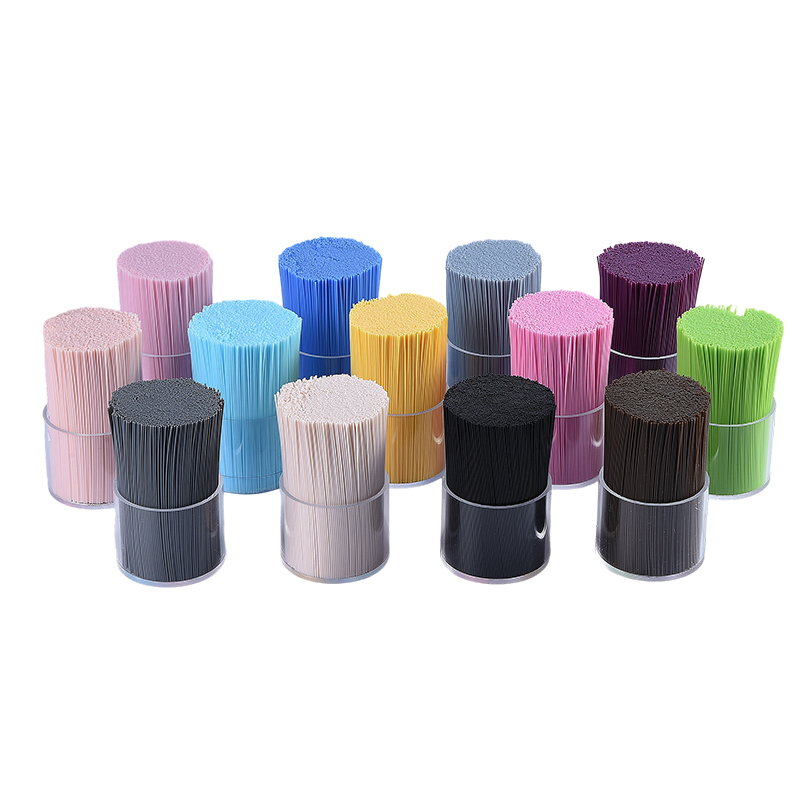 Nylon PBT Brush Filament Manufacturers, PBT Filament SuppliersNingbo Keying is China OEM/ODM nylon PBT brush filament manufacturers and PBT filament suppliers, Our factory customizes and wholesales P...View Product →
Final Thoughts
Creep resistance deserves attention before a brush goes into production, not after field complaints arrive. The material comparison, temperature behavior, and test data discussed above provide a practical framework for evaluating brush filaments. Start with the application profile, define the load and temperature, and ask for long-term creep data.
For brush manufacturers and industrial buyers, combining the right polymer grade with the right filament diameter and profile is the most direct way to extend brush life and reduce downtime. Our engineering team works with PA6, PA610, PA612, PA66, and PBT brush filaments, and you can review our production capabilities and 14 years of manufacturing experience on our homepage.