
 English
 русский
 Türk
TürkContent
- 1 The Material Properties That Make Nylon PBT Ideal for Brush Filaments
- 2 Use in Oral Care: Toothbrush Filaments
- 3 Use in Cosmetic and Makeup Brushes
- 4 Use in Industrial Cleaning and Surface Finishing Brushes
- 5 Use in Household Cleaning Brushes
- 6 Use in Paint and Artist Brushes
- 7 Use in Automotive Industry Brushes
- 8 Use in Street Sweeping and Municipal Cleaning Equipment
- 9 Application Summary: Nylon PBT Filament Uses by Sector
- 10 Nylon PBT vs. Other Common Brush Filament Materials
- 11 Environmental Sustainability of Nylon PBT Filaments
- 12 Selecting the Right Nylon PBT Filament Specification for Your Application
- 13 Ningbo Keying New Material Technology Co., Ltd.: Specialists in Nylon PBT Brush Filaments
- 14 Conclusion: The Breadth and Importance of Nylon PBT Brush Filament Applications
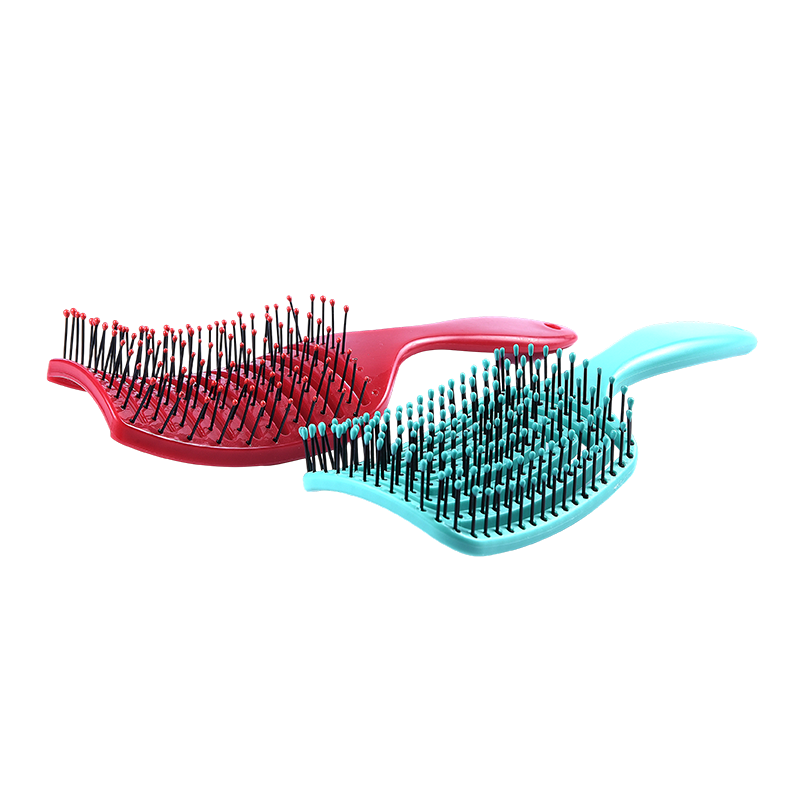
Nylon PBT brush filaments are used across a remarkably broad range of industries and applications, including oral care (toothbrushes), cosmetic brushes, industrial cleaning brushes, painting and artist brushes, household cleaning tools, automotive brushes, street sweeping equipment, and specialized technical brushes in electronics and precision manufacturing. Their unique combination of flexibility, chemical resistance, moisture resistance, dimensional stability, and durability makes them the preferred filament material wherever performance, longevity, and product safety are required simultaneously.
Nylon PBT — whose full name is polybutylene terephthalate — is a thermoplastic engineering plastic that synthesizes the best characteristics of nylon (polyamide) and PBT into a single high-performance material. It is not a simple blend of the two but an engineered compound designed to overcome the individual limitations of each material while retaining and amplifying their respective strengths. Understanding why this material is chosen for bristle manufacturing requires first understanding what it offers technically — and then tracing how those technical properties translate into specific use-case advantages across each application sector.
The Material Properties That Make Nylon PBT Ideal for Brush Filaments
Before examining the specific uses of Nylon PBT brush filaments, it is essential to understand the physical and chemical properties that make this material uniquely suited to filament applications. These properties directly determine where and how the filaments can be used effectively.
Mechanical Flexibility and Elastic Recovery
Nylon PBT filaments exhibit excellent elastic memory — the ability to bend repeatedly under load and return to their original shape without permanent deformation. This property, sometimes called "flagging resistance" in the brush industry, is critical for any brush application that involves repetitive mechanical contact with a surface. A filament that loses its shape after a few thousand strokes produces inconsistent cleaning, painting, or finishing results. Nylon PBT filaments can withstand millions of flexure cycles at standard operating angles before showing significant fatigue — a performance benchmark that most natural bristle materials and lower-grade synthetic filaments cannot match.
Low Moisture Absorption
One of the most important advantages of PBT over standard nylon (PA6 or PA66) is its significantly lower moisture absorption rate. Standard nylon absorbs between 2.5% and 8% of its weight in water depending on the grade, which causes dimensional swelling, softening, and reduced stiffness during use in wet environments. PBT, by contrast, absorbs only approximately 0.08–0.3% moisture. In the Nylon PBT compound, this low-absorption characteristic is carried forward, making Nylon PBT filaments dimensionally stable and consistently stiff even when used in water, cleaning solutions, or high-humidity environments — a critical property for toothbrushes, wet cleaning brushes, and industrial washdown applications.
Chemical Resistance
Nylon PBT filaments demonstrate strong resistance to a wide range of chemicals including dilute acids, alkalis, alcohols, oils, greases, and many organic solvents. This chemical resistance profile allows the filaments to maintain their structural integrity when used with cleaning agents, industrial lubricants, cutting fluids, and surface treatment chemicals that would rapidly degrade natural bristle or lower-grade synthetic alternatives. The resistance extends to UV exposure, making Nylon PBT filaments suitable for outdoor applications without significant performance degradation over time.
Dimensional Stability Across Temperature Ranges
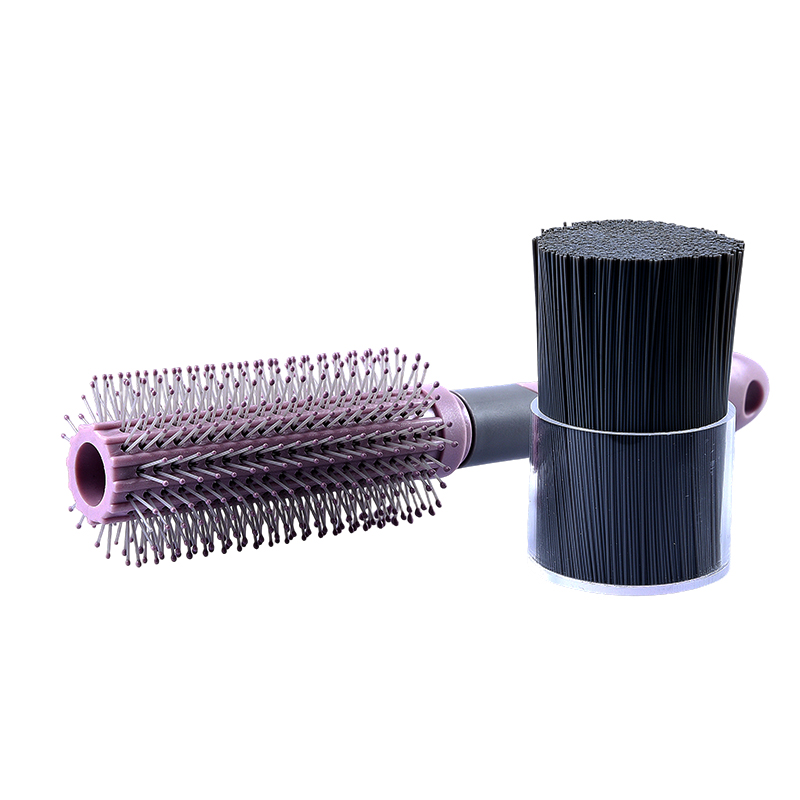
Nylon PBT retains its mechanical properties across a practical temperature range of approximately -40°C to 130°C, with short-term tolerance to higher temperatures. This thermal stability makes it suitable for hot-water cleaning applications, dishwasher-safe brushes, automotive paint shop brushes, and other applications where temperature variation is a factor in material selection. At the lower end, the filaments remain flexible at sub-zero temperatures where many plastics become brittle — important for outdoor street-sweeping and winter maintenance brush applications.
Controlled Tip Geometry and Filament Customization
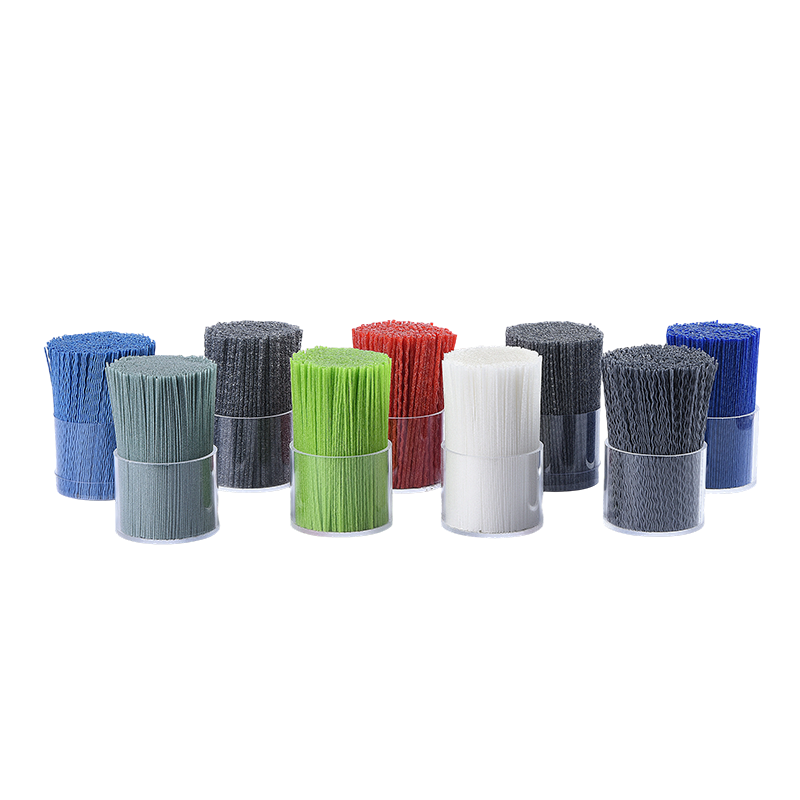
Nylon PBT can be processed to produce filaments with highly precise cross-sectional geometries — round, tapered, flagged (split-end), star-shaped, and hollow — with tight dimensional tolerances. Tapered filaments, in which the filament diameter reduces progressively toward the tip, are particularly important in oral care and cosmetic applications because the fine tip provides gentle, precise contact with delicate surfaces. The ability to control tip geometry precisely and reproducibly is one of the key manufacturing advantages that makes Nylon PBT the material of choice for premium consumer brush products.
Use in Oral Care: Toothbrush Filaments
The largest single application of Nylon PBT brush filaments by volume is in toothbrush manufacturing. Both manual and electric toothbrushes use Nylon PBT or PBT filaments as their standard bristle material, replacing the natural boar bristle that was used prior to the mid-20th century and the early synthetic nylon formulations that preceded today's advanced compounds.
The specific reasons Nylon PBT dominates oral care filament applications include:
- Hygiene and non-porosity: Unlike natural bristle, Nylon PBT filaments are non-porous and do not harbor bacteria, mold, or organic residue between uses. This is a fundamental hygiene requirement for any tool used in the human oral cavity multiple times daily.
- Tapered tip design: Premium toothbrush filaments are tapered to a fine tip diameter of 0.01–0.02mm at the end, enabling gentle access between teeth and below the gumline where plaque accumulation is most harmful. Standard nylon filaments cannot be tapered as finely or as consistently as Nylon PBT.
- Wet-condition stiffness retention: Toothbrush filaments are used in a wet environment with saliva and water throughout every use. Nylon PBT's low moisture absorption means the filament maintains its designed stiffness from the first stroke to the last, providing consistent plaque removal performance throughout the entire brushing session.
- Toothpaste abrasive compatibility: Toothpaste contains abrasive particles that would rapidly wear down softer bristle materials. Nylon PBT's hardness and abrasion resistance allow the filament to maintain its tip geometry through the recommended 3-month replacement cycle and beyond without excessive degradation.
- Food safety and regulatory compliance: Oral care filaments must meet stringent food-contact and body-contact safety standards. Nylon PBT can be formulated to comply with EU, FDA, and international standards for materials used in products in contact with the human body.
The global toothbrush market produces an estimated 3.5 to 4 billion toothbrushes annually, each containing hundreds of individual filaments — making oral care the highest-volume application for Nylon PBT brush filaments worldwide.
Use in Cosmetic and Makeup Brushes
Nylon PBT filaments are extensively used in the manufacture of cosmetic and makeup brushes, including foundation brushes, blush brushes, eyeshadow brushes, eyeliner brushes, mascara wands, and lip brushes. The cosmetic brush market has increasingly shifted from natural animal hair (squirrel, sable, goat) to synthetic Nylon PBT filaments for both ethical and technical reasons.
The technical advantages of Nylon PBT in cosmetic brush applications include:
- Consistent pickup and release of pigment: The smooth, non-porous surface of Nylon PBT filaments allows controlled pickup of powder, cream, and liquid cosmetic products and precise, even release onto skin. Natural hair bristles have a scaled surface structure (like human hair) that can absorb and retain pigment unevenly, causing inconsistent color application.
- Compatibility with all cosmetic formulations: Modern cosmetics include water-based, oil-based, silicone-based, and alcohol-based formulations. Nylon PBT's chemical resistance ensures the filament neither degrades nor becomes misshapen when exposed to these diverse chemical environments.
- Washability and hygiene: Cosmetic brushes require regular washing to remove pigment buildup and prevent bacterial contamination on skin-contact surfaces. Nylon PBT filaments withstand repeated washing with soap, water, and brush cleaner solvents without absorbing water, losing stiffness, or shedding filaments.
- Vegan and cruelty-free status: As consumer demand for animal-free cosmetic products has grown substantially — with the vegan cosmetics market projected to exceed USD 20 billion globally by 2025 — Nylon PBT synthetic filaments provide a high-performance, ethical alternative to natural animal hair that appeals to an increasingly large segment of cosmetics consumers.
- Color customization: Nylon PBT filaments can be produced in any color during the manufacturing process, allowing cosmetic brush manufacturers to create visually distinctive products that align with brand aesthetics.
Use in Industrial Cleaning and Surface Finishing Brushes
Industrial cleaning and surface treatment represent one of the most demanding application environments for brush filaments, and Nylon PBT is one of the most widely specified materials in this sector. Industrial brushes using Nylon PBT filaments are employed across manufacturing, processing, and maintenance operations worldwide.
Conveyor and Parts Cleaning Brushes
In automated manufacturing lines, rotating cylindrical brushes using Nylon PBT filaments are used to clean conveyor belts, remove debris from machined components, and prepare surface finishes before coating or inspection. The filaments' resistance to cutting fluids, oils, and industrial cleaning solvents ensures consistent performance over extended production runs without the chemical degradation that would affect natural bristle or lower-grade nylon filaments.
Metal Deburring and Surface Preparation
Nylon PBT filaments — particularly when loaded with abrasive particles such as silicon carbide, aluminum oxide, or diamond grit — are used in deburring brushes that remove sharp edges, surface burrs, and scale from machined metal, cast, or forged components. The elastic recovery of the filament is critical in this application: the filament must flex to conform to the part geometry, reach into grooves and recesses, and then spring back to full extension for the next cutting stroke. Abrasive-loaded Nylon PBT filaments maintain consistent cut rate over hundreds of operating hours, providing predictable surface finishing results that manual deburring or rigid abrasive tools cannot match.
Food Processing Industry Brushes
In food processing plants, Nylon PBT brushes are used to clean conveyor systems, wash fruits and vegetables, clean baking trays and molds, and scrub processing equipment surfaces. The material's compliance with food contact regulations, its resistance to hot water cleaning and sanitizing chemicals, and its non-porous surface that does not harbor food residue or pathogens make it the standard choice for food-grade brush filaments. Nylon PBT filaments used in food processing applications must comply with standards such as EU Regulation (EC) No. 10/2011 and FDA 21 CFR for food contact materials.
Electronics and PCB Manufacturing Brushes
In electronics manufacturing, ultra-fine Nylon PBT filaments are used in brushes that clean printed circuit boards (PCBs), remove flux residue after soldering, and prepare component surfaces before inspection or coating. The anti-static properties that can be formulated into Nylon PBT filament — preventing electrostatic discharge that would damage sensitive electronic components — combined with the fine tip precision possible with this material make it specifically suited to electronics assembly applications where component damage from static or mechanical contact is a critical concern.
Use in Household Cleaning Brushes
Household cleaning products represent one of the most visible everyday applications of Nylon PBT brush filaments. From dish brushes to bottle brushes, scrubbing brushes to toilet brushes, the performance characteristics of Nylon PBT translate directly into consumer-relevant product qualities: durability, hygiene, resistance to cleaning chemicals, and maintenance of cleaning effectiveness over the product's service life.
- Dish and kitchen brushes: Nylon PBT filaments in dish brushes resist hot water, dishwashing detergents, and grease without softening, absorbing odors, or collapsing under scrubbing pressure. The filaments do not absorb food particles or bacterial residue, and they dry quickly between uses — important hygiene advantages in the kitchen environment.
- Toilet and bathroom brushes: Cleaning brushes for toilet bowls and bathroom fixtures require filaments that can withstand concentrated bleach, acid-based limescale removers, and disinfectants without degrading. Nylon PBT's chemical resistance profile covers this full range of cleaning product chemistries, maintaining bristle integrity and cleaning effectiveness through hundreds of cleaning cycles.
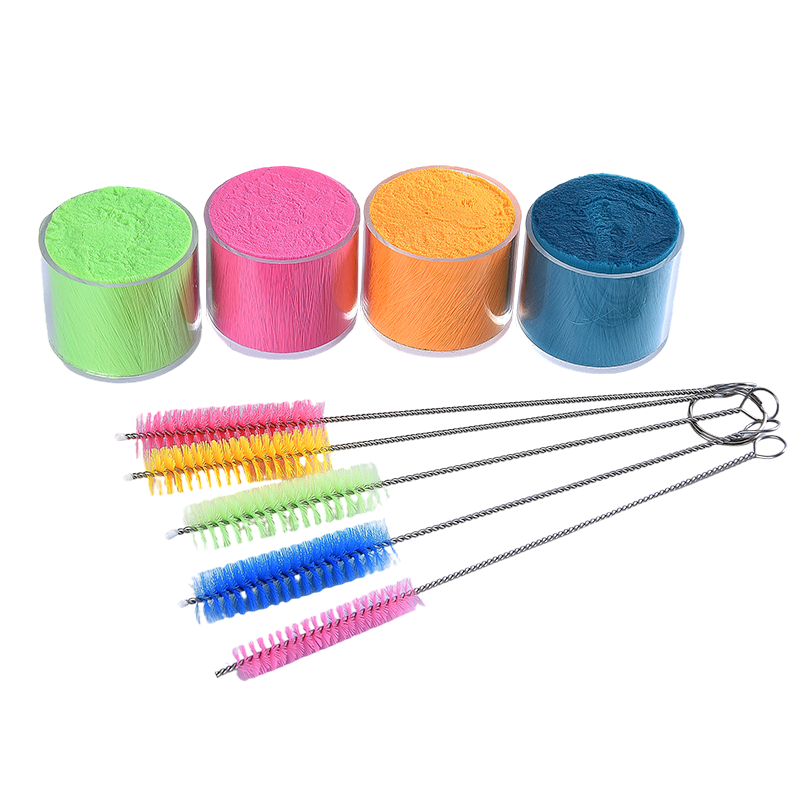
- Bottle and tube cleaning brushes: The combination of flexibility, spring recovery, and durability makes Nylon PBT ideal for bottle cleaning brushes that must flex to reach the interior geometry of containers of various shapes and sizes without permanently deforming.
- Floor scrubbing brushes: Heavy-duty floor scrubbing brushes for tile, stone, and grout use stiffer Nylon PBT filaments that deliver scrubbing force without breakage, and that resist the abrasive grit and harsh cleaning chemicals used in floor care.
Use in Paint and Artist Brushes
Nylon PBT filaments have become the dominant synthetic bristle material in paint brushes and artist brushes, used extensively across professional decorating, architectural painting, and fine art applications. Their adoption has been driven by both the ethical movement away from natural animal hair and the genuine technical advantages they offer over earlier synthetic filament materials.
Decorating and Architectural Paint Brushes
For latex (water-based) and acrylic paints — which have become the dominant paint type in interior and exterior decoration — Nylon PBT filaments outperform natural bristle. Natural bristle (typically from hog or horse) absorbs water from latex paint, causing the bristles to swell, soften, and lose their shape and painting precision. Nylon PBT filaments' low moisture absorption means they maintain their stiffness, spring, and tip sharpness throughout a painting session with water-based paints, delivering cleaner cut lines, more even paint loading, and reduced fatigue.
The filaments also resist the alkaline chemistry of lime-based and mineral paints, as well as the solvents present in oil-based enamels and varnishes, making Nylon PBT brushes genuinely versatile across paint types — a significant practical advantage for professional painters who may switch between media within a single project.
Fine Art and Watercolor Brushes
In fine art applications, finely tapered Nylon PBT filaments are used in detail brushes, liner brushes, and specialty shapes where precision tip performance is required. The controllable taper geometry of Nylon PBT enables the manufacture of brushes with spring and point characteristics that approximate those of premium natural sable, at a fraction of the cost and without the ethical concerns associated with natural hair sourcing. Modern Nylon PBT artist brushes can achieve tip diameters fine enough for line work requiring precision of less than 0.5mm.
Use in Automotive Industry Brushes
The automotive industry uses Nylon PBT brush filaments across multiple applications in both vehicle production and vehicle maintenance, taking advantage of the material's combination of mechanical durability, chemical resistance, and temperature stability.
- Automated car wash brushes: Rotating cylindrical and curtain brushes in automated car wash systems use Nylon PBT filaments that must withstand continuous wet operation, high-pressure water, car wash detergents, and waxes without degrading. The filaments must also be soft enough not to scratch vehicle paint while stiff enough to remove road grime effectively.
- Paint application and surface finishing brushes: In automotive paint shops, Nylon PBT brushes are used for touch-up painting, masking edge cleaning, and surface preparation. The solvent resistance of the filaments is critical in this environment where strong solvents and thinners are routinely present.
- Component cleaning brushes: Engine components, brake assemblies, and transmission parts are cleaned during manufacturing and maintenance using brushes with Nylon PBT filaments rated for oil, grease, and solvent exposure. These brushes must maintain their performance at the elevated temperatures encountered near engine components.
- Detailing brushes: Professional automotive detailing uses fine Nylon PBT brushes to clean wheel spokes, ventilation grilles, emblems, and interior trim details. The filaments' durability and chemical resistance allow repeated use with detailing chemicals across a professional service life.
Use in Street Sweeping and Municipal Cleaning Equipment
Municipal street sweepers, road maintenance vehicles, and airport runway cleaning equipment use large-format brushes with Nylon PBT filaments as one of the primary filament materials for channel brushes and gutter brushes. These applications subject filaments to some of the most extreme conditions encountered in any brush use case: outdoor UV exposure, temperatures ranging from sub-zero to high summer heat, abrasive grit and gravel, road salt, chemical spills, and continuous mechanical operation for many hours per day.
Nylon PBT's UV resistance, temperature range, chemical resistance, and mechanical durability make it suitable for these demanding conditions. The filaments' elastic recovery is particularly important in street sweeping applications because the brush must conform to uneven pavement surfaces and recover its shape between each contact cycle to maintain sweeping effectiveness. A single street sweeper brush assembly may contain several kilograms of Nylon PBT filament, and the filaments are expected to maintain acceptable sweeping performance for thousands of operating hours in outdoor environments.
Application Summary: Nylon PBT Filament Uses by Sector
The following table provides a consolidated overview of the primary application sectors for Nylon PBT brush filaments, with the specific product types and the key material properties that drive selection in each sector:
| Application Sector | Typical Products | Key Nylon PBT Property Required | Filament Type |
|---|---|---|---|
| Oral Care | Toothbrushes, tongue cleaners | Hygiene, taper precision, wet stiffness | Tapered, ultra-fine tip |
| Cosmetics | Foundation, eyeshadow, lip brushes | Smooth surface, chemical resistance, washability | Fine, soft taper |
| Industrial Cleaning | Parts cleaning, conveyor brushes | Chemical resistance, durability, elastic recovery | Straight, medium-heavy gauge |
| Surface Finishing | Deburring, polishing brushes | Abrasion resistance, spring recovery | Abrasive-loaded, straight |
| Household Cleaning | Dish, toilet, bottle brushes | Chemical resistance, non-porous, hygiene | Straight, various gauges |
| Paint and Art | Decorating, artist, detail brushes | Low moisture absorption, tip shape retention | Tapered, flagged tip |
| Automotive | Car wash, detailing, component cleaning | Solvent resistance, paint-safe softness | Soft taper, medium straight |
| Municipal / Street Sweeping | Road sweeper channel and gutter brushes | UV resistance, temperature range, mechanical durability | Heavy gauge, straight |
| Electronics Manufacturing | PCB cleaning, flux removal brushes | Anti-static capability, fine tip precision | Fine taper, anti-static |
| Food Processing | Conveyor cleaning, produce washing brushes | Food safety compliance, hot water resistance | Food-grade, straight |
Nylon PBT vs. Other Common Brush Filament Materials
To fully appreciate the value of Nylon PBT filaments across their diverse applications, it is useful to compare them directly against the primary alternative filament materials — standard PA6, PA66, PA610, PA612 nylon grades, PBT alone, natural bristle, and polypropylene — across the performance attributes that matter most in brush applications:
| Property | Nylon PBT | PA6 / PA66 | PBT Alone | Polypropylene | Natural Bristle |
|---|---|---|---|---|---|
| Moisture absorption | Very low | High (2.5–8%) | Very low | Very low | High |
| Elastic recovery | Excellent | Good | Good | Moderate | Good (degrades over time) |
| Chemical resistance | Excellent | Good | Excellent | Good | Poor |
| Taper precision possible | Very high | High | Moderate | Low | Natural only |
| UV resistance | Good | Moderate | Good | Moderate | Poor |
| Food safety compliance | Yes (formulated) | Yes | Yes | Yes | Variable |
| Recyclability | Yes | Yes | Yes | Yes | No (biodegrades) |
Environmental Sustainability of Nylon PBT Filaments
As sustainability has become a central concern in material selection across industries, Nylon PBT's environmental profile has become an increasingly important factor in its adoption. The material offers several sustainability advantages over both natural bristle materials and some alternative synthetic filaments:
- Recyclability: Nylon PBT is a thermoplastic that can be melted and reprocessed, allowing production waste and end-of-life products to be recycled into new material rather than sent to landfill. This closed-loop potential is increasingly valued by manufacturers subject to extended producer responsibility regulations.
- Compliance with environmental standards: Quality Nylon PBT filaments are formulated to comply with EU RoHS (Restriction of Hazardous Substances), REACH, and SGS standards, ensuring the material does not contain restricted heavy metals, plasticizers, or other substances of concern that could enter waste streams.
- Extended product service life: The durability of Nylon PBT filaments means that products made with them have longer service lives than those using lower-quality materials. A longer product lifespan means fewer units consumed, less manufacturing energy expended, and less waste generated per unit of cleaning or finishing work performed — an environmental benefit that is often underweighted in material comparisons.
- No animal welfare concerns: Nylon PBT is entirely synthetic, eliminating the animal welfare issues associated with the sourcing of natural bristle from hogs, horses, badgers, and other animals. This is particularly relevant in the cosmetics and personal care sectors where consumer scrutiny of supply chain animal welfare is high.
Selecting the Right Nylon PBT Filament Specification for Your Application
Nylon PBT filaments are not a single uniform product — they are available in a range of specifications that must be matched to the requirements of the intended application. The key specification variables include:
- Filament diameter (gauge): Ranging from ultra-fine (0.05–0.1mm for precision cosmetic and oral care use) through medium (0.15–0.3mm for household and paint brushes) to heavy gauge (0.4–1.0mm+ for industrial cleaning and street sweeping). Diameter determines stiffness, contact area, and the balance between aggressive cleaning action and surface gentleness.
- Taper ratio: The degree to which the filament narrows toward its tip. Higher taper ratios produce finer, softer tips for delicate applications (oral care, fine art); lower taper or straight filaments provide more uniform stiffness along the full length for scrubbing and industrial applications.
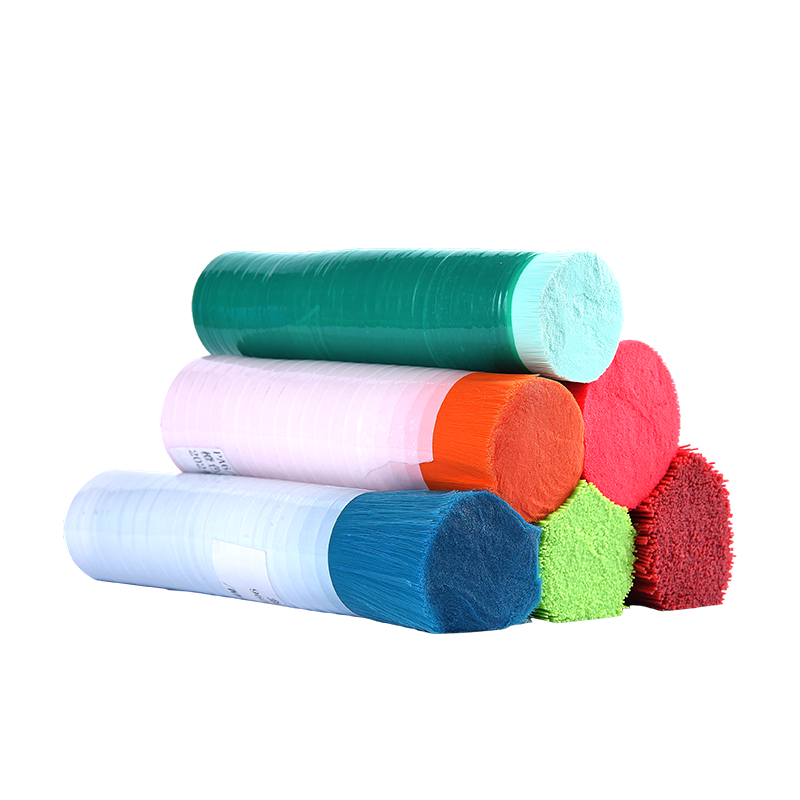
- Color: Nylon PBT can be produced in any color. Color serves both branding and functional purposes — for example, color-coded filaments in food processing brushes to designate use zones and prevent cross-contamination between raw and cooked food areas.
- Abrasive loading: For surface finishing and deburring applications, abrasive particles (silicon carbide, aluminum oxide, diamond) can be incorporated into the filament matrix during production at concentrations of 10–40% by weight, providing controlled cut rates while retaining the elastic recovery benefit of the Nylon PBT base material.
- Anti-static treatment: For electronics applications, filaments can be produced with anti-static additives that dissipate electrostatic charge during use, protecting sensitive components from ESD damage.
Ningbo Keying New Material Technology Co., Ltd.: Specialists in Nylon PBT Brush Filaments
Ningbo Keying New Material Technology Co., Ltd. is an enterprise specializing in the production of high-performance brush filaments, operating from a purpose-built facility of more than 7,000 square meters equipped with 4 imported advanced production lines. The company's advanced technology and production processes, combined with strict quality control systems, ensure that every product meets the demanding requirements of international industrial and consumer markets.
All products manufactured by Ningbo Keying comply with EU RoHS and SGS standards — internationally recognized certifications that verify the filaments are free from restricted hazardous substances and meet the safety requirements of the European and global markets. This compliance is particularly critical for oral care, cosmetic, and food-processing brush filament applications where material safety documentation is a non-negotiable requirement.
The company has successfully developed a comprehensive range of industrial filament products including nylon industrial filaments in grades PA6, PA66, PA610, and PA612, as well as PBT series industrial yarns. Its abrasive wire production line covers PA6 abrasive wire, PA612, and other specialist brush wire types. With an annual output of more than 1,000 tons, Ningbo Keying has the production scale to serve large-volume industrial customers while maintaining the quality standards required by premium consumer product manufacturers. This combination of technical breadth, quality certification, and production capacity positions the company as a comprehensive and reliable supply partner for brush filament requirements across all the application sectors discussed in this article.
Conclusion: The Breadth and Importance of Nylon PBT Brush Filament Applications
Nylon PBT brush filaments are not a niche specialty material — they are a foundational component in billions of products used daily across the full spectrum of modern life. From the toothbrush that starts every morning to the industrial deburring systems that finish precision components, from the cosmetic brushes used in personal care routines to the street sweepers that maintain urban environments, Nylon PBT filaments provide the combination of mechanical performance, chemical durability, hygienic properties, and manufacturing versatility that no alternative material fully delivers across all these applications simultaneously.
Understanding the specific property requirements of each application — and how Nylon PBT's unique compound characteristics address those requirements — is the key to selecting the correct filament specification and achieving the best possible performance from any brush product. As material science continues to advance and new application requirements emerge, Nylon PBT remains one of the most important and adaptable filament materials available to brush manufacturers worldwide.