
 English
 русский
 Türk
TürkContent
- 1 Understanding Abrasive Filament: Composition and Structure
- 2 Deburring: The Most Widespread Industrial Use
- 3 Surface Preparation Before Coating and Painting
- 4 Rust Removal and Corrosion Treatment
- 5 Precision Surface Finishing and Polishing
- 6 Industrial Cleaning and Descaling Applications
- 7 Key Industries That Rely on Abrasive Filament
- 8 Abrasive Filament in Woodworking and Furniture Manufacturing
- 9 Electronics and PCB Manufacturing Applications
- 10 Advantages of Abrasive Filament Over Alternative Abrasive Tools
- 11 Selecting the Right Abrasive Filament for Your Application
- 12 Brush Configurations That Use Abrasive Filament
Abrasive filament is used as the active grinding element in industrial brushes, deburring tools, surface finishing equipment, and cleaning brushes across a wide range of manufacturing and maintenance applications. Its primary functions are deburring machined parts, removing rust and oxide layers, surface preparation before coating or painting, polishing, and cleaning complex or contoured surfaces where conventional abrasive tools — grinding wheels, sandpaper, or abrasive belts — cannot reach effectively.
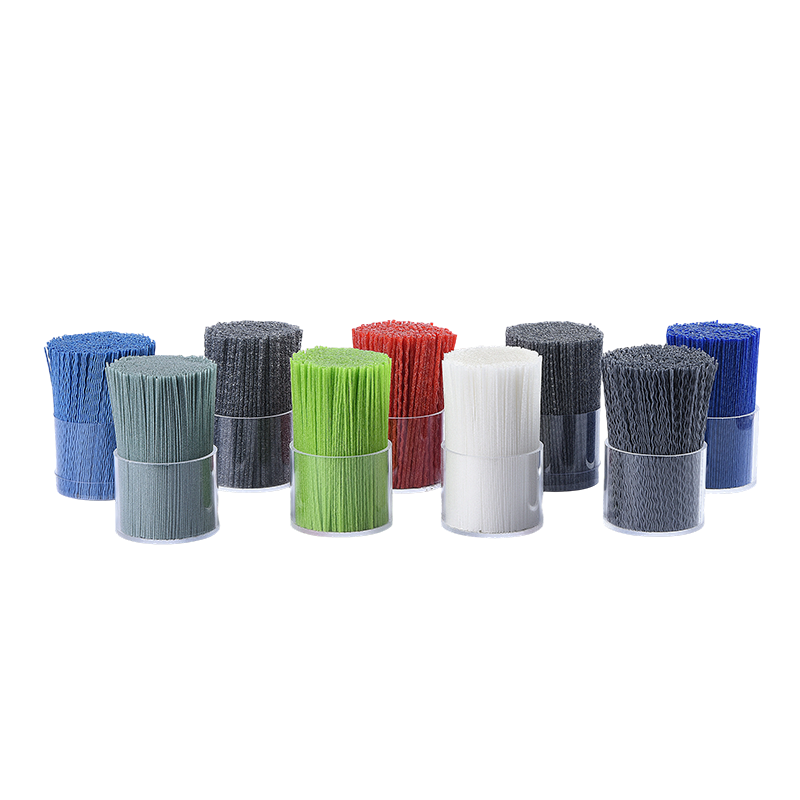
Made from nylon base materials (including PA6, PA610, PA612, and PA1010) impregnated with abrasive particles such as silicon carbide, white corundum, diamond, or ceramic, abrasive filaments combine the flexibility of synthetic fiber with the cutting power of industrial abrasives. The abrasive content is typically controlled at 20% to 30% by weight, a ratio that delivers effective material removal while preserving the filament's flexibility, resilience, and resistance to fatigue fracture. The result is a tool that conforms to workpiece geometry, self-renews its cutting surface as the tip wears, and delivers consistent finishing performance throughout its working life.
Understanding Abrasive Filament: Composition and Structure
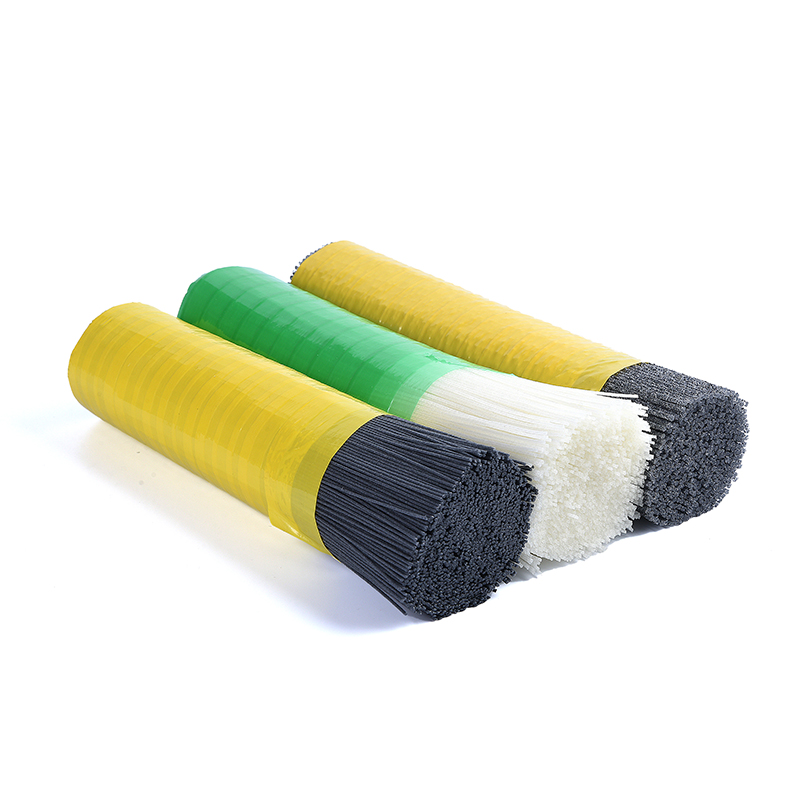
To understand what abrasive filament is used for, it helps to understand what it is made of and how its structure enables its performance. Abrasive filament is a composite monofilament — a single continuous fiber strand — produced by extruding a homogeneous mixture of nylon polymer and abrasive particles through a precision die.
Nylon Base Materials
The nylon matrix serves as the structural backbone of the filament, providing the flexibility, tensile strength, and resilience that allow the filament to bend repeatedly under working contact without fracturing. Different nylon grades are selected based on the application environment:
- PA6 (Polyamide 6): General-purpose base with good flexibility and mechanical strength; suitable for standard deburring and surface finishing applications at moderate temperatures
- PA610: Lower moisture absorption than PA6, improved dimensional stability in humid environments, and better performance in wet grinding or coolant-flooded finishing applications
- PA612: Higher chemical resistance and lower water absorption than PA610; preferred for applications involving exposure to cutting fluids, oils, or mild chemical environments
- PA1010: Bio-based polyamide derived from renewable sources; offers excellent resistance to fatigue, superior long-term flexibility, and good performance at elevated temperatures up to approximately 130°C
Abrasive Particle Types and Grit Sizes
The abrasive particles embedded in the nylon matrix determine the filament's cutting aggressiveness and suitability for specific materials and finishes. The particles are cubic in shape — a geometry that provides multiple sharp cutting edges and consistent material removal per contact event. Grit size ranges from 36 mesh (coarse) to 800 mesh (very fine), covering the full spectrum from aggressive stock removal to fine polishing:
- Silicon carbide (SiC): Hardness of approximately 2,500 HV (Vickers hardness); sharp, angular grain that cuts aggressively; ideal for non-ferrous metals (aluminum, brass, copper), cast iron, ceramics, stone, and composites
- White corundum (white aluminum oxide): Hardness of approximately 2,000 HV; friable grain that fractures during use to expose fresh cutting edges; suitable for steel, stainless steel, titanium, and heat-sensitive materials where a cooler cut is needed
- Diamond: Hardness of approximately 10,000 HV (the hardest known material); used for precision finishing of hardened steel, carbide tooling, ceramics, glass, and semiconductor materials where conventional abrasives cannot maintain performance
- Ceramic abrasive: Microcrystalline ceramic with self-sharpening properties during use; combines high hardness with good toughness; suited for high-pressure finishing of aerospace alloys, hardened steels, and superalloys
The abrasive loading — maintained between 20% and 30% by weight — is the result of careful engineering optimization. Below 20%, the filament lacks sufficient abrasive density to maintain cutting performance throughout its working life. Above 30%, the nylon matrix becomes too heavily loaded with particles, reducing filament flexibility and increasing the risk of brittle fracture during high-speed brush operation.
Deburring: The Most Widespread Industrial Use
Deburring — the removal of small projections of material (burrs) left on machined, stamped, cast, or forged parts after the primary manufacturing operation — is the single most common application for abrasive filament brushes in industrial manufacturing. Burrs cause assembly problems, create stress concentration points that initiate fatigue cracks, and present safety hazards to handlers. Removing them reliably and consistently is a critical quality step in the production of precision components.
Abrasive filament brushes excel at deburring for several reasons that distinguish them from alternative deburring methods:
- Selective material removal: The flexible filaments preferentially contact and remove the raised burr while conforming around the part surface, removing minimal material from the base workpiece geometry. This selectivity is critical for maintaining dimensional tolerances on precision parts after deburring.
- Edge blending and radiusing: After removing the burr, continued filament contact creates a controlled radius or chamfer on the machined edge — improving fatigue life, reducing stress concentrations, and meeting engineering drawing requirements for edge break specifications (typically R 0.1 to R 0.5 mm)
- Access to complex geometries: Filaments flex into cross-holes, blind holes, keyways, undercuts, gear tooth roots, and internal passages that rigid deburring tools cannot reach, making automated deburring of complex aerospace and automotive components feasible
- Consistent results across production volumes: Unlike manual deburring with files or scrapers, abrasive filament brush deburring delivers repeatable results across thousands of parts per hour when integrated into automated machining cells
Typical deburring applications include CNC-machined aluminum aerospace components, stamped steel automotive body parts, cast iron engine blocks and cylinder heads, sintered powder metallurgy parts, and injection-molded plastic components where flash removal is required.
Surface Preparation Before Coating and Painting
The adhesion of paint, primer, powder coating, anodizing, electroplating, and thermal spray coatings depends critically on the condition of the substrate surface immediately before coating application. A properly prepared surface must be free of oxide layers, mill scale, corrosion, oil contamination, and loose particles, and must have a defined surface profile (roughness) that promotes mechanical adhesion of the coating.
Abrasive filament brushes are widely used for this surface preparation step because they accomplish multiple preparation objectives simultaneously in a single pass:
- Removal of surface oxides and mill scale from steel and aluminum substrates
- Mechanical activation of the surface to increase its free energy and improve wetting by liquid primers and coatings
- Creation of a controlled surface roughness (Ra value) in the range of 0.8 µm to 3.2 µm that provides mechanical interlocking sites for the coating layer
- Removal of light corrosion without removing base material or altering the dimensional accuracy of the part
In automotive body manufacturing, abrasive filament disc brushes are used to prepare weld seams, spot welds, and heat-affected zones before primer application — areas where the heat of welding has altered the steel surface chemistry and created oxides that would prevent paint adhesion. In aerospace manufacturing, filament brushes prepare aluminum and titanium surfaces for anodizing or primer application with a consistency and repeatability that manual abrasive methods cannot match.
Rust Removal and Corrosion Treatment
Rust and corrosion removal is a high-volume application for abrasive filament brushes in maintenance, repair, and overhaul (MRO) operations, infrastructure maintenance, and marine environments. The combination of mechanical abrasion from the embedded particles and the mechanical action of the flexible filament tips against the corroded surface makes abrasive filament brushes highly effective at removing iron oxide, white rust on aluminum and zinc, verdigris on copper alloys, and atmospheric corrosion products from a wide range of metal surfaces.
Compared to wire brushes — the traditional tool for rust removal — abrasive filament brushes offer important practical advantages:
- No wire fragment contamination: Wire brushes shed short metal wire fragments that embed in the workpiece surface and later corrode, causing premature coating failure. Abrasive filaments do not shed metal fragments — critical for stainless steel, aluminum, and food-contact surfaces where iron contamination is unacceptable
- Gentler on base metal: Abrasive filaments remove corrosion products selectively without gouging the underlying metal surface, preserving dimensional accuracy and avoiding the cold-worked stressed surface layer that wire brush treatment can produce
- Consistent finish quality: Filament brushes produce a uniform, controlled surface texture across the treated area, whereas wire brushes often leave an irregular, scratched surface that requires additional finishing before coating
- Safe for use near sensitive components: The non-metallic nature of abrasive filaments makes them safe for use near electronic components, sealing surfaces, and precision-machined areas where wire contamination would cause functional damage
Precision Surface Finishing and Polishing
At the finer end of the grit size spectrum — from 320 mesh to 800 mesh — abrasive filament brushes transition from aggressive material removal to precision surface finishing and polishing. In this role, they are used to achieve specific surface roughness targets on functional components where surface finish directly affects performance.
Gear and Bearing Surface Finishing
Gear tooth flanks, bearing raceways, and cam surfaces require surface finishes in the Ra 0.2 µm to 0.8 µm range to ensure proper lubrication film formation and minimize contact fatigue. Fine-grit abrasive filament brushes are used to blend machining tool marks and achieve the required finish without altering the geometric profile of the functional surface. Diamond-loaded filaments in 400 to 800 mesh are particularly suited to finishing hardened steel gear teeth after grinding, where the extremely high hardness of the abrasive maintains cutting performance on hardened surfaces that would rapidly dull conventional abrasives.
Medical Device and Implant Finishing
Orthopedic implants, surgical instruments, and medical device components require biocompatible surface finishes that are free of sharp edges, micro-cracks, and contamination. Abrasive filament brushes — particularly those based on PA612 or PA1010 nylon with fine-grit white corundum or diamond abrasive — provide a controlled, repeatable finishing action on titanium, cobalt-chrome, and stainless steel implant surfaces without contaminating the part with metallic debris. This is a critical advantage in medical manufacturing where contamination control is a regulatory requirement.
Turbine Blade and Aerospace Component Finishing
Turbine blades, compressor blades, and structural aerospace components are made from high-strength alloys (nickel superalloys, titanium alloys, aluminum lithium alloys) that are difficult to finish without inducing thermal damage or residual stress. Abrasive filament brushes provide a cool, low-pressure finishing action that improves the surface integrity of these components — increasing fatigue life by eliminating surface micro-defects — without the heat generation associated with conventional grinding.
Industrial Cleaning and Descaling Applications
Beyond metalworking, abrasive filament finds extensive use in industrial cleaning applications where surfaces must be thoroughly cleaned of scale, deposits, coatings, or contamination without damaging the underlying substrate.
Heat Exchanger and Boiler Tube Cleaning
Heat exchanger tubes accumulate scale deposits — calcium carbonate, silica, iron oxide, and biological fouling — that reduce heat transfer efficiency and restrict flow. Abrasive filament brushes mounted on flexible shaft tools or drill attachments are used to clean tube interiors, removing scale without scoring the tube bore or leaving metallic contamination that would accelerate future corrosion. Silicon carbide filament brushes are particularly effective for removing hard mineral scale, while coarser silicon carbide grit (36 to 80 mesh) handles thick, hard deposits in industrial boiler tubes.
Weld Seam Cleaning and Dressing
After welding, the weld bead and heat-affected zone are typically covered with spatter, slag, and oxide discoloration that must be removed before inspection or subsequent coating. Abrasive filament disc and wheel brushes are used for this weld dressing operation, removing surface contamination and blending the weld profile smoothly into the parent material — particularly important in food processing, pharmaceutical, and sanitary piping applications where weld seam finish affects cleanability and regulatory compliance.
Foundry and Forging Flash Removal
Cast and forged components emerge from their molds with flash — thin fins of excess material at the parting line — and with sand, scale, and surface oxides from the casting or forging process. Coarse-grit abrasive filament brushes (36 to 120 mesh silicon carbide or ceramic) are used in automated finishing lines to clean casting surfaces, remove parting line flash, and prepare the surface for machining or coating in a single integrated operation.
Key Industries That Rely on Abrasive Filament
Abrasive filament brushes are used across a remarkably wide range of industries, each with distinct requirements for abrasive type, grit size, filament diameter, and brush configuration.
| Industry | Primary Application | Recommended Abrasive | Typical Grit Range |
|---|---|---|---|
| Aerospace | Deburring, edge radiusing, surface prep of Ti and Al alloys | Silicon carbide, ceramic | 120–400 mesh |
| Automotive | Deburring stamped/cast parts, weld seam cleaning, surface prep | Silicon carbide, white corundum | 80–240 mesh |
| Medical Devices | Implant finishing, instrument deburring, surface biocompatibility prep | Diamond, white corundum | 320–800 mesh |
| General Metal Fabrication | Rust removal, mill scale removal, pre-paint surface prep | Silicon carbide, ceramic | 36–120 mesh |
| Electronics and PCB | PCB surface preparation, lead finishing, connector cleaning | White corundum, fine silicon carbide | 400–800 mesh |
| Woodworking | Wood surface texturing, paint stripping, profiled surface sanding | Silicon carbide | 80–240 mesh |
| Marine and Infrastructure | Corrosion removal, anti-corrosion coating prep on steel structures | Silicon carbide, ceramic | 36–80 mesh |
| Food Processing Equipment | Weld seam finishing on stainless steel, sanitary surface prep | White corundum | 120–320 mesh |
Abrasive Filament in Woodworking and Furniture Manufacturing
Abrasive filament brushes play a significant role in wood surface processing, particularly for profiled and contoured surfaces that cannot be finished effectively with flat sandpaper or drum sanders. The flexible filaments conform to the shape of routed profiles, carved moldings, and turned components, delivering consistent abrasive contact across the full surface geometry.
Specific woodworking applications include:
- Antiquing and distressing: Abrasive filament wheel brushes are used to create an aged, textured surface appearance on furniture and flooring by selectively removing soft grain from wood surfaces — a process known as wire brushing or antiquing that exposes the harder grain lines and creates a visually distinctive three-dimensional texture
- Raised grain removal: After water-based primer or stain application, wood grain rises to create a rough surface texture. Fine-grit silicon carbide filament brushes remove this raised grain efficiently between coats without removing the primer itself, improving the final topcoat finish quality
- Profile sanding on moldings and door frames: Abrasive filament brushes integrated into CNC router finishing stations or dedicated profile sanding machines sand complex molding profiles in a single pass, replacing the multiple hand-sanding operations previously required
- Paint and coating stripping from architectural woodwork: Coarse silicon carbide filament brushes remove old paint layers from decorative moldings, window frames, and carved surfaces without damaging the wood detail underneath — a significant advantage over chemical stripping or heat gun methods that risk wood damage
Electronics and PCB Manufacturing Applications
In electronics manufacturing, surface cleanliness and surface condition at the microscopic level directly determine solder joint quality, plating adhesion, and electrical contact reliability. Abrasive filament brushes — particularly fine-grit white corundum and silicon carbide types in the 400 to 800 mesh range — are used in several critical PCB and component manufacturing processes:
- PCB surface preparation before plating: The copper surface of printed circuit boards must be uniformly micro-roughened before electroless plating or direct metallization to ensure complete, void-free plating adhesion. Abrasive filament brush machines provide this controlled surface micro-texturing across the full board surface uniformly and repeatably.
- Through-hole deburring: Mechanical drilling of PCB through-holes leaves burrs on the hole exit side that can cause shorts, impede component insertion, and reduce plating quality. Fine abrasive filament brushes clean and deburr these holes without widening them or damaging the surrounding copper pad.
- Lead and connector finishing: Electronic connector contacts and component leads require a clean, oxide-free surface for reliable soldering. Abrasive filament brushes provide a gentle mechanical cleaning that removes oxide films without introducing contamination or dimensional changes to precision contact surfaces.
Advantages of Abrasive Filament Over Alternative Abrasive Tools
Understanding what makes abrasive filament the preferred tool for so many applications requires a direct comparison with the alternatives it frequently replaces.
| Property | Abrasive Filament Brush | Wire Brush | Abrasive Belt / Wheel | Sandpaper |
|---|---|---|---|---|
| Flexibility / conformability | Excellent — conforms to complex shapes | Moderate | Poor — rigid profile | Moderate (hand use only) |
| Metal contamination risk | None | High — wire shedding | Low | None |
| Self-renewal of cutting surface | Yes — new abrasive exposed as tip wears | No | No — glazes with use | No — clogs and dulls |
| Heat generation | Low — light contact pressure | Moderate | High — thermal damage risk | Low to moderate |
| Automation compatibility | Excellent — CNC, robotic, inline integration | Good | Good for flat surfaces only | Poor |
| Access to internal features | Good — flexible reach into bores and slots | Moderate | Very poor | Poor |
| Consistency across production run | Excellent — consistent throughout brush life | Moderate | Decreases as wheel wears | Poor — rapid performance degradation |
The self-renewing nature of abrasive filament brushes deserves particular emphasis. As the filament tip wears during use, fresh abrasive particles embedded throughout the filament cross-section are continuously exposed — unlike sandpaper or abrasive wheels where cutting performance diminishes progressively as the surface abrasive dulls and loads with swarf. This self-renewal property allows abrasive filament brushes to maintain consistent cutting performance from the first part to the last part in a production run, simplifying process control and reducing the operator attention required to monitor and compensate for tool wear.
Selecting the Right Abrasive Filament for Your Application
Choosing the correct abrasive filament specification for a given application requires consideration of four interdependent variables: abrasive type, grit size, filament diameter, and nylon base material. Getting this selection right determines whether the tool performs efficiently and achieves the desired surface result, or whether it underperforms, wears prematurely, or damages the workpiece.
Choosing Abrasive Type by Workpiece Material
- Silicon carbide: Best for non-ferrous metals (aluminum, copper, brass, zinc), composites, plastics, wood, stone, and glass; avoid on hardened steel where SiC dulls quickly
- White corundum: Best for carbon steel, stainless steel, mild steel, and titanium; the friable grain fractures cleanly and cuts without excessive heat
- Diamond: Best for hardened steel (above 60 HRC), cemented carbide, ceramics, glass, and semiconductor materials
- Ceramic: Best for high-temperature alloys, aerospace superalloys, and applications requiring high stock removal rate combined with good surface finish
Choosing Grit Size by Required Finish
- 36 to 80 mesh (coarse): Heavy rust removal, scale removal, aggressive deburring of large burrs, paint stripping — expect Ra surface finish of 3.2 µm or coarser
- 100 to 180 mesh (medium): General deburring, surface preparation for coating, weld seam cleaning — expect Ra 1.6 µm to 3.2 µm
- 220 to 320 mesh (fine): Precision edge radiusing, pre-plate surface preparation, intermediate finishing — expect Ra 0.8 µm to 1.6 µm
- 400 to 800 mesh (very fine): Polishing, final surface finishing, medical device and optical component preparation — expect Ra 0.2 µm to 0.8 µm
Choosing Filament Diameter
Filament diameter determines the stiffness and aggressiveness of the brush. Common filament diameters range from 0.3 mm to 1.6 mm. Thinner filaments (0.3 to 0.6 mm) are more flexible, gentler on the workpiece, and better suited for fine finishing, delicate parts, and complex geometries. Thicker filaments (0.8 to 1.6 mm) are stiffer, more aggressive, and better suited for heavy deburring, rust removal, and high stock-removal applications where firm contact pressure is needed.
Brush Configurations That Use Abrasive Filament
Abrasive filament is incorporated into a wide variety of brush tool configurations, each suited to different machine types, workpiece geometries, and production environments.
- Disc brushes: Flat, circular brushes mounted on angle grinders, bench grinders, or dedicated disc brush machines; used for surface preparation, rust removal, and weld cleaning on flat or slightly curved surfaces
- Wheel brushes (end brushes / cup brushes): Cylindrical or cup-shaped brushes for reaching into grooves, slots, and recessed areas; commonly used in CNC machining centers for in-process deburring integrated directly into the machining cycle
- Roller / cylinder brushes: Large-diameter cylindrical brushes used in conveyor-fed automated finishing machines that process flat workpieces (sheet metal, PCBs, wood panels) in continuous throughput operation
- Tube / channel brushes: Long, narrow brushes for cleaning the interior of pipes, tubes, and channels; used in heat exchanger maintenance, hydraulic system cleaning, and bore finishing
- Strip and sector brushes: Modular brush segments assembled into custom configurations for specialized machine installations where standard brush shapes do not fit the application geometry