
 English
 русский
 Türk
Content
- 1 How a Honing Brush Differs From a Rigid Hone
- 2 Abrasive Type and Grit Decide the Finish Before Anything Else
- 3 Filament Diameter, Trim Length, and Brush Fit
- 4 Speed, Stroke Balance, and Lubrication
- 5 A Selection Sequence That Works
- 6 Failure Modes and What They Usually Mean
- 7 Where Honing Brushes Earn Their Keep
- 8 What to Check When You Buy Brush Filament
Most bore finishing problems that get blamed on the hone are really filament problems. When a honing brush cuts unevenly, loads up on aluminum, or leaves a cross-hatch too shallow to hold an oil film, the cause is almost always one of four variables: abrasive type and grit, filament diameter and trim length, brush-to-bore fit, or spindle and stroke speed. Get those four right and a flexible hone will repeat the same finish from the first part of a shift to the last.
Below is how each variable behaves in practice, together with the checks that experienced brush makers and rebuild shops run before they change a single process setting.
How a Honing Brush Differs From a Rigid Hone
A honing brush is a rotating tool made of abrasive-filled filaments mounted radially around a stem. There is no stone and no fixed cutting geometry. The filaments flex outward, so the brush centres itself in the bore, follows a slightly tapered or out-of-round bore, and applies light, even pressure across the whole contact length.
That construction decides the job it is suited to. A rigid hone with bonded stones removes measurable stock, corrects geometry, and produces a defined plateau under heavy pressure. A flexible abrasive brush removes a few micrometres at most. Its value lies in deburring, deglazing, cross-hatch generation, edge radiusing, and surface plateauing, plus reaching bores that a rigid hone struggles to follow, such as ported, interrupted, or thin-wall surfaces.
- Removes burrs from cross-drilled holes and port edges without changing bore size.
- Generates a repeatable cross-hatch for oil retention.
- Blends a previously honed surface without embedding loose grit.
- Covers a wide diameter range with one tool family instead of a stone per size.
Abrasive Type and Grit Decide the Finish Before Anything Else
Two decisions sit inside the filament, and both matter more than most operators expect. The abrasive material determines what the grain will cut and how long it keeps cutting. Silicon carbide is sharp and friable, so it bites quickly and breaks down to expose fresh edges, which suits cast iron, aluminum, and general deburring. Aluminum oxide is tougher and wears more slowly, which helps on steel and on long cycles where brush life drives cost. For hardened steel, carbide, or ceramic surfaces, diamond or ceramic grain is used instead.
Grit then sets the finish ceiling. The table below is the band most shops start from.
| Grit band | Typical surface finish | Usual job |
|---|---|---|
| 40 to 80 | 1.5 to 3.0 micron Ra | Heavy deburring, blending, cast iron cleanup |
| 120 to 180 | 0.8 to 1.5 micron Ra | Cylinder prep, cross-hatch for ring seating |
| 240 to 320 | 0.4 to 0.8 micron Ra | Plateau finishing, hydraulic and pneumatic bores |
| 400 to 800 | 0.15 to 0.4 micron Ra | Final polish, low friction and sealing surfaces |
Read those bands as a direction, not a promise. Two shops running the same 240 grit at different spindle speeds can land a full step apart on Ra, which is why grit and speed should never be changed at the same time. If you are weighing how grain type, loading level, and grit blending affect real results, the questions buyers ask most about abrasive filament are a useful sanity check before a trial run.
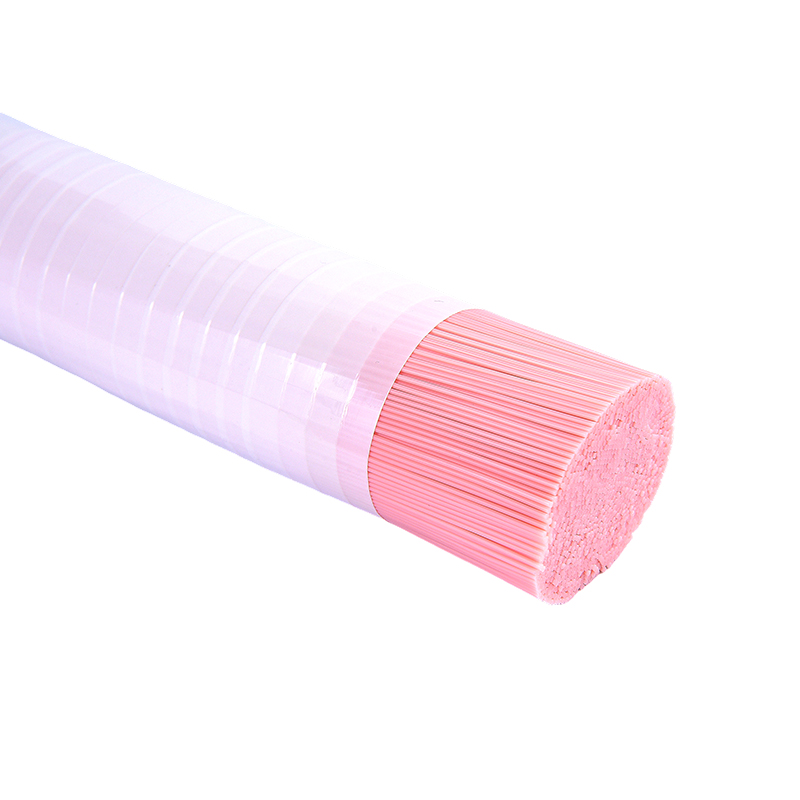 Abrasive Nylon Filament for Industrial Surface TreatmentComposite nylon filaments with embedded silicon carbide, diamond, ceramic or corundum abrasives, offered in controlled grits and loadings for consistent deburring and finishing.View Product →
Consistency is where filament supply shows up on the shop floor. If abrasive loading shifts from lot to lot, the same brush, speed, and cycle will not deliver the same finish twice, and the operator ends up compensating with pressure, which is exactly how bores go oversize. A declared grit and a controlled grain distribution remove that variable from the process.
Filament Diameter, Trim Length, and Brush Fit
Filament diameter sets stiffness. A thicker filament pushes harder against the bore wall, cuts faster, and follows geometry less closely. A thinner filament conforms better in small bores and around features, but removes material slowly and wears out sooner. As a working range, bores under about 20 mm usually suit 0.4 to 0.8 mm filament, bores from 20 to 60 mm sit comfortably at 0.8 to 1.2 mm, and larger bores take 1.2 mm and above.
Trim length works in the same direction. Short trim makes the filament stiffer and more aggressive, long trim makes it softer and more forgiving. Brush diameter should be a light drag fit in the bore: matched to the nominal diameter for fine grits, with a modest oversize when a coarser grit needs more pressure. An oversize brush plus coarse grit plus high speed is the fastest way to take a bore out of tolerance.
| Variable | More aggressive | Less aggressive |
|---|---|---|
| Filament diameter | Thicker filament | Thinner filament |
| Brush diameter | Larger oversize over bore | Light drag fit |
| Grit | Coarser grain | Finer grain |
| Trim length | Shorter trim | Longer trim |
| Spindle speed | Higher rpm | Lower rpm |
Speed, Stroke Balance, and Lubrication
Cross-hatch angle is set by the ratio between rotational speed and stroke rate, not by the grit. A spindle in the 300 to 1200 rpm range combined with a steady reciprocating stroke produces the 30 to 45 degree pattern that holds oil and seats rings. Speed up the stroke without touching rpm and the pattern flattens; slow it down and the hatch steepens until the bore looks scratched.
Lubrication keeps the filament cool, flushes swarf, and stops the abrasive from loading. Water-soluble coolant or a light honing oil covers most steel work. Dry running is possible on cast iron and some plastics, but it shortens brush life and raises the risk of filament breakage at the root.
Wet processes add a second demand on the filament itself: moisture. Nylon takes up water, and a filament that swells in coolant loses stiffness and changes its cutting behaviour over a shift. PA612 absorbs less moisture than PA6 or PA66 and holds its diameter better in wet honing and cooling lines, which is why it is often specified for bores that are honed with flood coolant rather than dry.
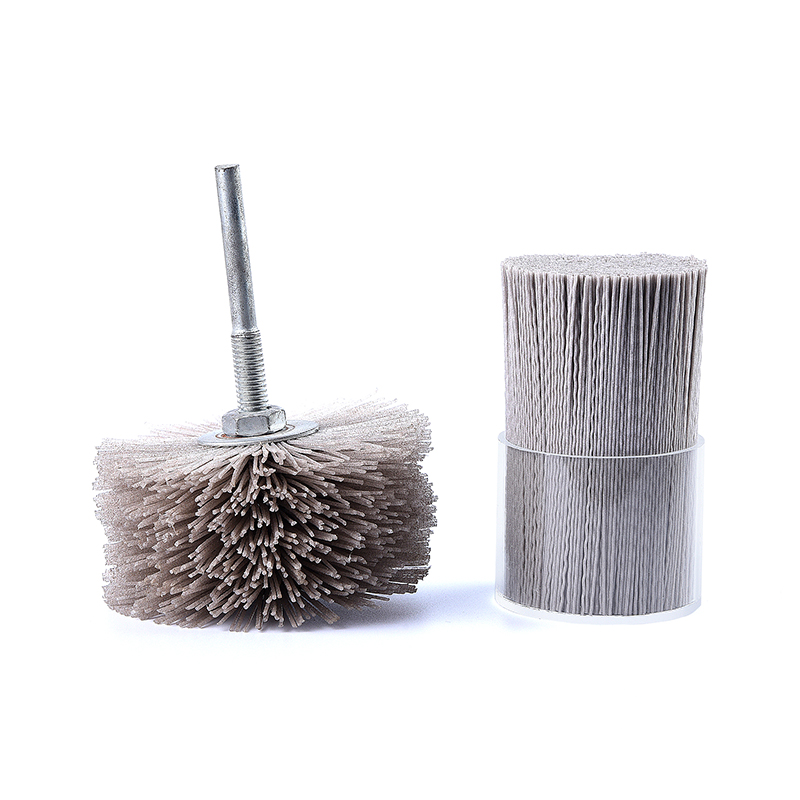 PA612 Nylon Brush Filament for Wet Honing and CleaningLow-moisture polyamide 612 filament with 0.05–1.2 mm diameter options, suited to wet honing, industrial cleaning, polishing and deburring brushes.View Product →
A Selection Sequence That Works
- Define the deliverable: finish in Ra, allowable size change, burr height, and cross-hatch angle.
- Pick the abrasive for the workpiece material, then the coarsest grit that still meets the finish target.
- Match filament diameter and brush diameter to bore size, starting at a light drag fit.
- Set spindle speed first, then adjust stroke rate until the hatch angle is correct.
- Run a three-part trial: measure the first part, the middle part, and the last, because brush behaviour changes as filaments wear in.
- Record grit, brush diameter, rpm, stroke, lubricant, and cycle time so the next run starts from a known point.
Failure Modes and What They Usually Mean
Most complaints about a honing brush trace back to speed, stroke balance, or lubricant rather than to the filament. The patterns below cover the majority of cases.
| Symptom | Likely cause | Practical fix |
|---|---|---|
| Bore tapers toward one end | Uneven dwell or stroke overrun | Balance the stroke and reduce overtravel |
| Cross-hatch too shallow | Stroke rate too high for the rpm | Slow the stroke or raise spindle speed |
| Filament breaks at the root | Excess speed, dry running, worn brush | Reduce rpm and add lubricant |
| Brush loads with aluminum | Grit too fine, pressure too high, no oil | Coarser grit, light oil, lighter pressure |
| Finish stops improving | Glazed or spent abrasive | Fit a fresh brush and confirm grit |
Where Honing Brushes Earn Their Keep
Hydraulic and pneumatic cylinder bores, tube IDs, valve bodies, and engine cylinder preparation are the classic applications, because each needs a controlled cross-hatch rather than a mirror finish. Cross-drilled holes in machined housings are another strong case: a rigid hone cannot deburr the intersection, while a flexible brush reaches it without altering the bore.
Many shops run two steps. The abrasive brush cuts and blends, then a non-abrasive nylon brush clears loose grain and residual swarf before inspection. In that second step, PA66 is a common choice where stiffness and wear life matter more than conformability.
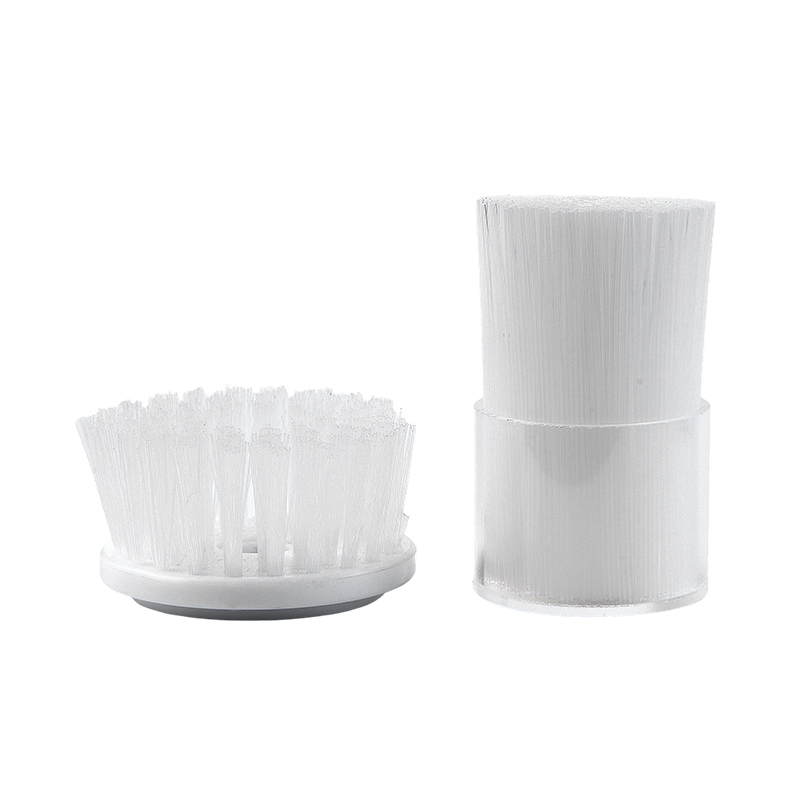 PA66 Nylon Filament for Stiff Industrial Cleaning BrushesHigh-strength, wear-resistant polyamide 66 filament in 0.1–1.2 mm diameters for cleaning, deburring, polishing and surface-treatment brushes.View Product →
What to Check When You Buy Brush Filament
The brush is only as stable as the filament inside it, so purchasing decisions deserve the same attention as process settings. Four points carry most of the risk.
- Diameter tolerance: a tight, declared tolerance on filament diameter keeps brush stiffness predictable between lots.
- Abrasive loading and grain distribution: both determine cut rate and finish repeatability.
- Moisture content: relevant for wet processes and for filament stored in humid workshops.
- Compliance documentation: RoHS and third-party test reports matter for export programmes and for customers who audit their supply chain.
Beyond the standard grades, custom development is often the difference between a brush that works and a brush that sells. A supplier able to extrude to a drawing or a sample, in a specified base polymer, filament diameter, and grit, shortens the loop between a trial and a production release considerably. Working with a brush filament manufacturer that controls its own extrusion and can hold those parameters run after run is usually cheaper than solving the same problem twice.
A honing brush is a finishing tool, not a sizing tool. Treat it that way and the process becomes predictable: choose the abrasive for the material, pick the coarsest grit that meets the finish, match brush diameter to bore with a light drag fit, then balance spindle speed against stroke rate until the cross-hatch lands where it should. Everything else, including filament grade and lubricant, exists to keep those four settings stable from the first part to the last.