
 English
 русский
 Türk
Content
- 1 What Metal Brushes for Cleaning Do Well, and Where They Stop
- 2 The Specs That Decide Whether the Brush Actually Performs
- 3 Four Failures That Cost More Than the Brush
- 4 Abrasive Filament as the Non Metal Route
- 5 Choosing the Filament Grade Behind the Abrasive
- 6 A Practical Decision Path
- 7 Ordering the Right Brush the First Time
A rusted weld seam on a mild steel gate and a scuffed aluminum extrusion need cleaning on the same afternoon, and the same knotted steel wheel will ruin one of them. That is the real problem behind most metal brush decisions. Wire brushes are the fastest route to stripping rust, mill scale, paint and heavy carbon, but the wire that works on steel will gouge aluminum, smear brass, and leave loose fragments on a stainless surface headed for a food line.
The short answer: pick the wire by substrate and finish requirement, not by habit or by whatever is hanging on the bench. Where scratching, sparking or ferrous contamination is a genuine risk, an abrasive filament brush usually delivers the same clean surface with far fewer downstream problems.
What Metal Brushes for Cleaning Do Well, and Where They Stop
A wire brush removes material through impact and abrasion at the wire tips. That makes it excellent on brittle surface layers such as rust, scale, weld spatter and cured paint, and nearly useless on soft contamination like grease, oil or adhesive residue, which the wires simply push around.
| Wire type | Typical cleaning job | Main risk |
|---|---|---|
| Carbon steel, crimped | Light rust, paint removal, general surface prep on steel | Leaves free iron on stainless; wire breakage |
| Carbon steel, knotted | Heavy scale, slag, deep corrosion, weld cleaning | Deep scratching, heat build up, aggressive stock removal |
| Stainless steel wire | Stainless fabrication, food and sanitary equipment, marine work | Higher cost; still scratches polished finishes |
| Brass or copper coated wire | Soft metals, light deburring, non sparking areas | Soft wire wears quickly and sheds more tips |
Crimped wire gives a flexible brushing action with lighter impact, which suits paint removal, light rust and blending. Knotted wire is stiff and aggressive, the right choice for heavy scale and weld slag, at the cost of a rougher surface and more heat at the contact point.
The Specs That Decide Whether the Brush Actually Performs
Two brushes with the same outer diameter can behave completely differently once they touch the workpiece. These four parameters are where most cleaning problems originate.
| Parameter | Common range | Practical effect |
|---|---|---|
| Wire diameter | 0.20 to 0.30 mm light duty, 0.35 to 0.50 mm general, 0.60 mm and above heavy | Thicker wire cuts harder and leaves a coarser scratch pattern |
| Knot versus crimp | Crimped for finishing, knotted for stock removal | Sets how much impact each wire tip delivers |
| Maximum RPM | Printed on the brush, often 4,500 to 12,500 | Over speeding throws wires and is the leading cause of injury |
| Trim length and face width | Short trim for stiff action, long trim for soft action | Controls flexibility and how well the brush follows contours |
Run a brush below its rated speed and it feels weak, so operators tend to push harder. That pressure bends the wires, generates heat and shortens life far more than the correct speed with light, even contact ever would.
Four Failures That Cost More Than the Brush
- Embedded wire tips. Steel wires fatigue and snap. On aluminum, machined slots or soft castings, fragments lodge in the surface and appear later in inspection or on a customer complaint.
- Ferrous contamination of stainless. A carbon steel brush leaves free iron particles that turn into rust blooms days after the part ships, even though the cleaning looked perfect at the bench.
- Sparks and heat. Wire brushing near solvent vapors, coated surfaces or thin sheet generates sparks and localized heating that distort the part.
- Soft metal damage. Aluminum and copper scratch easily and work harden under a stiff knotted brush, making a second finishing step unavoidable.
None of these failures show up on the purchase order. They show up in rework hours, rejected batches and warranty claims, which is why substrate and finish should drive the choice before price does.
Abrasive Filament as the Non Metal Route
Abrasive filament is a polymer monofilament loaded with abrasive grain, so the cutting action comes from the grain rather than from a hard steel edge. The result is a consistent, controllable scratch pattern, no wire shedding, no sparks and no ferrous contamination, which makes it usable on aluminum, brass, composites, wood and stainless sanitary equipment where a wire brush is simply too risky.
Because the filament bends instead of fracturing, it also follows radii, threads and profiled edges that a stiff wire wheel cannot reach without damaging the geometry. Grit selection replaces wire diameter as the main control variable, so a coarser grain handles weld blending while a finer grain handles satin finishing in the same operation.
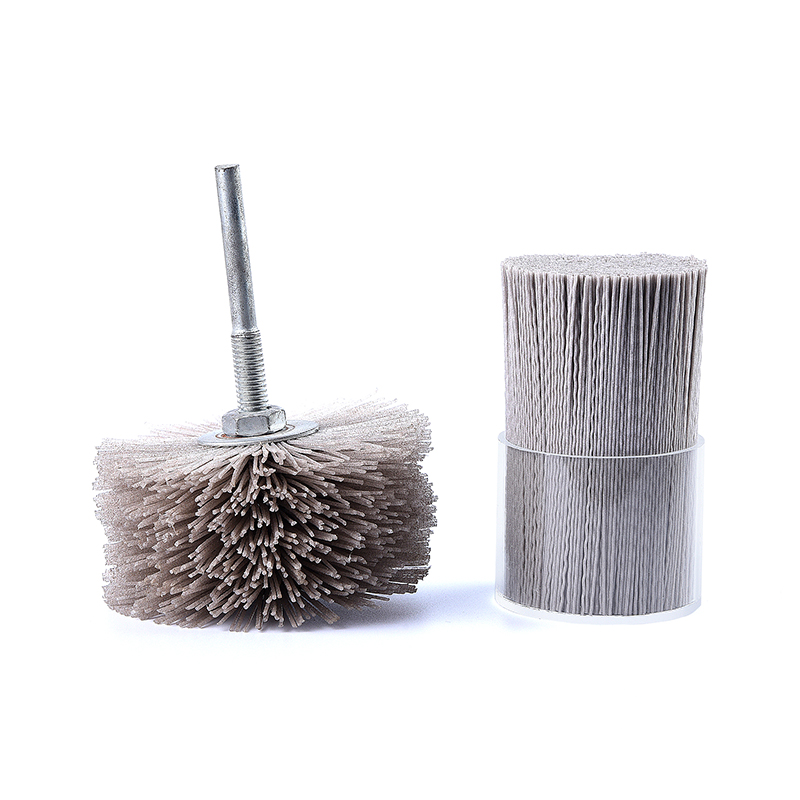
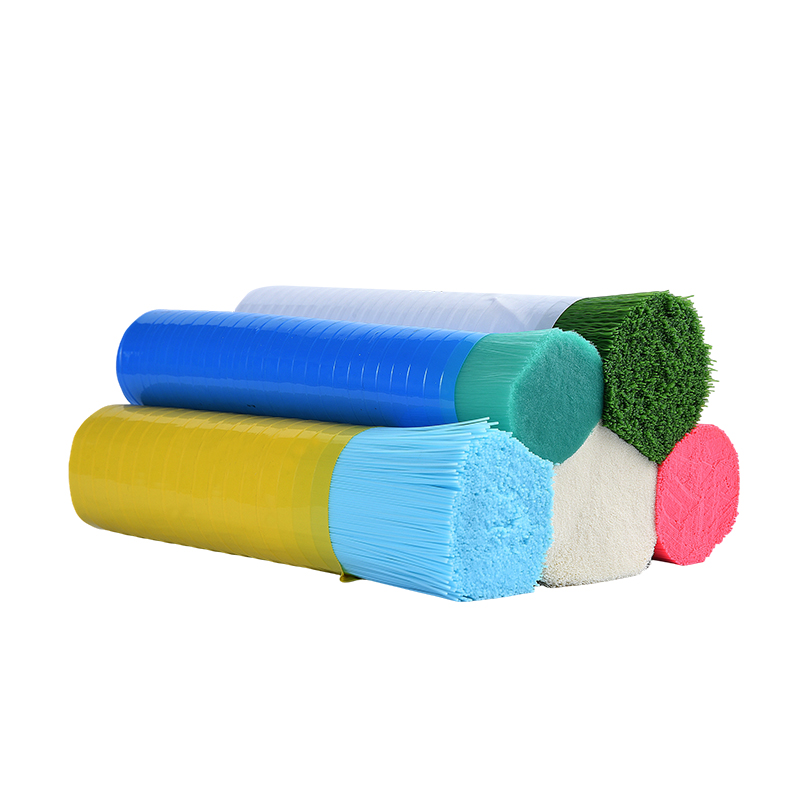 Abrasive Nylon Filament for Grinding and Surface FinishingComposite nylon filament with abrasive particles for deburring, scale removal and finishing on metal, glass, ceramic, wood and stone; grit controls blending or satin finish.View Product →
For many workshops the practical split is straightforward: wire for heavy scale on plain carbon steel, abrasive filament for everything downstream of that, especially where a scratch pattern, a surface finish specification or a cleanliness standard has to be met.
Choosing the Filament Grade Behind the Abrasive
The base polymer determines how the brush behaves in service, not just how it cuts on day one. PA6 is the workhorse grade with good toughness and grain retention for general purpose cleaning brushes. PA612 holds dimensions better in humid or wet conditions and keeps its stiffness when a brush runs cool and wet. PA66 offers higher stiffness and heat resistance for demanding deburring, while PBT resists moisture and a broad range of chemicals, which suits equipment that is cleaned in place.
 Nylon PA612 Brush Filament for Wet and Chemical ExposurePA612 filament offers low water absorption, wet stiffness and dimensional stability for industrial cleaning, polishing, deburring and personal-care brushes in humid or chemical-exposure settings.View Product →
Diameter tolerance matters more than most buyers expect. A filament specified at 0.50 mm with a tight tolerance fills a tuft predictably, which keeps brush density, balance and cutting consistency stable from batch to batch. Loose tolerances show up as uneven wear and vibration at speed.
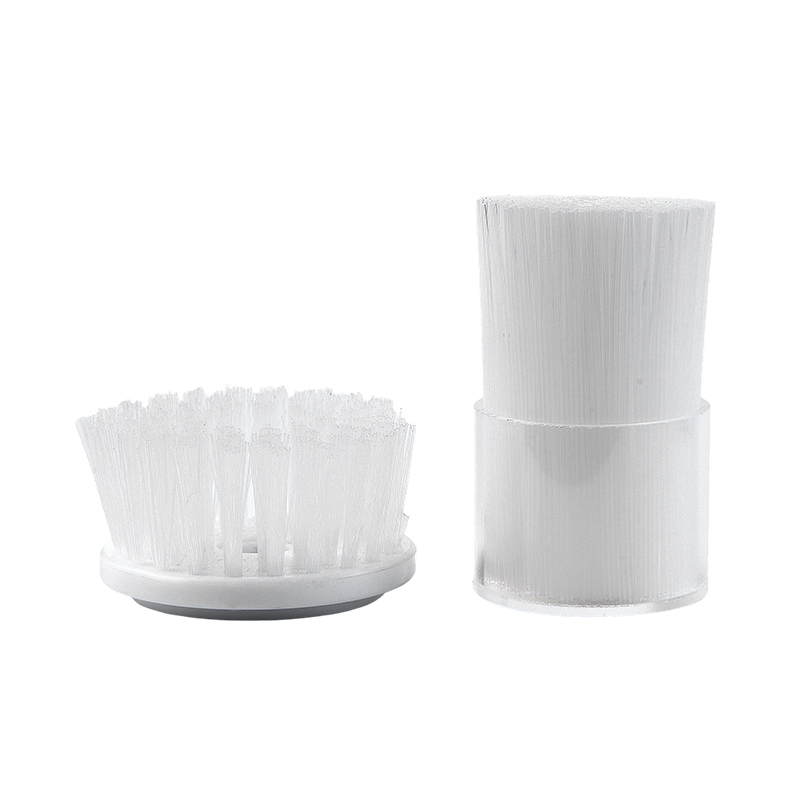 Nylon PA66 Brush Filament for Strength and Chemical ResistancePA66 filament combines strength, toughness and chemical resistance for cleaning, deburring and polishing brushes; diameter, shape and cut length can be customized.View Product →
Grit, filament diameter and trim length work together. Short trim with coarse grain cuts aggressively; long trim with fine grain produces a softer, more uniform finish. Testing two or three combinations on scrap material is usually faster than reasoning it out on paper. More detail on abrasive filament selection is covered in this practical guide to abrasive filament questions.
A Practical Decision Path
- Identify the substrate first. Carbon steel, stainless, aluminum and composites each rule out a different family of brushes.
- Define what has to be removed. Scale and slag point to knotted wire; paint, light rust and blending point to crimped wire or abrasive filament.
- Check the finish requirement. If a scratch pattern, Ra value or cleanliness standard applies, assume a non metal brush until proven otherwise.
- Confirm the tool speed against the brush rating, and never exceed it to compensate for a worn brush.
- Run a sample batch and inspect for embedded fragments, contamination and heat damage before releasing a full order.
Ordering the Right Brush the First Time
A clear specification removes most of the back and forth. State the substrate, the contaminant, the required finish, the tool and its RPM, the brush geometry, and either the wire diameter or the filament diameter with tolerance and grit. Ask for a sample quantity first, then inspect the surface under the same lighting the customer will use.
For buyers moving part of their cleaning work away from wire, the more useful comparison is wear behavior over a full shift rather than cutting speed in the first minute. Filament brushes tend to hold their cutting rate longer because the grain keeps exposing fresh edges as the polymer wears. Background on how high strength, wear resistant nylon filaments perform in cleaning and industrial duty is available in this overview of wear resistant nylon filaments, and it explains why the filament grade deserves as much attention as the brush shape.